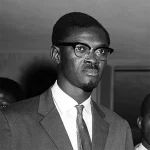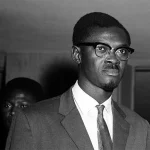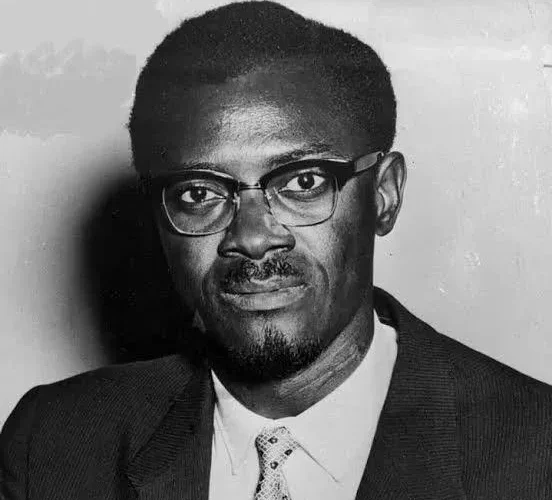
THE man they most feared was already broken when they loaded him onto the plane. His face was swollen, his shirt torn, his wrists bound behind his back with rope that had cut into his skin during three weeks of beatings. Patrice Émery Lumumba – the thirty-five-year-old schoolteacher from État Indépendant du Congo-Belge who had become the continent’s most electrifying voice for liberation – was being flown not to safety but to slaughter. He knew it. Every man on that aircraft knew it. And that, perhaps, is the most unforgivable truth of all.
It was the evening of 17 January 1961. The plane carrying Lumumba and two of his comrades – Maurice Mpolo, his youth minister, and Joseph Okito, the Senate vice-president – touched down at Luano Airport in Élisabethville, the capital of the secessionist Katanga province. Waiting on the tarmac were the men who had come to finish the business that Brussels, Washington, and the United Nations had begun: the annihilation of the first democratically elected prime minister in Congolese history.
“His body was dissolved in acid. Only a single gold-capped tooth survived. For sixty-five years, that tooth was all his family had left of him.”
A LION IN THE DOCK OF THE WORLD
To understand what happened to Patrice Lumumba on that airstrip, one must understand what he represented – and why that representation was intolerable to the powers of the age. In June 1960, when Belgium finally relinquished its catastrophically brutal colonial grip on the vast Central African territory it had turned into a personal rubber plantation for King Léopold II, Lumumba won the Congo’s first free elections and was appointed prime minister. He was, by any measure, a phenomenon: self-educated, mercurial, possessed of an oratory that could move a crowd from grief to rage to hope within a single breath.
At the independence ceremony itself, before King Baudouin and the assembled dignitaries of the world, Lumumba rose and delivered a speech that Belgium had not asked for and could not contain. He spoke of the “humiliating slavery” imposed on his people, of the backs bent under the lash, of the children who grew up knowing only servitude. Historians have described it as one of the most consequential speeches ever delivered on African soil. Belgium was horrified. Washington was alarmed. Lumumba, in that single moment, became the most dangerous man in Africa.
His danger was ideological as much as political. He refused to choose sides in the Cold War, insisting that Congo’s extraordinary mineral wealth — the uranium that had powered the Manhattan Project, the cobalt, the copper, the diamonds — should serve Congolese people first. He turned to the Soviet Union for military assistance when the UN and the West stood aside during the secession of Katanga, orchestrated by Belgian mining interests. That appeal sealed his fate.
The American CIA, then under director Allen Dulles, drew up assassination plans. Belgian intelligence operatives embedded with the Katangese secessionists. Lumumba’s political ally turned rival, Joseph-Désiré Mobutu, launched a coup in September 1960 with covert Western backing. Lumumba was placed under house arrest, guarded by UN peacekeepers who, in one of history’s more shameful ironies, failed entirely to protect him.
FLIGHT INTO THE MOUTH OF THE LION
On 27 November 1960, Lumumba slipped through the UN cordon under cover of darkness, heading for Stanleyville, where his supporters remained in power. He was recaptured within days. What followed was a spectacle of calculated degradation. He was beaten publicly in front of journalists and cameras. He was paraded before crowds as a trophy. He was humiliated at every turn by men who understood that breaking him psychologically was part of the project of erasing him politically.
Among those present during these weeks of detention was a young Belgian diplomat completing a traineeship in Leopoldville: Étienne Davignon, then in his mid-twenties, born into the Belgian nobility, and destined for a glittering European career. Sixty-five years later, it is Davignon – now ninety-three years old, a former European Commissioner, elevated to the rank of Count by King Philippe in 2018 – who stands as the last surviving Belgian official accused of complicity in what happened next.
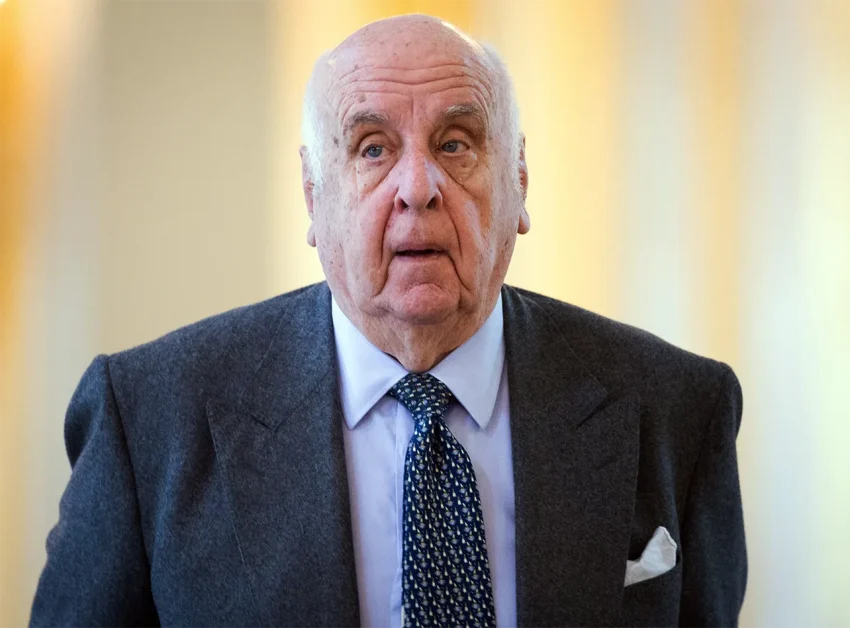
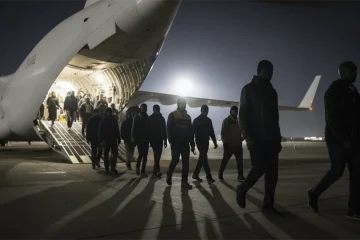
On the evening of 17 January, Lumumba, Mpolo, and Okito were loaded onto a DC-4 aircraft. The flight was not announced. There was no legal process, no tribunal, no recourse. Belgian prosecutors would later allege that Davignon was present at meetings where the decision to transfer Lumumba to Katanga was discussed – a transfer that amounted, everyone in the room understood, to a death sentence. He is accused of having subjected Lumumba to humiliating and degrading treatment, of unlawful detention, and of denying the prime minister his right to any form of fair process. Davignon’s lawyers have contested these charges.
“Lumumba knew. Every man on that aircraft knew. He was not being flown to safety. He was being delivered to his executioners.”
THE NIGHT OF THE LONG KNIVES, KATANGAN STYLE
The accounts of what happened after the plane landed in Élisabethville are drawn from a 2000 Belgian parliamentary commission, declassified intelligence files, and survivor testimonies. They constitute a portrait of state-sanctioned murder carried out with clinical brutality.
Three men were driven from the airport to a remote villa. There, Katangese soldiers and Belgian officers were waiting. The beatings that followed were severe. Lumumba, already weakened by weeks of captivity and abuse, endured what his tormentors apparently hoped would destroy any last vestige of the man who had spoken truth to imperial power from an independence podium.
The executions were carried out on the night of 17 January 1961. Lumumba was thirty-five years old. Mpolo was thirty. Okito was thirty-four. They were taken to a clearing in the bush. Three separate firing squads. The Belgian officer in command of the Katangese gendarmerie, Gérard Soete, would later boast — boast — of overseeing the disposal of the bodies. The corpses were exhumed from a shallow grave, cut up, and dissolved in sulphuric acid. Soete would tell Belgian television decades later that he had kept two of Lumumba’s teeth as souvenirs. He returned one. The other — a gold-capped molar — was recovered from his daughter after his death and eventually, in June 2022, was placed in a coffin and returned to the Democratic Republic of Congo in a state ceremony.
For sixty-one years, that tooth was the only physical remnant of Patrice Émery Lumumba. The man had been dissolved. The Congo’s first prime minister had been rendered into nothing but acid and ash and one gold crown, carried across an ocean by the daughter of his murderer.
THE LONG SILENCE
The West did not mourn. Within days, the news was managed, contextualised, and buried beneath Cold War rationalisations. In Washington, the killing was viewed as a satisfactory resolution of a dangerous problem. In Brussels, official Belgium maintained a studied silence for four decades. The complicity — of Belgian intelligence, Belgian officers, Belgian diplomats, Belgian mining concerns — was not a secret exactly, but it existed in that comfortable zone of the known-and-unacknowledged that empires have always maintained about their worst crimes.
Mobutu Sese Seko ruled the Congo for thirty-two years, renamed it Zaire, looted it systematically, and was propped up throughout by Western powers who preferred a pliant kleptocrat to the ghost of Lumumba’s pan-Africanism. The country Lumumba had dreamed of — sovereign, unified, serving its own people — became instead a byword for state failure, perpetuated by the very forces that had arranged his removal.
Africa mourned differently. Lumumba’s image was carried at protests across the continent. His name was given to universities, to streets, to the People’s Friendship University in Moscow that trained a generation of African revolutionaries. Kwame Nkrumah wept. Che Guevara cited him. In the townships of South Africa, where apartheid still held its boot on black necks, Lumumba’s story circulated in whispers as proof of what African liberation threatened to achieve — and what the West would do to prevent it.
“Mobutu ruled the Congo for thirty-two years, propped up by Western powers who preferred a pliant kleptocrat to the ghost of Lumumba’s pan-Africanism.”
THE CHILDREN OF THE REVOLUTION
Lumumba’s children grew up in exile, scattered across multiple countries, carrying a father who existed more as a symbol than a memory. It was not until 2001 — forty years after his death — that the Belgian government issued a formal apology, acknowledging what the parliamentary commission of inquiry had concluded the previous year: that Belgium was “morally responsible” for Lumumba’s death. It was a carefully calibrated admission. Moral responsibility without legal accountability. Regret without consequence.
It was not enough. It was never going to be enough.
In June 2011, Lumumba’s son François, filed a criminal complaint in Brussels against eleven Belgian citizens for their roles in his father’s murder. It was a landmark act, audacious in its ambition and grounded in meticulous historical research. Belgian federal prosecutors took up the case. For years, the proceedings moved with glacial slowness, stymied by legal technicalities, by the deaths of suspects, by the sheer difficulty of prosecuting sixty-year-old crimes under contemporary war crimes statutes.
One by one, the accused died. Then another. Then another. Until, by 2025, only one man remained: Étienne Davignon, now a nonagenarian count, a celebrated figure of the European establishment, a man whose career had included chairing the Bilderberg Group and heading the International Energy Agency. The last man standing from a roster of those accused of conspiring in the elimination of Africa’s most famous post-colonial martyr.
A RECKONING, SIXTY-FIVE YEARS LATE
On 17 March 2026, the Council Chamber of the Brussels Court of First Instance made history. It ordered Davignon to stand trial for war crimes — specifically for his alleged role in the unlawful detention and transfer of Lumumba to Katanga, the denial of his right to a fair process, and the infliction of humiliating and degrading treatment. The court went further than prosecutors had requested, extending the scope of the trial to encompass the murders of Mpolo and Okito as well. Davignon was not present in the courtroom. His lawyers declined to comment.
In January 2026, when the case was first heard, ten members of the Lumumba family’s grandchild generation — people who never knew their grandfather, who knew him only as a photograph and a martyr and a continent’s wound — joined the proceedings as civil parties. Ten grandchildren. The intergenerational reach of a single assassination.
Outside the court, Lumumba’s grandson Mehdi did not hide his emotion. “We are all relieved,” he told journalists. “At last, Belgium is facing up to its history.” His cousin Yema, a granddaughter, was more measured but equally resolute. She told Reuters the ruling was a step in the right direction. “What we want is to search for truth and establish different responsibilities.”
The family issued a collective statement that cut to the historical marrow of the moment: “What changes today is that the legal system of Belgium begins, at last, to confront its own responsibilities for acts committed in the name of colonial rule. For our family, this is not the end of a long fight. It is the beginning of a reckoning that history has long demanded.”
“Ten grandchildren who never knew him — who knew him only as a photograph and a martyr and a continent’s wound — have joined the case as civil parties.”
WHAT JUSTICE CAN AND CANNOT DO
The trial, expected to begin in 2027, will not resurrect Patrice Lumumba. It will not undo the decades of Mobutu’s pillage, the wars that followed, the resource extraction that continues to bleed the Democratic Republic of Congo while its people remain among the poorest on earth despite sitting atop some of the planet’s most valuable mineral deposits. It cannot give back sixty-five years of pain to a family that was scattered across continents, carrying the weight of a name that was simultaneously a glory and a target.
What it can do — what it must do, if it is to mean anything — is establish, in law, that the murder of an African head of government by European colonial officials was not simply an unfortunate episode of Cold War geopolitics, but a crime. A war crime. A crime against a human being who had committed the unforgivable offence of believing that his country’s wealth should belong to his country’s people.
Human Rights Watch has called the ruling a “historic opportunity for justice for alleged war crimes committed by Belgian officials during decolonisation.” The European Centre for Constitutional and Human Rights, which has supported the family’s case since 2011, noted that it may represent the final opportunity for a Belgian court to examine, under criminal law, the individual responsibilities related to the assassination.
The defence will argue, as it has argued throughout the long pre-trial proceedings, that Davignon’s role was peripheral, that he was a trainee diplomat in his twenties, that the decisions were made by others, that the chain of command and the passage of sixty-five years make criminal conviction impossible to sustain. These are not trivial arguments. The bar for criminal conviction is high, and deliberately so.
But the Lumumba family’s lawyer, Christophe Marchand, has framed the prosecution’s case in terms that transcend the individual defendant. Davignon, he has argued, was “a link” in “a grim state-run criminal enterprise” carried out by Belgium. The trial, whatever its verdict, will force Belgium — and by extension Europe — to look directly at what was done in its name in the heart of Africa, in the name of order and investment and civilisation.
THE TOOTH AND THE TEST OF HISTORY
In June 2022, in a ceremony at N’djili Airport in Kinshasa, a coffin containing a single gold-capped tooth was carried with full honours off a Belgian aircraft and received by the Congolese government. The ceremony was attended by thousands. The streets of Kinshasa were filled with people who had come to receive, finally, the remains of the man their grandparents had wept for. Lumumba was reburied in a mausoleum built in his name.
That tooth — that single impossible relic of a man dissolved in acid by those who feared what he represented — had crossed back over an ocean sixty-one years after it was taken. It had outlasted Mobutu. It had outlasted the Cold War. It had outlasted most of the men who had conspired in its owner’s destruction. And now, against all reasonable expectations, it has outlasted the assumption that those men would die in comfortable impunity.
There is something irreducibly African in this story: the insistence of the living on reckoning with the dead, the refusal to let injustice calcify into a historical footnote, the belief — tested over generations but never broken — that the arc of the moral universe bends, however slowly, however painfully, toward something that at least resembles justice.
Patrice Lumumba was thirty-five years old when they killed him. He had been prime minister for less than three months. He had stood before a king and told the truth about colonialism in the king’s presence. He had believed that an independent Africa could chart its own course. He was wrong about how quickly the world would allow it, and right about everything that mattered.
His grandchildren are still fighting for him. And on 17 March 2026, a court in Brussels — the capital of the country that helped murder him — agreed, finally, that someone must answer for what was done.