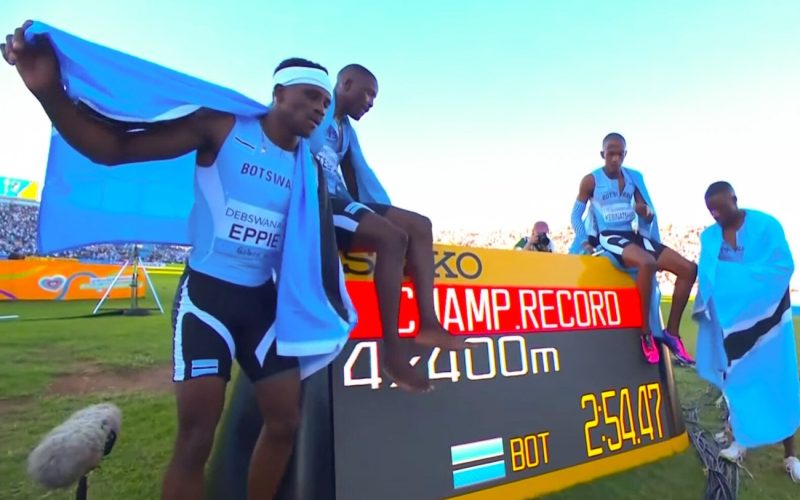
THE National Stadium fell silent for just a moment – the held breath of an entire nation – and then it erupted.
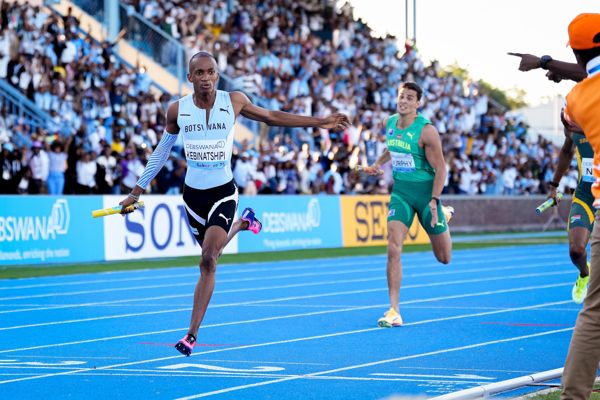
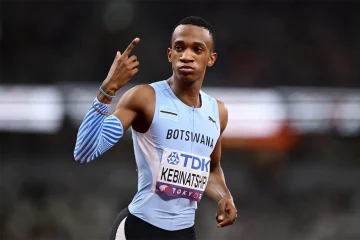
When Collen Kebinatshipi burst free from South Africa’s Zakithi Nene on the home straight and charged across the finish line in 2:54.47, the noise that rose from Gaborone was the sound of history being made. Botswana had done it. The Awesome Foursome had delivered.
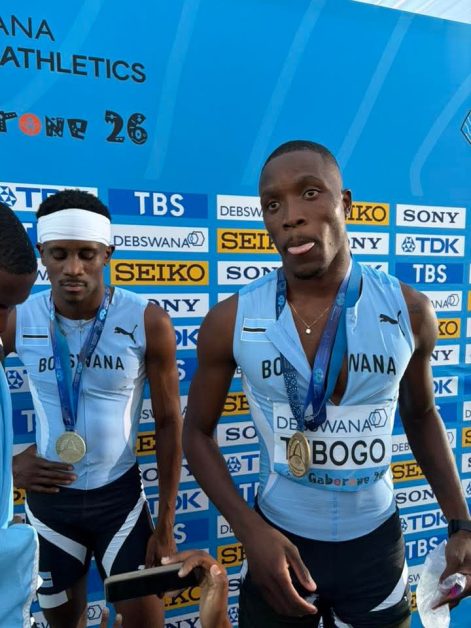
In the final race of the Debswana World Athletics Relays Gaborone 26, the host nation’s men’s 4x400m team produced a performance so blazing in its ambition and so precise in its execution that it rewrote the record books in real time. It was not merely a national record. It was not merely a championship record – shattered by an astonishing 2.53 seconds. It was the third-fastest men’s 4x400m relay in history. And it was done, defiantly, magnificently, on home soil.
This was the moment the whole weekend had been building towards. This was the culmination of the first World Athletics Series event ever held on African soil – and Botswana, as hosts, as champions, as standard-bearers for a continent on the rise, did not merely meet the occasion. They consumed it.
From the First Leg to Bedlam
Lee Eppie opened with controlled authority, a 44.26 split giving Botswana the early lead and setting the tone. Then came Letsile Tebogo – Olympic 200m champion, the most electric talent in African sprinting – striding out down the back straight with characteristic ease. His 43.50 split would have been the stuff of legend on another day. But this was a race of rare, bruising quality, and South Africa’s Lythe Pillay delivered a sensational 42.66 on the second leg to reel Tebogo in and move the Bafana Bafana relay squad to the front.
Australia were in the hunt too. Reece Holder’s 43.12 on the second leg kept the Australians dangerously close, and as the field thundered into the third exchange, it was clear this would be no procession. Three nations were fighting for a title that would have continental and historical weight.
Botswana’s Bayapo Ndori chased South African teenager Leendert Koekemoer hard through the third leg, with Australia’s Thomas Reynolds pressing close behind. As the relay sashes passed to the anchors, the gap between the three leading nations was almost invisible. A single stumble, a single hesitation, and the dream would unravel.
Kebinatshipi: The Man for the Moment
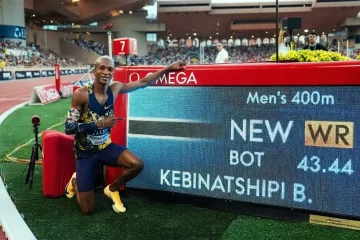
But Botswana still had Collen Kebinatshipi.
World champion. Nerve of steel. And, on the biggest stage African relay athletics has ever seen, a man who rose to the occasion with a performance that will be told and retold for decades.
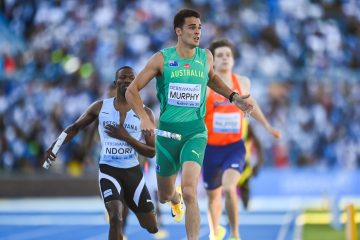
He was level with SA’s Nene and Australia’s Aidan Murphy at the 200-metre mark. For 100 metres, the three anchors ran as one – a blur of national colours and competing dreams, each man refusing to yield. And then, at the point where champions are separated from contenders, Kebinatshipi broke.
He surged. He flew. The home crowd, already at a level of noise that was close to physical, found another register entirely. Kebinatshipi crossed the line in 2:54.47, and for a moment the stadium simply shook.
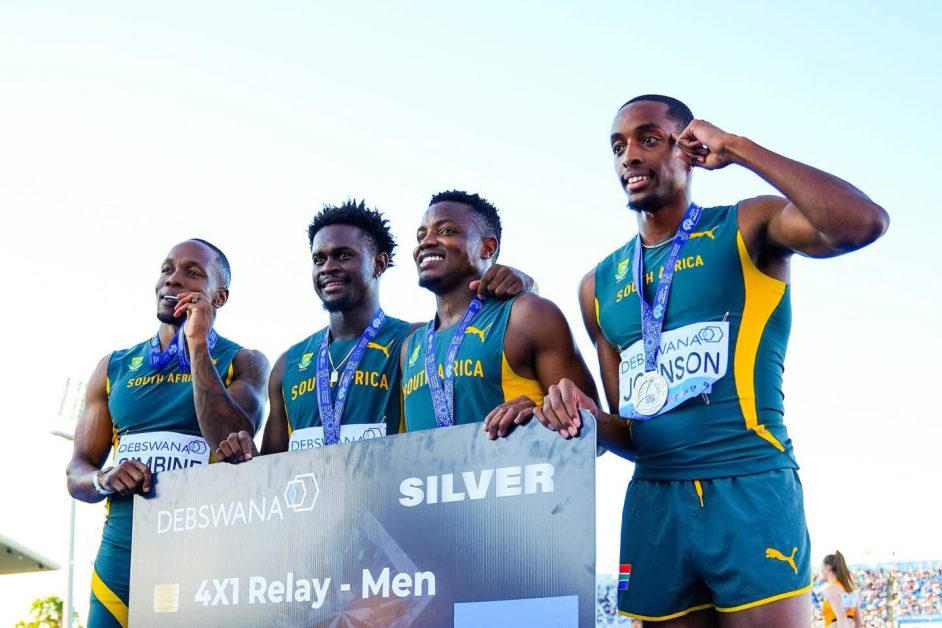
South Africa pushed hard to the end, clocking 2:55.07 for silver – the fifth-fastest performance in history. Australia’s 2:55.20 earned them bronze and the sixth fastest ever recorded. In any other final, in any other era, both teams might have won. On this Sunday evening in Gaborone, they were simply outrun by something special.
A Continent’s Moment
Portugal held off Zimbabwe to finish fourth – 2:59.75 to 2:59.79 in a frantic battle for position – while the Netherlands (3:00.13) and Belgium (3:00.69) completed the finalists. Qatar were disqualified.
In the qualifying round that ran alongside the final programme, Senegal announced themselves as surprise winners of the first heat in 3:01.28, edging Spain (3:01.37). Japan topped the second heat in 3:00.19 ahead of Brazil (3:00.45). All eight finalists, plus Brazil, Japan, Senegal and Spain from the qualifying round, have now secured their berths at the World Athletics Championships in Beijing 2027, with the final order determining lane seedings.
But the statistics – impressive as they are across the full relay programme, a weekend of world leads, area records and national records – cannot fully capture what Sunday evening in Gaborone meant. This was more than a race. This was a declaration.
For years, the narrative of African athletics has been written elsewhere, adjudicated elsewhere, celebrated elsewhere. The World Athletics Relays Gaborone 26 planted a flag. It said: the continent can host, can compete, can conquer.
And the Awesome Foursome – Eppie, Tebogo, Ndori, Kebinatshipi – wrote the chapter that no one who was there will ever forget.
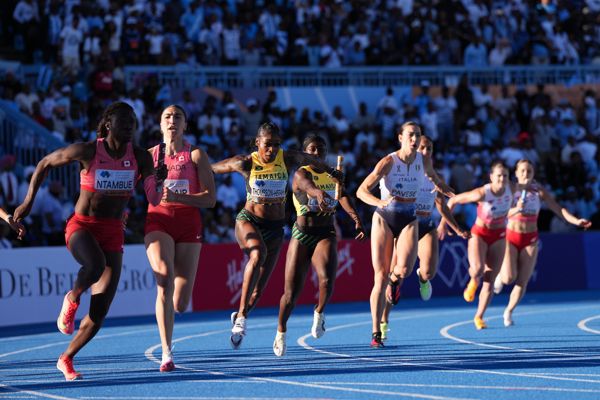
Also on Sunday, Jamaica’s women’s 4x100m team claimed gold in 42.00, with the legendary Elaine Thompson-Herah anchoring to victory in her return from injury, easing up at the line ahead of a Canadian side that ran 42.17 for a national record. Spain completed the podium in 42.31, while Italy, China and Germany were separated by just 0.007 of a second in a frantic battle for fourth, all clocking 42.61.