THE morning sun cast long shadows across Independence Square in Maputo as history unfolded beneath a blanket of tension. On this pivotal day, Daniel Chapo, a 48-year-old lawyer born in the heart of central Mozambique, stepped forward to become the nation’s fifth president – and its first to have been born after independence.
The square, typically bustling with life, stood eerily quiet under the watchful eyes of heavily armed security forces. Their presence told a story of its own – one of a nation divided, where celebration and protest danced a dangerous waltz. The gleaming rifles and armoured vehicles served as stark reminders of the bloody path that led to this moment: over 300 lives lost in post-election violence, hundreds more bearing the physical and emotional scars of political upheaval.
At precisely 11:12 local time, Chapo’s voice rang out across the square as he took the oath of office. The applause that followed seemed to echo with both hope and hesitation. Standing before approximately 1,500 supporters, his wife Gueta by his side, Chapo cut a figure of youthful leadership – at 48, representing a new generation of Mozambican governance.
The ceremony unfolded like a carefully choreographed dance: the transfer of power’s symbols from outgoing President Filipe Nyusi to Constitutional Council President Lúcia Ribeiro, and finally to Chapo himself. The 21-cannon salute thundered across the city, each boom seeming to underscore the gravity of the moment.
Yet beyond the perimeter of Independence Square, a different story played out in Maputo’s deserted streets. Opposition leader Venâncio Mondlane, recently returned from self-imposed exile, had rallied his supporters to reject what they saw as a deeply flawed election. His followers’ anger at Chapo’s claimed 65.17% victory had transformed into the largest anti-government protests in Mozambican history.
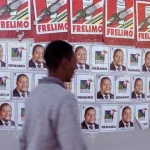
Chapo, once the governor of Inhambane province and now secretary-general of the ruling Frelimo Party, faced his first moment of truth at the podium. His inaugural address reached out across the divide: “Peace among Mozambicans,” he declared, must be the foundation of all progress. He acknowledged the protesters’ grievances and outlined his vision: a streamlined government, youth employment initiatives, and a renewed focus on health and education.
The sparse attendance of foreign dignitaries – with South African President Cyril Ramaphosa a notable exception – spoke volumes about the international community’s cautious stance. Meanwhile, the unrest had already left its mark on Mozambique’s economy, disrupting foreign businesses in this resource-rich nation of 35 million and sending ripples through regional trade networks.
As the military parade marked the ceremony’s close, Chapo assumed command of the Armed Forces of Defence of Mozambique – inheriting not just the title of commander-in-chief, but the monumental task of healing a fractured nation. The sun continued its arc across the sky, casting new shadows across Independence Square, where the echoes of both celebration and protest lingered in the air, marking the beginning of an uncertain new chapter in Mozambique’s story.