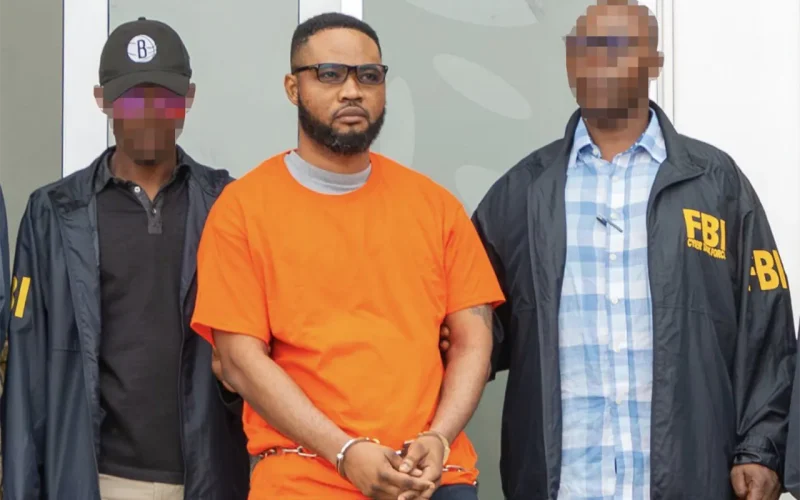
A 40-year-old Ghanaian national has pleaded guilty in a New York federal court to stealing more than $10 million from American victims through an elaborate web of fake online romances – in what prosecutors describe as one of the most brazen cyber-fraud operations to emerge from West Africa in recent years.
Derrick Van Yeboah – known to his victims simply as “Van” – entered the guilty plea before US District Judge Arun Subramanian on Thursday, admitting to conspiracy to commit wire fraud. He now faces a maximum of 20 years in a US federal prison.
The case lays bare the transnational machinery of a criminal organisation primarily based in Ghana that collectively defrauded dozens of victims – mostly vulnerable older men and women – of more than $100 million. Van Yeboah, according to court documents, personally accounted for $10,149,429.17 of those losses.
“Van Yeboah cruelly exploited the vulnerability of elderly people searching for companionship online — for over $10 million in illicit profit.”
US Attorney Jay Clayton, Southern District of New York
THE SCHEME
The fraud operation was painstakingly constructed. Conspirators invented fictional romantic identities – complete with photographs, backstories, and months of tender correspondence – and deployed them against their targets on dating websites and social media platforms. Once a victim’s trust was won, the demands for money followed: urgent medical bills, business emergencies, stuck investments. When victims ran out of funds, some were persuaded to become unwitting money-laundering conduits, forwarding other victims’ stolen money deeper into the network.
In parallel, the same organisation ran business email compromise (BEC) attacks – impersonating vendors, lawyers or executives to trick companies into wiring funds to fraudulent accounts. The proceeds were then laundered back to West Africa through a layered system of accounts designed to obscure the trail.
Van Yeboah was not a peripheral figure. He is accused of personally conducting romance scam communications – inhabiting fake personas for extended periods, maintaining the emotional deception required to keep victims engaged and financially compliant.
The case is a damaging headline for Ghana and for the African continent’s broader ambition to be taken seriously as a digital economy. Cyber fraud originating in West Africa – commonly labelled “sakawa” in Ghana – has for years undermined trust in African digital commerce and tainted the reputation of millions of law-abiding nationals abroad.
Ghana’s cooperation with US investigators – credited by prosecutors and the Department of Justice’s Office of International Affairs – is, however, a signal that Accra is willing to hold its own criminals to account. Van Yeboah was extradited to the United States in August 2025.
US Attorney Jay Clayton, who also serves as Chairman of the US Securities and Exchange Commission, was unsparing in his remarks. He urged Americans to exercise vigilance on dating platforms and warned against sending money to anyone encountered online – “especially if it seems too good to be true.”
Van Yeboah is scheduled for sentencing on 3 June 2026. Beyond imprisonment, he has agreed to pay full restitution of $10,149,429.17 – a sum representing the shattered savings and broken hearts of the people he deceived.
The prosecution is being handled by Assistant US Attorneys Kevin Mead and Mitzi Steiner of the Office’s Complex Frauds and Cybercrime Unit, with investigative credit going to the Federal Bureau of Investigation.
For the dozens of victims – many elderly, many now financially ruined – Thursday’s guilty plea offers some measure of accountability. For the continent, it is a reminder that the crimes of the few carry consequences for the many.