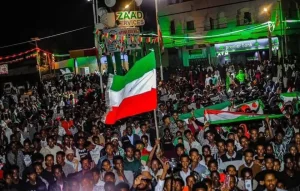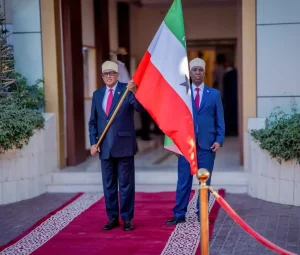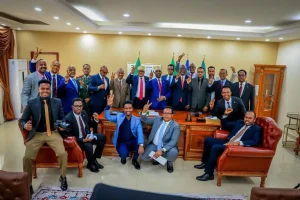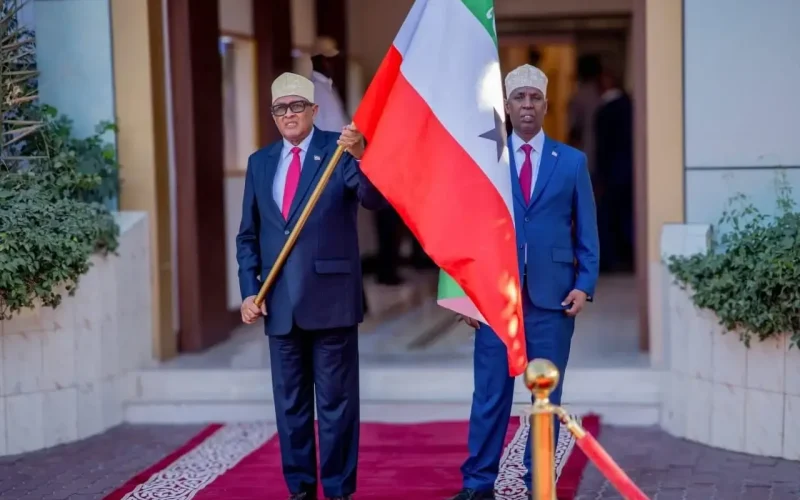
A wave of international condemnation has swept across Africa and the Middle East following Israel’s controversial recognition of Somaliland as a sovereign state, with major regional powers warning that the unilateral action threatens to destabilise the Horn of Africa and undermine the global legal order.
Saudi Arabia’s Foreign Ministry issued a sharp rebuke, affirming the Kingdom’s “full support for the sovereignty of the brotherly Federal Republic of Somalia, and for its unity and territorial integrity.” The statement rejected what it termed “the announcement of mutual recognition between the Israeli occupation authorities and the Somaliland region,” describing it as an action that “entrenches unilateral secessionist measures that violate international law.”
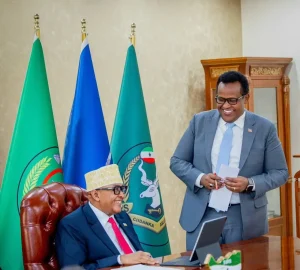
The recognition, announced on December 26 following a virtual meeting between Israeli Prime Minister Benjamin Netanyahu and Somaliland President Abdirahman Mohamed Abdillahi, has triggered unprecedented diplomatic fallout. Turkey, Egypt, Djibouti, and the African Union joined Somalia in condemning the move, with foreign ministers coordinating their response through emergency consultations.
Egyptian Foreign Minister Badr Abdel Atty held separate calls with his counterparts from Somalia, Turkey, and Djibouti, with the ministers jointly warning that recognising secessionist regions “constitutes a dangerous precedent, contradicts principles of international law and the UN Charter, and risks destabilising the international system.”
The African Union and the League of Arab States have both strongly rejected the recognition, emphasising their commitment to Somalia’s territorial integrity.
Twenty-One Nations Issue Unprecedented Joint Condemnation
In an extraordinary show of unity, 21 Arab, Islamic and African countries issued a joint statement condemning Israel’s recognition, warning of serious repercussions to peace and security in the Horn of Africa, the Red Sea region, and international peace and security as a whole.
The signatories include Jordan, Egypt, Saudi Arabia, Turkey, Iran, Pakistan, Qatar, Algeria, Iraq, Kuwait, Oman, Libya, Palestine, Somalia, Sudan, Yemen, Comoros, Djibouti, Gambia, Maldives, and Nigeria, along with the Organisation of Islamic Cooperation. Significantly, the three countries that normalised ties with Israel through the 2020 Abraham Accords – the United Arab Emirates, Bahrain, and Morocco – did not sign the statement.
The statement condemned Israel’s action as reflecting the country’s “clear and complete disregard for international law” and expressed categorical rejection of any attempts to link Somaliland recognition with plans to displace Palestinians from their land.
The countries voiced support “for the sovereignty of Somalia and rejected any measures that would undermine its unity, territorial integrity, and sovereignty over all its lands.”
UAE Accused of Orchestrating Recognition
Sources close to the Somali cabinet indicate mounting evidence that Israel’s recognition resulted from a months-long process orchestrated by the United Arab Emirates. The allegations have intensified pressure on President Hassan Sheikh Mohamud to take decisive action against Abu Dhabi.
According to officials familiar with cabinet discussions, Somalia is seriously considering severing all ties with the UAE. Immediate steps under consideration include closing Somali airspace to UAE flights and shutting down the Bosaso base allegedly used by the Emirates to transport mercenaries and weapons connected to Sudan’s civil war.
President Mohamud reportedly told advisers he “no longer intends to yield to mounting internal and external pressure,” characterising the UAE’s actions as targeting Somalia’s sovereignty and territorial integrity.
Recognition Comes Amid Somaliland’s Internal Crisis
The Israeli recognition arrives as Somaliland faces its most severe internal challenges since declaring independence from Somalia in 1991. The breakaway region, dominated by the Isaaq clan, effectively controls only 65-70 percent of its claimed territory.
In 2023, Somaliland forces suffered a devastating military defeat in Lasanod after attacking the Dhulbahante-dominated city, resulting in significant civilian casualties and the loss of substantial territory. The defeated region established the North-East State administration, which remains part of Somalia.
More recently, deadly clashes erupted in December 2025 in Boroma, where Somaliland forces killed 19 people during clan violence between the Ise and Gadabursi communities. The government’s heavy-handed response sparked widespread opposition in the western territories.
Analysts warn that recognising such a fragmented and contested entity could fuel further conflict in an already volatile region. The breakaway region’s opponents, particularly in eastern territories, remain heavily armed and opposed to secession.
International Law Experts Warn of Precedent
Legal experts note that Somaliland lacks recognition from any other nation, the African Union, the United Nations, or the Arab League. The unilateral Israeli recognition defies decades of international consensus on respecting existing borders and the principle that territorial changes require broad international acceptance.
Netanyahu expressed plans to “immediately expand relations with the Republic of Somaliland through extensive cooperation in the fields of agriculture, health, technology, and economy.” He thanked Foreign Minister Gideon Sa’ar and Mossad chief David Barnea for their contributions to the development.
The African Union Commission, which congratulated Somalia on peaceful municipal elections in Mogadishu just one day before the Israeli announcement, has reaffirmed its commitment to Somalia’s unity and territorial integrity.
As diplomatic tensions escalate, regional observers fear the recognition could trigger a broader crisis affecting Somalia’s relations with neighbouring countries and international partners, potentially undermining fragile stability gains achieved through Turkish-mediated negotiations that defused similar tensions in late 2024.