A coordinated global operation led by INTERPOL has resulted in the safeguarding of 4,414 potential victims of human trafficking and the detection of 12,992 irregular migrants across 119 countries, with significant enforcement action taking place across the African continent.
Operation Liberterra III, conducted from 10 to 21 November 2025, led to 3,744 arrests worldwide, including more than 1,800 for human trafficking and migrant smuggling offences. The operation mobilised over 14,000 law enforcement officers globally, with extensive participation from African nations.
INTERPOL Secretary General Valdecy Urquiza emphasised the evolving nature of the threat: “Criminal networks are evolving, exploiting new routes, digital platforms and vulnerable populations. Identifying these patterns allows law enforcement to anticipate threats, disrupt networks earlier and better protect victims.”
Shifting Trafficking Patterns Impact Africa
The operation revealed concerning trends affecting the continent. While trafficking-fueled scam schemes remain a serious concern in both Asia and Africa, improved intelligence and detection mechanisms are yielding results, with more arrests and hundreds of victims being repatriated.
Significantly, cases involving victims from the Americas and Asia being trafficked to Africa point to changing trafficking dynamics, contrasting with historically observed patterns of African victims being trafficked abroad. Sexual exploitation remains highly reported, but forced labour and forced criminality are increasing, with domestic servitude and organ removal also detected.
Pressure continues along Atlantic and Mediterranean maritime routes, particularly from West and North Africa toward Europe, with authorities intercepting multiple high-risk sea departures involving overcrowded vessels with minimal safety equipment.
Major Crackdown on West African Trafficking Networks
In a significant breakthrough, authorities across Benin, Burkina Faso, Congo, Côte d’Ivoire, Ghana, Senegal and Sierra Leone reported extensive action against pyramid-style human trafficking networks. These operations led to the rescue of more than 200 victims and the disruption of multiple recruitment and exploitation hubs.
These schemes, specific to Central and West Africa, involve recruiting victims under false pretences of work abroad, charging exorbitant “recruitment fees”, then forcing them into recruiting friends or family members in exchange for improved conditions. The self-sustaining nature of these networks makes them particularly insidious and difficult to dismantle.
Behind the statistics are devastating individual stories. In Mozambique, authorities rescued an eight-year-old boy who had been kidnapped for organ removal, underscoring the brutal reality of trafficking crimes.
In Mali, authorities identified 47 Nigerian women who had been trafficked into the country for sexual exploitation, demonstrating the cross-border nature of trafficking operations within the continent.
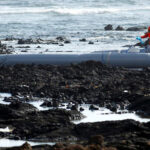
Authorities intercepted multiple dangerous sea departures from African shores. One interception alone involved 245 migrants departing from Senegal, with further cases recorded off the coasts of Guinea-Bissau, Morocco and Algeria.
Acting on intelligence, Algerian authorities intercepted a large inflatable boat carrying 71 people of various nationalities, including seven minors. Three suspected facilitators were arrested, and authorities seized communications equipment, cash and mobile phones. Investigations are ongoing to dismantle the wider network and its financing structure.
To support real-time checks against INTERPOL databases and facilitate intelligence sharing, four operational coordination units were established globally, including one in Algeria. The operation benefited from collaboration with AFRIPOL and other regional partners.
Participating African countries included: Algeria, Angola, Benin, Botswana, Burkina Faso, Burundi, Cabo Verde, Cameroon, Central African Republic, Chad, Congo, Democratic Republic of Congo, Côte d’Ivoire, Djibouti, Eswatini, Ethiopia, Gabon, Gambia, Ghana, Guinea, Guinea Bissau, Kenya, Libya, Madagascar, Malawi, Mali, Mauritius, Morocco, Mozambique, Namibia, Niger, Nigeria, Sao Tome and Principe, Senegal, Sierra Leone, Somalia, South Africa, Sudan, Togo, Tunisia, Uganda and Zimbabwe.
Awareness and Prevention Efforts Continue
Additional awareness campaigns were carried out across multiple continents, including in South Africa and Tunisia, highlighting the importance of public engagement in combating these crimes.
Authorities are increasingly using online monitoring to detect and track trafficking and smuggling networks, while human trafficking and migrant smuggling continue to be closely linked to crimes such as document fraud, money laundering and drug trafficking.
The operation was supported by multiple international partners and funded by the United Kingdom’s Home Office through the National Crime Agency, with additional support from the European Union, Global Affairs Canada, and the US Bureau of International Narcotics and Law Enforcement Affairs.
More than 720 new investigations were opened during the operation, many of which remain ongoing as authorities work to dismantle criminal networks and bring traffickers to justice.