AT least 80 people, including refugees, died in three separate maritime disasters off the coasts of Tunisia and Libya this week, prompting renewed calls from the UN Refugee Agency for enhanced search-and-rescue capabilities and expanded legal migration channels.
The deaths bring this year’s total to over 1,600 people killed or missing on Mediterranean and West Africa migration routes, according to UNHCR figures—less than half of last year’s toll of 3,530, but still representing what the agency characterised as an unacceptably high loss of life.
The Incidents
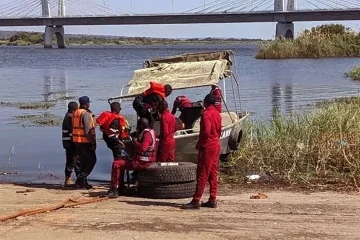
The first disaster occurred on Wednesday when a vessel carrying 70 people capsized after departing from Salakta, south of Mahdia in Tunisia. The Tunisian Coast Guard rescued 30 survivors, primarily nationals of Cameroon, Côte d’Ivoire, and Guinea, who received medical assistance. The remaining 40 passengers are presumed dead.
On the same day, a second boat departing from Zouara in western Libya sank off the Tunisian coast with 72 people aboard. Survivors—32 individuals from Yemen, Bangladesh, Ghana, Pakistan, Sierra Leone, Gambia, and Guinea—reported that 40 people perished. All survivors received medical treatment following their rescue.
A third vessel carrying 100 people, also from Zouara, was successfully intercepted by the Tunisian Coast Guard after three days at sea. All passengers, from Syria, Iraq, Egypt, Pakistan, and Bangladesh, were safely disembarked in Sfax.
Agency Response and Policy Recommendations
Matthew Saltmarsh, UNHCR spokesperson, described the deaths as “avoidable” and called the situation “appalling.” The agency extended condolences to the victims’ families while acknowledging Tunisian authorities’ life-saving efforts.
UNHCR has consistently advocated for increased resources and coordinated international action to strengthen search-and-rescue operations in the Mediterranean. The agency emphasised the need for expanded “safe and legal pathways” that would allow people fleeing conflict and persecution to access protection without resorting to dangerous sea crossings facilitated by human traffickers and smugglers.
The organisation is currently promoting what it terms a “route-based approach” with national governments. This strategy aims to strengthen protection mechanisms along key migration corridors between sub-Saharan Africa and the Mediterranean, with objectives including reducing fatalities, protecting vulnerable populations, providing alternatives to hazardous journeys, and supporting states in managing mixed flows of refugees and migrants.
Context
The Mediterranean Sea remains one of the world’s deadliest migration routes, with departures from Libya and Tunisia representing major pathways for people from sub-Saharan Africa, the Middle East, and South Asia attempting to reach Europe. The routes are characterised by unseaworthy vessels, overcrowding, and limited rescue capacity—factors that contribute to the high casualty rates.
The diversity of nationalities represented in this week’s incidents—spanning three continents—illustrates the complex nature of migration flows through North Africa, where refugees fleeing persecution travel alongside economic migrants seeking better opportunities.