NIGERIA’S Foreign Affairs Minister has dismissed the possibility of state-sanctioned religious persecution in the country, responding to U.S. President Donald Trump’s threat of military intervention over the killing of Christians by Islamist insurgents.
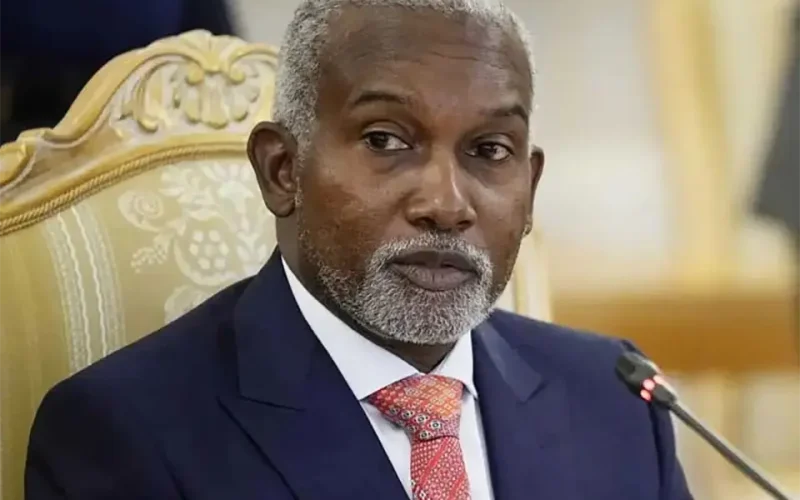
Foreign Minister Yusuf Tuggar, speaking in Berlin alongside his German counterpart Johann Wadephul, pointed to Nigeria’s constitutional protections as evidence that government involvement in religious persecution was legally impossible.
“This is what shows that it’s impossible for there to be a religious persecution that can be supported in any way, shape or form by the government of Nigeria at any level, be it federal, be it regional, be it local, it’s impossible,” Tuggar said, citing the country’s “constitutional commitment to religious freedom and rule of law.”
The comments came a day after Trump announced on Truth Social that his administration would immediately halt all aid and assistance to Nigeria, Africa’s most populous nation and top oil producer.
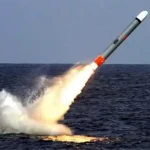
Trump warned of possible “fast” military action if Nigeria fails to crack down on Islamist groups targeting Christians, saying U.S. forces would go in “guns-a-blazing” to “completely wipe out the Islamic terrorists who are committing these horrible atrocities.”
The Nigerian presidency responded by stating it would welcome American assistance in fighting Islamist insurgents, provided the country’s territorial integrity is respected.
An adviser to Nigerian President Bola Ahmed Tinubu told Reuters that Trump’s comments were not being taken literally and that the U.S. president actually “thinks well of Nigeria.”
Tinubu’s Orders to Military Chiefs
The diplomatic exchange comes days after President Tinubu on Thursday issued stern orders to Nigeria’s newly appointed military leadership to decisively defeat terrorism and banditry that has plagued the country for over 16 years.
Speaking at the Presidential Villa after decorating the service chiefs with their new ranks, Tinubu declared that citizens expect results rather than excuses from the armed forces.
“We cannot allow the crisis that began in 2009 to persist any longer,” Tinubu said. “Nigerians expect results, not excuses. I also urge you to be innovative, pre-emptive, and courageous. Let’s stay ahead of those who seek to threaten our peace.”
The president expressed particular concern about emerging armed groups that have regrouped in parts of the North-Central, North-West, and southern regions, demanding swift action to prevent new threats from taking root.
“Security threats are constantly evolving and mutating,” Tinubu said. “We must not allow these new threats to fester. We must be decisive and proactive. Let us smash the new snakes right at the head.”
16 Years of Insurgency and Violence
Nigeria’s security crisis began in 2009 when Boko Haram launched an insurgency in Borno State, seeking to establish an Islamic caliphate. The conflict has since claimed at least 35,000 lives and displaced more than 2 million people, according to United Nations estimates.
The insurgency has particularly affected Christian communities in northeastern Nigeria, with churches and Christian villages frequently targeted by Boko Haram and its offshoot, Islamic State West Africa Province. Hundreds of Christians have been killed or abducted over the years, with some captives forced to convert or face execution.
In the northwest, criminal bandit groups have evolved from cattle rustling to mass kidnappings, attacking schools, villages, and travellers on highways. Thousands of students have been abducted from schools in coordinated raids, with many held for months while families struggle to pay ransoms.
The violence has devastated farming communities, disrupted education, and contributed to Nigeria’s food security crisis. Entire villages have been abandoned as residents flee repeated attacks, while security forces struggle to cover vast, remote territories.
Kidnapping for ransom has become a lucrative criminal enterprise, with gangs targeting not only rural communities but also commuters on major highways and residents in urban areas.
New Military Leadership
The Thursday ceremony at the Council Chambers was attended by Vice President Kashim Shettima, Senate President Godswill Akpabio, Speaker Tajudeen Abbas, and governors from Kwara, Jigawa, Lagos, and Ogun states, among other senior government officials.
The newly promoted and decorated service chiefs include Chief of Defence Staff General Olufemi Oluyede, Chief of Defence Intelligence Lieutenant General Emmanuel Parker Undiandeye, Chief of Army Staff Lieutenant General Waidi Shaibu, Chief of Naval Staff Vice Admiral Idi Abbas, and Chief of Air Staff Air Marshal Sunday Kelvin Aneke.
Tinubu emphasised the need for coordination among security agencies and urged the military leadership to leverage technology in their operations.
“I advise you to work together as a team. Compare notes, exchange information effectively, and follow up proactively to ensure a seamless process,” the president said. “Work with other security agencies and defeat this enemy once and for all. We need to clean them up, clear them out.”
The president assured the armed forces of federal government support for their operations, describing the safety and security of Nigerians as paramount to national development.
Responding on behalf of the service chiefs, General Oluyede thanked the president for the appointments and called on Nigerians to support military efforts to secure the country.
“Security should be our business, but without the support of Nigerians, we can hardly achieve anything,” Oluyede said. “I want to encourage Nigerians of all ethnicities to support us, and ultimately, we will make Nigeria a safer place. That’s our promise to you.”
International Implications
Trump’s threat marks a significant escalation in U.S. rhetoric toward Nigeria, a key African ally and major oil exporter to the United States. Nigeria is also the continent’s largest economy and most populous country, with roughly 220 million people split roughly evenly between Muslims in the north and Christians in the south.
The U.S. has provided military assistance to Nigeria in the past, including training, intelligence sharing, and equipment for counterterrorism operations. The suspension of aid could complicate Nigeria’s ongoing military campaigns against insurgent groups.
The timing of Trump’s statement, coming just days after Tinubu’s charge to military chiefs to end the insurgency, underscores growing international frustration with the persistence of violence in Nigeria despite repeated government pledges to restore security.
The Nigerian government has consistently maintained that the violence is criminal rather than religiously motivated, though critics argue the state has not done enough to protect vulnerable Christian communities in the northeast.
Additional reporting from Reuters. The foreign minister’s comments were made in Berlin on Tuesday, November 4, 2025.