SOUTH Africa’s President Cyril Ramaphosa has called on Africa to convert its vast natural energy wealth into reliable electricity and industrial jobs, warning that geopolitical volatility and the ongoing Middle East conflict are sharpening the urgency of the continent’s energy security agenda.
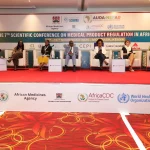
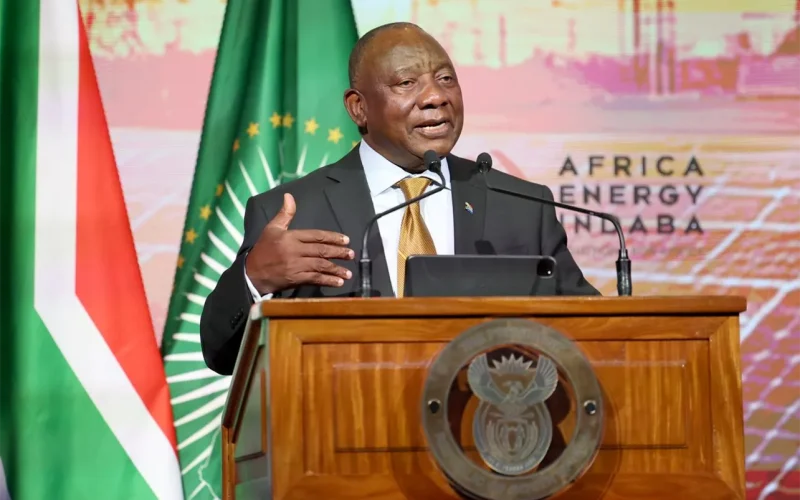
Delivering the keynote address at the 18th annual Africa Energy Indaba at the Cape Town International Convention Centre on Wednesday, Ramaphosa told more than 1,600 delegates from 37 African countries that the continent’s abundant solar, wind, hydro and mineral resources placed it in a uniquely strong position — but only if matched by sustained implementation.
“The present moment calls for unity of effort,” the President said. “It calls for a shift from potential to delivery, from promise to construction.”
The Indaba, running under the theme “Igniting the Power Revolution”, has drawn 15 African energy ministers and 173 expert speakers, with more than 4,300 visitors expected at the accompanying exhibition.
Ramaphosa used the address to focus on the continent’s most persistent energy challenge. More than 600 million Africans remain without electricity access, he said — a gap he described as directly responsible for lost production, interrupted services and constrained investment. He argued that industrialisation could not proceed without “secure supply chains, resilient villages, towns and cities, and reliable, affordable and scalable energy.”
The President placed significant emphasis on the Ten-Year Africa Energy Infrastructure Investment Plan, launched under South Africa’s G20 Presidency, which he described as a shift from fragmented initiatives to a coordinated pipeline of bankable investment projects. He called on financiers and governments alike to align behind the plan, acknowledging that public finance alone could not fund Africa’s infrastructure needs but could play a “catalytic role” in de-risking projects.
He also sounded a geopolitical alarm, noting that the escalating Middle East conflict was already straining supply chains and pushing energy prices higher. The lessons of the Russia-Ukraine war and the COVID-19 pandemic, he said, had exposed the vulnerability of import-dependent African economies – making regional energy integration not a strategic nicety but a survival imperative.
Energy and Electricity Minister Dr Kgosientsho Ramokgopa, who opened the Indaba on Tuesday, set the tone by declaring that “the global order, as we have known it for decades, is not merely evolving – it is being recalibrated in real time,” adding that energy had become “the silent architecture of global power.”
South Africa is simultaneously attempting to establish a fully independent Transmission System Operator, launch the first round of privately financed transmission expansion, and reform municipal electricity revenue systems – one of the most complex multi-layered energy reforms attempted by any market globally.
Ramaphosa closed by calling for Africa to be known not only for its ambition but for its implementation. “Africa has what it needs to succeed,” he said. “The remaining task is to match this potential with sustained implementation – to translate plans into projects, and to turn projects into reliable power that supports industry, jobs and dignity.”