ACROSS Africa, a disturbing pattern has emerged: armed forces arriving under promises of security and stability have instead perpetrated the very atrocities they claimed to prevent. From Mali to Kenya, reports of sexual violence, extrajudicial killings, and systematic abuse by supposed peacekeepers reveal a crisis of accountability in international military interventions.
Russia’s Africa Corps: Wagner’s Violent Legacy Continues
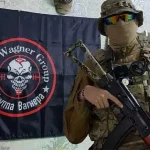
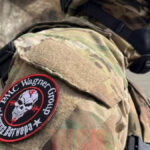
In the dusty refugee camps along Mali’s border with Mauritania, survivors interviewed by the Associated Press tell stories that contradict Russia’s stated mission of bringing stability to the troubled Sahel region. What began as the Wagner Group’s mercenary operations has transformed into the Africa Corps, a unit formally under Russia’s defence ministry – but witnesses say the brutality remains unchanged.
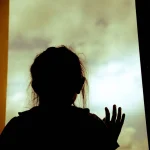
Medical workers treating refugees report cases that illustrate the human cost of this mission. A 14-year-old girl arrived at a makeshift clinic in Mauritania with a life-threatening infection following sexual assault, her family telling AP reporters she was raped by Russian fighters who had beheaded her uncle before her eyes. The girl now cannot remember the attack, speaking only to one of just six psychiatrists in the entire country.
Her case represents only what has surfaced. Aid workers describe a wall of silence among refugees from conservative societies where shame prevents victims from seeking help. When asked to document how many assailants attacked the teenager, even the local nurse felt too embarrassed to pose the question.
A Pattern of Predation Under Cover of Protection
The allegations against Africa Corps echo earlier accusations against Wagner forces. One refugee interviewed by the AP described witnessing mass rapes in her village in March 2024, including the assault of her 70-year-old mother, who died a month later. In the village of Moura, a 2023 UN report documented at least 58 women and girls raped or sexually assaulted in an attack by Malian troops and armed white men – an incident that led Mali’s government to expel UN peacekeepers entirely.
The transformation from Wagner to the Africa Corps appears to have been organisational rather than operational. Refugees continue describing attacks by “white men” who burn homes, execute civilians, and commit sexual violence. Russian officials have not responded to the AP’s questions about these allegations, while Kremlin-aligned media dismisses investigations as disinformation.
The Exploitation of Africa’s Security Vacuum
These abuses occur within a broader context of Africa’s security challenges. Mali has endured a decade-long conflict involving government forces, multiple armed groups, and international interventions. The country faces threats from al-Qaeda-affiliated JNIM, which medical workers say has also committed sexual assaults. One clinic in the Mopti area treated 28 women in six months who reported assaults by JNIM militants.
Yet the presence of foreign forces ostensibly deployed to counter such threats has added another layer of violence. Refugees interviewed by the Associated Press described attacks that followed a familiar pattern: armed men arriving at villages, separating families at gunpoint, executing male relatives, and assaulting women and girls.
Four women separately described to AP reporters encounters with “armed white men” that resulted in sexual violence or attempts. One watched several men drag her 18-year-old daughter into their house; she fled and has not seen her daughter since. Another said what happened to her “stays between God and me.” A third had scratch marks on her neck but could not speak about her experience.
The Silence That Enables Impunity
Medical workers note a stark difference between Mali and other conflict zones. In eastern Congo, where armed groups have operated for decades, survivors came forward in large numbers. In Mali and Mauritania, shame and fear keep most silent.
This silence extends beyond individual trauma to systemic impunity. Mali’s expulsion of UN peacekeepers following the Moura report effectively eliminated independent monitoring of conflict-related sexual violence. Thousands of new refugees, mostly women and children, now shelter just inside Mauritania in structures made of fabric and branches, far from the nearest refugee camp and its services.
Aid organisations report that survivors typically seek medical care only when complications become life-threatening, as with the 14-year-old who collapsed after a three-day journey by donkey cart. Her family had not brought her to a clinic because they had no money. “If you have nothing, how can you bring someone to a doctor?” her grandmother asked.
Parallel Concerns About Peacekeeping Forces
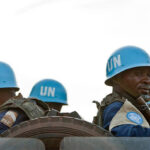
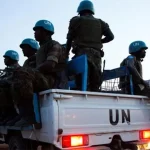
The Mali situation follows similar revelations about peacekeeping forces elsewhere in Africa, including Kenya, where reports have emerged of abuses by those deployed to maintain security. The pattern suggests a systemic problem with how international military interventions are conducted and monitored across the continent.
These cases raise fundamental questions about the purpose and oversight of foreign military deployments in African nations. Forces that arrive promising stability but commit atrocities against civilians undermine both immediate security and long-term development. They exploit the very vulnerabilities they claim to address.
The Cost of Looking Away
The women treating survivors describe the psychological toll of bearing witness to preventable suffering. One medical team leader broke into tears discussing the worsening conflict: “There is less regard for human life, whether it’s men, women or children. It’s a battle.”
As Russia’s Africa Corps continues operations in Mali and potentially elsewhere on the continent, the gap between stated objectives and documented actions grows wider. The girls and women fleeing across borders carry evidence of systematic abuse, yet international accountability mechanisms remain largely absent. Mali’s government maintains its alliance with Russia despite mounting testimony from its own displaced citizens.
The transformation of Wagner into Africa Corps may have changed the organizational chart, but for refugees hiding in bushes during three-day journeys to safety, terrified at every sound, the distinction is meaningless. The forces that promised to restore peace continue to wage war on the most vulnerable.