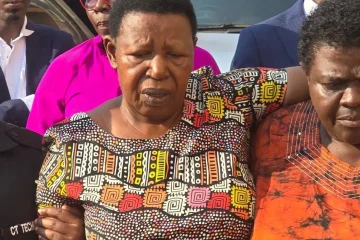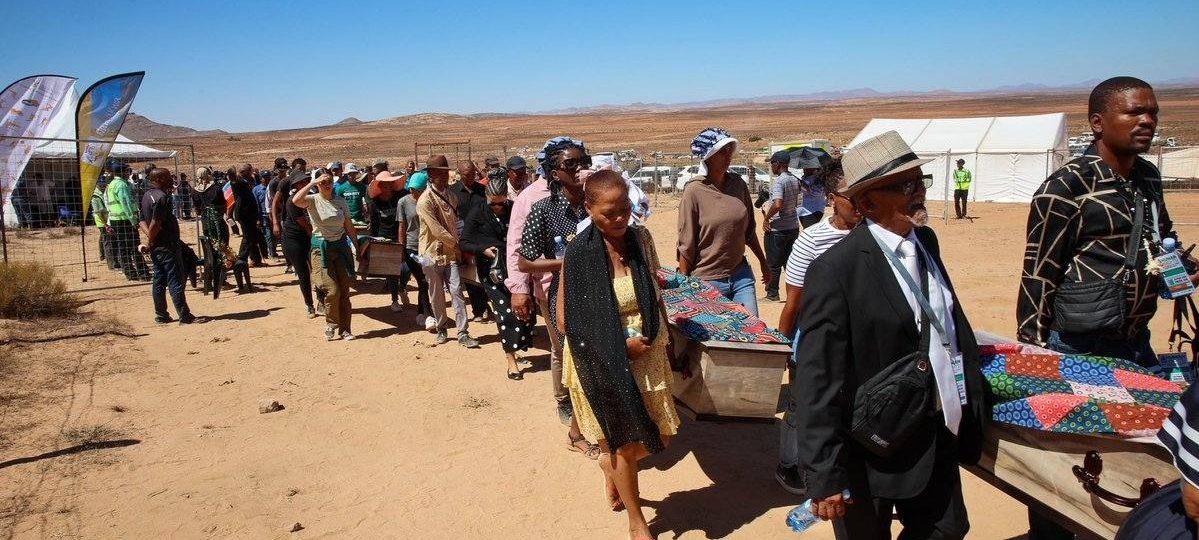

THE Northern Cape wind was cold, and the sky a vast, cloudless expanse as the descendants of the Nama, Khoi, Korana, Griqua and San people gathered at Kinderlê on Monday to do something their forebears had been denied for over a century: bury their dead with dignity.
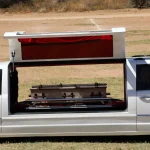
Sixty-three individuals – their bones carried across oceans, stored in the cabinets of European museums, catalogued as scientific specimens rather than mourned as human beings – came home to the red earth of South Africa. Wooden coffins, draped in the colours of mourning and memory, were carried by members of the very communities these ancestors once belonged to. Prayers were sung in Nama and Afrikaans. Elders performed ancient rites. Women wept and ululated. The ceremony was sombre, yet searing in its beauty.
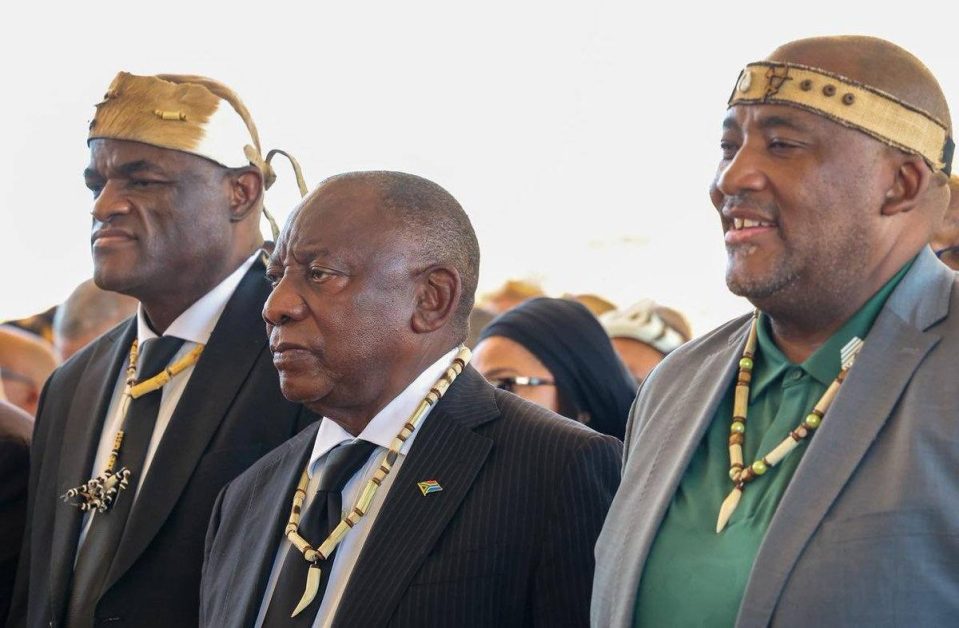
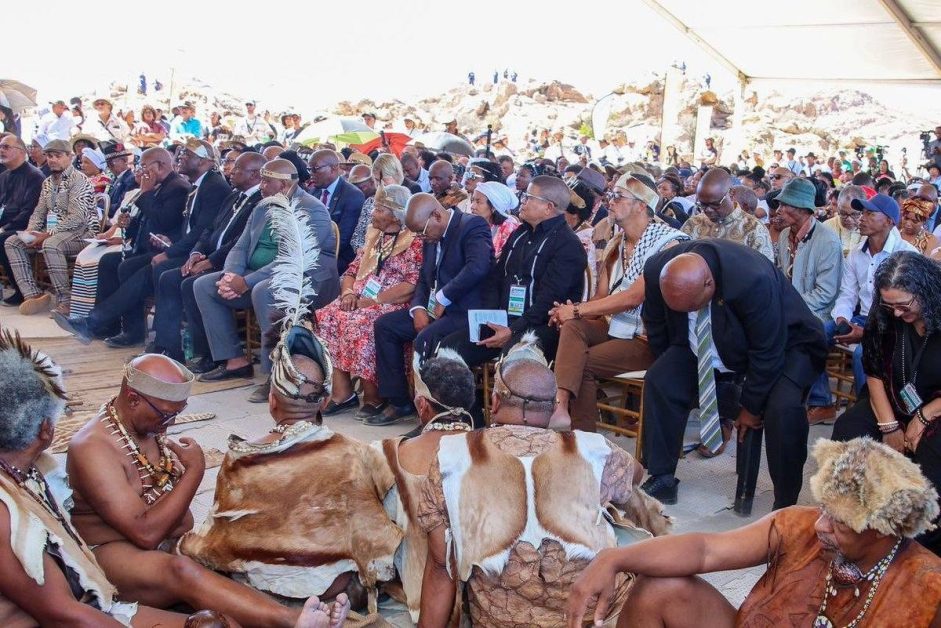
President Cyril Ramaphosa, flanked by the Minister of Sport, Arts and Culture, Gayton McKenzie, Northern Cape Premier Zamani Saul, traditional leaders, and representatives from the Hunterian Museum at the University of Glasgow, led a nation in an act of restoration that was as political as it was spiritual.
“A dignified burial is but the least we can do as the democratic government to honour these, our countrymen and countrywomen, who were victims of a terrible past.”
President Cyril Ramaphosa
COLONIAL SCIENCE AS COLONIAL CRIME
The history that brought these remains to Kinderlê is one of extraordinary cruelty dressed in the language of science. From the late 18th century through the 19th century, European colonisers and their academic institutions systematically desecrated the graves of indigenous southern Africans, exhuming bodies to feed a grotesque intellectual enterprise – scientific racism.
Ramaphosa did not flinch from naming that history in its full horror. “The Nama, Khoi, Korana, Griqua and San people bore the brunt of European conquest of southern Africa,” he told the gathered mourners. “They were dispossessed of their lands, and unimaginable violence was unleashed upon them.”
That violence did not end at death. “Their remains were dug up from graves and sold to museums and medical institutions in Europe,” the President said. “The sale of human remains of indigenous peoples for study in Europe was rooted in racism and used to advance theories of European racial superiority.”
The remains buried on Monday had been held at two institutions: five individuals, along with two plaster face-casts and a smoking pipe excavated from a burial ground, had been repatriated from the Hunterian Museum following discussions that began in 2022. These remains had been unethically exhumed between 1868 and 1924 from graves in the Northern Cape before being donated to the Scottish university. The remaining individuals had been held at the Iziko Museum – formerly the South African Museum – since the 1920s.
Representatives of the Hunterian Museum, Dr Steph Scholten and Dr Andy Mills, attended the ceremony. Their presence – quiet, respectful = was itself a statement about the long road from extraction to restitution.
“In life, they were robbed of their names, their culture, and their very humanity.”
President Ramaphosa
A CEREMONY WRITTEN IN GRIEF AND GRACE
Kinderlê is not an arbitrary choice of burial site. It is a place saturated with tragedy. It was here, in 1867, that 32 Nama children were massacred while their parents attended a church service. The Northern Cape Reburial Task Team’s decision to inter the ancestors alongside those children was deliberate and profound – an act of communal memory, a refusal to scatter the dead across unmarked spaces where they might be forgotten again.
As the coffins were lowered into the ground, descendants from the Nama, Korana and Griqua communities performed final rites rooted in centuries-old tradition. The rituals – the specific prayers, the songs, the laying of symbolic objects – are more than ceremony. For communities whose spiritual practices hold that the dead cannot rest until properly mourned and buried by their own, these rites carried an urgency that cut across grief and politics alike.
Now that the proper customs have been observed, the community believes their ancestors’ spirits – long restless, long wandering across the land where they once lived – can at last find peace. They are no longer specimens. They are no longer property. They are home.
Ramaphosa, speaking directly to the dead as much as to the living, captured the weight of the moment: “Their restless spirits were left to wander here in the Northern Cape, the land where they once lived. Today we welcome their mortal remains, that they may at last be reunited with their spirits.”
“They were not nobodies. They came from communities. They had families. Each and every one of their lives had meaning and purpose.”
President Ramaphosa
UBUNTU, THE CONSTITUTION AND THE UNFINISHED BUSINESS OF EUROPE
Ramaphosa was careful to frame Monday’s ceremony not merely as a historical event but as a living obligation – one rooted in both the philosophy of Ubuntu and the hard text of South Africa’s democratic Constitution.
“The return of our ancestors to their descendant communities is a vital act of restoration and restitution that goes beyond acknowledging the colonial legacy,” the President said. “It is also a manifestation of ubuntu — a recognition of our common humanity.”
He invoked the Constitution’s preamble – its call to heal the divisions of the past and establish a society founded on social justice and fundamental human rights – as the legal and moral basis for continuing this work. South Africa, he noted, has pursued legislative reform, land restitution, recognition of traditional leadership structures, and support for cultural and language revival as part of its commitment to redressing historical exclusion.
But the President’s most pointed words were aimed westward. Thirty years after serious European scholarly critique of colonialism began to emerge, he argued, many of the former colonial powers have still not reckoned fully with what they did.
“Some of these countries have apologised for specific atrocities, but in the main they have fallen short of full, unqualified apologies for colonialism as a whole,” Ramaphosa said. “As democratic South Africa, we do not linger in the shadow of unspoken apologies or deferred reckonings. We will restore dignity – on our own terms.”
It was a line that drew deep, silent affirmation from the crowd at Kinderlê. South Africa has long waited for Europe to lead the conversation on colonial accountability. Monday suggested it has stopped waiting.
THE NATIONAL POLICY AND THE LONG ROAD AHEAD
The ceremony at Kinderlê is the latest, but not the final, chapter in a broader national programme. Through the National Policy on Repatriation of Human Remains and Heritage Objects, South Africa is actively forging partnerships with institutions and individuals across the world to recover ancestral remains that were illegally removed.
The Iziko Museums of South Africa, the South African Heritage Resources Agency (SAHRA), and the Northern Cape Reburial Task Team have been central to the years-long process that made Monday possible. The President thanked them by name, as well as the traditional leadership whose participation lent the ceremony its ceremonial and spiritual legitimacy.
The challenge ahead is immense. South African remains are held in institutions across Europe – from London to Berlin, Leiden to Paris. The legal, diplomatic and logistical negotiations required to bring them home are measured not in months but in decades. Each case requires identifying communities of descendants, establishing provenance, securing agreements with often-reluctant foreign institutions, and then – crucially – performing the rites that allow the living to properly grieve.
But Monday showed that it is possible. And in the words of the late Diana Ferrus, the Afrikaans poet whose verse on Sara Baartman became an anthem of repatriation, President Ramaphosa offered the day’s most quietly devastating statement of intent:
“I have come to take you home,
where the ancient mountains shout your name.
I have made your bed at the foot of the hill.
Your blankets are covered in buchu and mint.
The proteas stand in yellow and white.
I have come to take you home
where I will sing for you,
for you have brought me peace.
For you have brought us peace.”
The 63 souls interred at Kinderlê on Monday were not nobodies. They were people — with names, families, stories and spirits that refused, across the long decades of exile, to be extinguished.
They are home now.