THE United Nations has issued a stark warning about the deteriorating situation in the Democratic Republic of Congo (DRC), where escalating violence threatens to engulf the entire region in catastrophe.
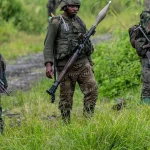
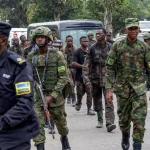
“The offensive launched this year by the Rwandan-backed M23 armed group in the North and South Kivu provinces has exacerbated an already dire human rights and humanitarian crisis in Eastern DRC,” UN Deputy High Commissioner for Human Rights Nada Al-Nashif told the Human Rights Council.
The situation has become increasingly dire in recent months. According to UN documentation, 602 victims of extrajudicial and summary executions have been recorded in North and South Kivu provinces alone since the beginning of the year. Al-Nashif expressed “grave concern” over these killings, which have been committed by all parties to the conflict.
“In Ituri province in the northeast, several groups continue to kill, maim and abduct civilians,” she added, noting that “DRC forces and their allies have also attacked civilians.”
Sexual violence has reached alarming levels. “Conflict-related sexual violence continues to run rampant and is being committed by all parties. Cases increased by more than 270 per cent from January to February,” Al-Nashif reported.
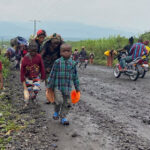
The humanitarian toll is devastating. Nearly 7.8 million people are displaced across the DRC, including 3.8 million in the Kivu provinces. Food insecurity has reached emergency levels, affecting close to 26 million people—almost a quarter of the country’s population. Education has been severely disrupted, with “thousands of schools closed, destroyed, turned into emergency shelters or occupied by armed groups,” leaving more than 1.6 million children in eastern DRC without access to education.
Al-Nashif emphasized that addressing the root causes of the conflict is essential for sustainable peace. “Any plans for a sustainable peace must tackle the root causes of the conflict, including the illegal exploitation of the national wealth that lies in natural resources. The DRC authorities must also take a firm and consistent stand against corruption, impunity, and hate speech, by whomever committed.”
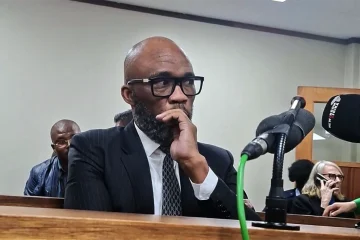
The UN has attempted to provide technical support to strengthen the rule of law and fight impunity despite challenges posed by the violence. These efforts have resulted in some success, with trials leading to the conviction of a warlord and former militiamen for war crimes and crimes against humanity, including murder, torture, rape, and sexual slavery.
After nearly three decades of war and over six million deaths, Al-Nashif stressed that “it should be abundantly clear that there is no military solution to this conflict.”
She called for concerted action from all stakeholders. “The people of the DRC need local, national, and regional actors to demonstrate leadership and prioritise dialogue over self-interest, greed and violence. The international community must also take decisive, concrete and urgent action to facilitate a durable peace in the DRC.”
The Deputy High Commissioner also directed strong criticism at economic actors profiting from the conflict: “States and private companies that profit from natural resources exploited under dangerous and illegal conditions must stop hiding behind complex and shadowy supply chains.”
In her most urgent warning, Al-Nashif cautioned that “without concrete action, current violence may well engulf the entire region. The risks of such catastrophe are growing by the day.”
The UN official concluded with a call for accountability, stating it is time for the international community to send “a strong and unequivocal message to all parties that the violations and abuses, many potentially amounting to international crimes, must cease and be effectively addressed.”