
LONG before a single bolt is torqued onto a Ford Ranger at the Silverton Assembly Plant in Pretoria, Ford South Africa is already at work in communities that will never buy one of its vehicles — in classrooms teaching five-year-olds to read, in disaster zones where roads have washed away, and in rural villages where the nearest clinic is a taxi ride most families cannot afford.
It is, says Neale Hill, President of Ford Motor Company Africa and Managing Director of Ford South Africa, precisely the point. For a company whose commercial future depends on convincing government and global executives that South Africa deserves continued investment, its social investment programmes tell a quieter but no less deliberate story: that Ford sees itself not merely as a manufacturer operating in South Africa, but as an institution embedded in its future.
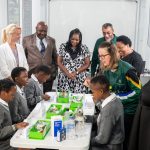
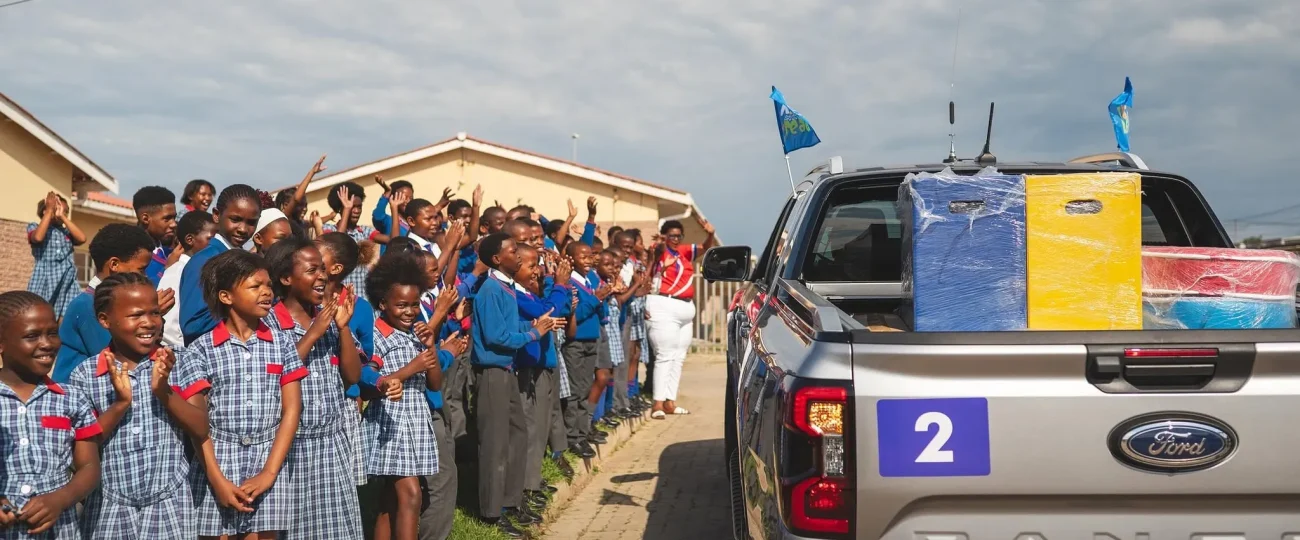
“We appreciate legacy and longevity. Ready to Read is one of our cornerstone, our anchor projects — cradle to vocation. If a child cannot read at its early childhood development foundational stages, the level of opportunity development is just critically impacted as that child goes through the education process.”
NEALE HILL, PRESIDENT, FORD MOTOR COMPANY AFRICA
CRADLE TO VOCATION
At the heart of Ford South Africa’s community work sits Ready to Read, a literacy programme Hill describes as a “cradle to vocation” commitment — one that begins with a child’s earliest encounter with a book and follows them, in principle, through to the workplace. The logic is unsentimental and rooted in decades of development economics: a child who cannot read fluently by the end of the foundation phase carries that deficit for life, with consequences that compound through every later stage of education and employment.
It is a strikingly patient form of corporate investment. There is no vehicle sale at the end of it, no brand campaign engineered for a quarterly report. Ford’s return, if it can be called that, is measured in a generation’s worth of literate, employable South Africans — many of whom the company will never meet, and fewer still who will ever set foot inside the Silverton plant.
MOBILITY AS A MISSION, NOT A SLOGAN
Ford’s global mission statement — to help build a better world where every person is free to move — is the kind of line that could easily read as marketing gloss. Hill, however, points to it as the literal design brief behind the company’s mobility donations, including a recent partnership with the Nelson Mandela Foundation to deliver transport and mobility solutions into far-flung rural communities across South Africa.
Hundreds of vehicles have been donated by the company to organisations working at the sharpest edges of South African inequality — places where the absence of reliable transport is not an inconvenience but a barrier to healthcare, education and economic participation. For a company built on the idea of movement, Hill argues, addressing the mobility poverty faced by South Africa’s most isolated communities is not philanthropy adjacent to the business. It is the business applied to those the market alone will never reach.
| FORD SA’S COMMUNITY FOOTPRINT Ready to Read – Cradle-to-vocation literacy programme Mobility donations – Hundreds of vehicles to community organisations Key mobility partner – Nelson Mandela Foundation Disaster relief partner – Gift of the Givers Company milestone – Entering its second century in South Africa |
FIRST ON THE SCENE
Nowhere is that philosophy tested more directly than in disaster response. Ford South Africa has stood alongside Gift of the Givers — routinely among the first organisations on the ground when floods, fires or other emergencies strike — providing the vehicles that carry relief workers, medical supplies and rescue teams into places where ordinary logistics break down.
“We stand alongside organisations like Gift of the Givers, who are often the first ones on the ground when it comes to emergency and disaster relief. Our vehicles play an absolutely critical role in terms of providing that level of mobility.”
NEALE HILL
In a country increasingly exposed to climate-driven flooding and fires, that partnership has taken on a weight beyond corporate social responsibility box-ticking. It is, in effect, private industrial infrastructure quietly repurposed for public emergency response — the same rugged Rangers built for export to more than 100 markets pressed into service on washed-out rural roads at home.
WHY A MANUFACTURER GIVES LIKE THIS
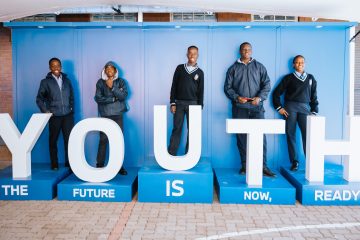
Hill’s broader argument — made forcefully in the same address in which he warned of the existential threat posed by cheap imports to South Africa’s manufacturing base — is that a company’s social commitments and its industrial commitments spring from the same root. A “transactional brand,” in his framing, sells cars off a ship and owes the country nothing beyond the sale. A “generational partner” anchors itself in a nation’s future through investment — in factories, in skills, and, just as deliberately, in the classrooms and disaster zones that have nothing to do with vehicle sales at all.
As Ford South Africa begins its second century of operations, its literacy programmes, mobility donations and disaster-relief partnerships stand as evidence of a wager the company is making alongside its far larger industrial bets: that a manufacturer’s fortunes in South Africa are inseparable from the country’s own. “Our aim,” Hill said, “is that in our second century, as we start our second century in this country, we plan to be here, and we plan to continue to play that role.”