LET us begin with a confession: the South African automotive industry has, for most of its existence, treated women approximately as it has treated GPS navigation — as a nice-to-have that nobody quite trusted until they absolutely needed it. For decades, the grease-stained gospel of the workshop held that this was man’s work: heavy, technical, loud, and emphatically not for the ladies.
Then International Women’s Day 2026 arrived, and two of South Africa’s most prominent motor brands — Hyundai Automotive South Africa and Tata Motors SA — stepped forward to politely, enthusiastically, and in one case quite movingly, announce that they had reconsidered. Entirely. With robots.
We applaud them. We really do. And we do so with only the gentlest of eyebrows raised — because in an industry where progress has historically moved at the speed of a 1988 Hyundai Pony with a flat tyre, any forward momentum deserves its flowers.
“When young people receive structured training, mentorship and clear career pathways, talent rises to meet the standard.” — Christine Masinga, HR Director, Hyundai Automotive South Africa
Part One: Hyundai Counts to 80 – and It Counts
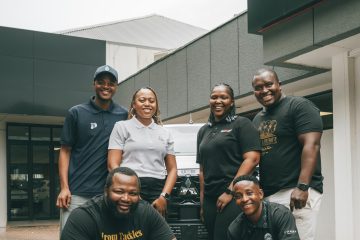
First, the numbers, because they are genuinely worth celebrating without irony. Hyundai Automotive South Africa has grown its national apprenticeship programme to 338 active apprentices across its 97-dealer network. Of those, 80 are women — nearly 24 percent, or just shy of one in four. In the rarefied, testosterone-marinated world of automotive artisan training, this is not nothing. This is, in fact, rather a lot.
For context: this is an industry where, until fairly recently, the most common role available to women in a dealership was either making coffee for the finance manager or being photographed next to a concept car at a motor show. Technical apprenticeships? That was another world entirely.
CEO Stanley Anderson — speaking with the measured confidence of a man who has clearly done his homework — describes apprenticeship development as a “strategic business imperative.” One imagines a boardroom somewhere in Sandton where this phrase was polished to a fine corporate shine before deployment. But behind the language lies a genuine commitment: each apprentice is paired with an experienced aftersales specialist, many with over 20 years in the trade. This is mentorship the old-fashioned way — knowledge transferred from hands that have actually been under a bonnet, to hands that are learning to belong there.
Human Resources Director Christine Masinga puts it more directly: “Nearly a quarter of our apprentices are women because we have intentionally widened opportunities while preserving technical rigour.“ She says this as though it were obvious. It is not obvious. It is the product of deliberate choice in an environment where deliberate choice has historically run in the opposite direction.
The tongue-in-cheek read? Hyundai has essentially discovered that women can turn a torque wrench. The genuine read? An organisation with 97 dealers across South Africa has decided to structurally reshape who gets to build a career in the technical side of the automotive world — and backed that decision with actual numbers, actual mentors, and actual pathways. At scale.
The 80 women currently in that programme are not tokens. They are a statistic with names, overalls, and a career trajectory. And for every Hyundai owner who pulls into a service bay and is met by a female technician, there is a quiet, powerful disruption of expectation happening in real time.
Part Two: Tata Motors Builds Cars. Women Build Tata Motors.
Now, if Hyundai’s story is one of incremental, structured progress — commendable in the way that a well-executed five-year plan is commendable — then Tata Motors’ story is something else entirely. Tata’s story is the kind that makes you put down your coffee and say: “Wait. Women are doing what, exactly? With robotics? In Pune?”
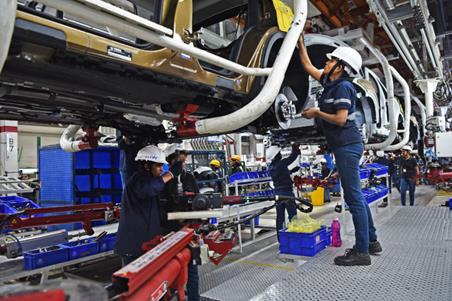
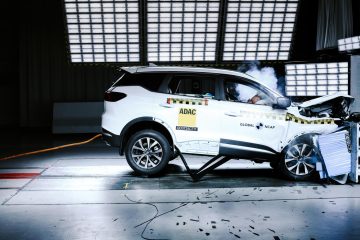
Yes. Since 2020, more than 1,700 women from some of the most remote corners of Maharashtra have been employed at the Tata Motors Passenger Vehicle plant in Pimpri-Chinchwad, Pune. This is not an all-women section of a plant, or a pilot programme, or a diversity initiative attached as a footnote to an annual report. This is a full production facility — responsible for the Tata Safari and the Tata Harrier — that is led, run, and staffed by women.
Let that land for a moment. The Tata Harrier — a vehicle that projects considerable presence on South African roads — is built entirely by women. Women from rural Maharashtra who entered the plant as trainees and graduated into a range of technical and operational roles. Women who are supported in pursuing engineering master’s degrees. Women for whom this plant was literally redesigned: raised workstations, manipulators, robotics, redesigned hoists and torquing tools — ergonomic interventions so practical and effective that they were subsequently rolled out to other plants for the benefit of all employees, regardless of gender.
Here is where the tongue-in-cheek commentary must pause and simply acknowledge: this is remarkable. Tata Motors did not just open a door and invite women in — they rebuilt the room. The tools, the workstations, the culture, the hygiene facilities, the safety protocols. They addressed the physical and structural barriers that have historically made manufacturing environments unwelcoming to women, and in doing so, created one of the very few women-led vehicle production facilities in the world.
The sardonic observer might note that it took a major multinational nearly a century of automotive manufacturing to think: “perhaps we should make the tools easier to use and the environment safer.” The more generous observer — and we are feeling generous today — will note that once they thought it, they actually did it, comprehensively, and the results speak in the language of 1,700 employed women and a globally recognised facility.
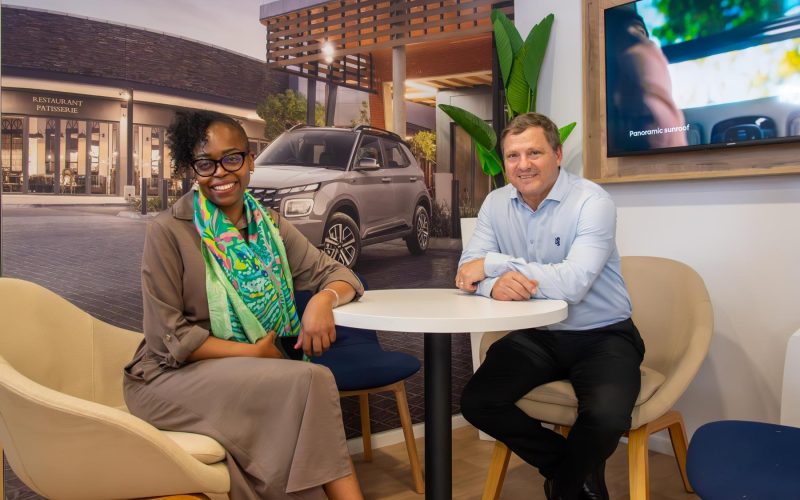
Locally, Daphne Greyling, General Manager of Dealer Sales at Tata Motors SA, provides the South African chapter of the story. Tata SA has been intentional about employing women across leadership, marketing, and after-sales. Across its 40-plus dealer network, a large proportion of staff are women. And Greyling’s observation about the customer experience deserves quoting at length, because it is both commercially astute and culturally honest:
“Buying a car might be a substantial financial undertaking, but it is also an emotional decision. We still believe that people do business with people, but the automotive industry can be daunting for women. We have seen first-hand how our female customers are considerably more comfortable dealing with a woman when they are shopping for a new car, doing a finance application or booking their Tata in for a service.” — Daphne Greyling, Tata Motors SA
This is not sentimentality. This is market intelligence. And it points to something the automotive industry has been slowly learning: that the people who buy cars are not a monolith, and that the experience of purchasing, financing, and servicing a vehicle is not gender-neutral.
The Bigger Picture: Progress Arrives, Fashionably Late
Let us not pretend that one Women’s Day announcement, however warm, rewrites a century of exclusion. The South African automotive sector remains overwhelmingly male in its technical and leadership ranks. Women at the workbench remain the exception, not the rule. And there is something inherently a little circular about celebrating gender inclusion on the one day of the year specifically designated to remember that gender inclusion is not yet a given.
But here is the honest, unsarcastic truth: Hyundai’s 80 female apprentices are real people with real skills and real futures in the industry. Tata’s 1,700 women in Pune are not a press release — they are the engineers and technicians who manufacture vehicles that South Africans drive. These are not gestures. They are structures.
The automotive industry has a long road ahead — in South Africa and globally — before gender equity stops being a feature story and becomes simply the story. But today, on International Women’s Day 2026, two motor brands have offered something more than platitude. One has counted carefully and invested seriously. The other has rebuilt the factory.
Both deserve credit. And the women who show up — in overalls, in boardrooms, on showroom floors, on assembly lines — deserve more than credit. They deserve the industry.