THERE is a factory in Kariega that produces more than cars. Every year, from the same industrial heartland where Volkswagen Group Africa (VWGA) has assembled vehicles for South African roads and export markets for decades, a quieter kind of output rolls off the line – investment in people, in nature, in the survival of the most vulnerable.
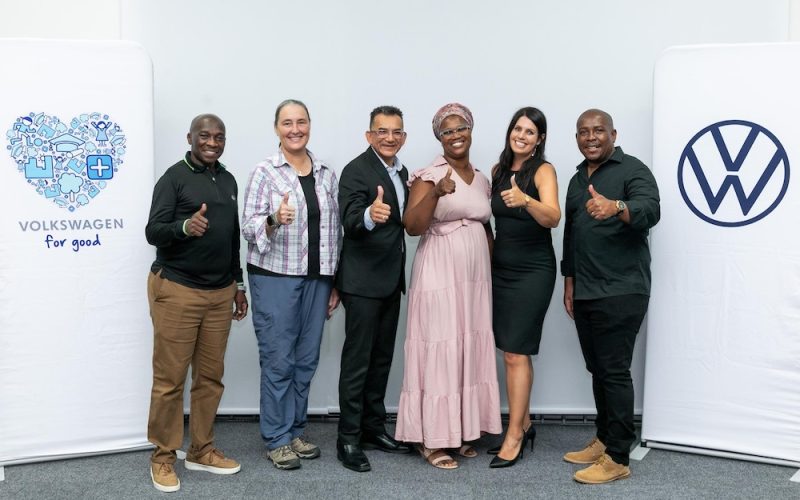
In the latest expression of that commitment, VWGA has pledged R500 000 in support of four non-governmental organisations operating in and around Nelson Mandela Bay. The funding, channelled through the VW Community Trust over the next 12 months, targets three of the most urgent pressure points in the Bay’s social landscape: child welfare, disaster relief and environmental conservation.
“Corporate social investment is exactly that: an intentional investment in uplifting the communities in which we belong and operate , ” – Nonkqubela Maliza, Corporate and Government Affairs Director, VWGA
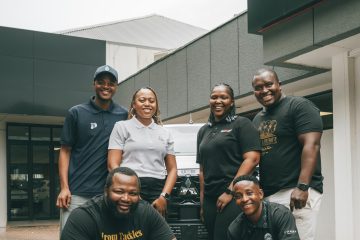
The four beneficiaries each carry a distinct mandate, but together they map the contours of a community under pressure. Family Restoration Services has worked out of Motherwell since 2005, providing long-term care and stability for orphaned and vulnerable children in one of Nelson Mandela Bay’s most densely populated townships. Beside it on the beneficiary list is Zanethemba Charity Foundation, established in 2008 as a place of safety for children with nowhere else to turn – its current model providing refuge for up to 12 children at a time. Taken together, the two child-focused organisations represent a safety net that the state alone cannot hold.
A third beneficiary, Sinako-We Can, addresses a more sudden form of vulnerability. Registered in 2019, the organisation responds when fire or flood reduces a family’s home to ash and mud – helping survivors navigate the fraught process of rebuilding their living arrangements from the ground up. In a city that has seen devastating informal settlement fires in recent years, that mandate is not abstract.
The fourth partner, Zwartkops Conservancy, carries the oldest institutional history of the group, having safeguarded biodiversity in Nelson Mandela Bay since 1968. Through clean-up operations, habitat restoration and environmental education, the Conservancy does the patient, unglamorous work of keeping ecosystems intact for the communities and wildlife that depend on them.
A Legacy Investment
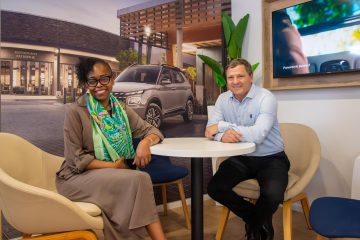
Nonkqubela Maliza, VWGA’s Corporate and Government Affairs Director, framed the funding not as charity but as continuity. ‘Much like the organisations we are supporting, Volkswagen Group Africa has a long legacy of making an impact,’ she said. ‘By partnering with NGOs consistently, we can reach more people in need of help and make a lasting difference.’
That framing matters. VWGA is not an incidental presence in Nelson Mandela Bay — it is among the region’s anchor employers and has been for generations. The Kariega plant produces vehicles for both domestic and international markets, making it one of the most strategically significant manufacturing sites on the African continent. That scale carries an obligation, and the VW Community Trust is the mechanism through which VWGA has chosen to honour it.
The R500 000 commitment may appear modest against the backdrop of a multi-billion rand manufacturing operation. But for a charity sheltering a dozen children in Motherwell, or a volunteer crew responding to a dawn fire in a Gqeberha informal settlement, it is the difference between continuity and closure.
A Model Worth Watching
Across Africa, the corporate social responsibility terrain is littered with once-off donations, photo-opportunity handovers and initiatives that dissolve the moment the media interest fades. What VWGA is attempting – consistent, multi-year relationships with community-based organisations tied to clearly defined developmental priorities – represents a more demanding standard.
The three pillars guiding VWGA’s CSI selection – youth development, community upliftment and environmental sustainability – are not plucked from a branding manual. They reflect real and measurable needs in Nelson Mandela Bay, a metro that ranks among South Africa’s most economically stressed, where unemployment, poverty and environmental degradation converge in ways that no single intervention can reverse.
For the children in Zanethemba’s care, the orphans supported by Family Restoration Services, the flood survivors helped by Sinako-We Can, and the ecosystems tended by Zwartkops Conservancy, Volkswagen’s R500 000 is not a corporate gesture. It is, as Maliza put it, an investment – in communities that have long carried the weight of the country’s inequality, and in the organisations that refuse to look away.