MORE than a decade ago, I stood inside a basketball stadium in Bamako, among people who had fled an upscale hotel after one of the first jihadist attacks on Mali’s capital. Some had been injured jumping from windows. Everyone was in shock.
Standing in that stadium, on one of my first journalistic assignments, it never occurred to me that more than a decade later I would still be documenting similar scenes. Yet last weekend’s attacks on Bamako and other cities by al-Qaeda-linked JNIM fighters and separatists show how wrong I was.
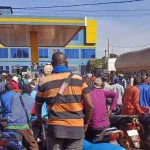
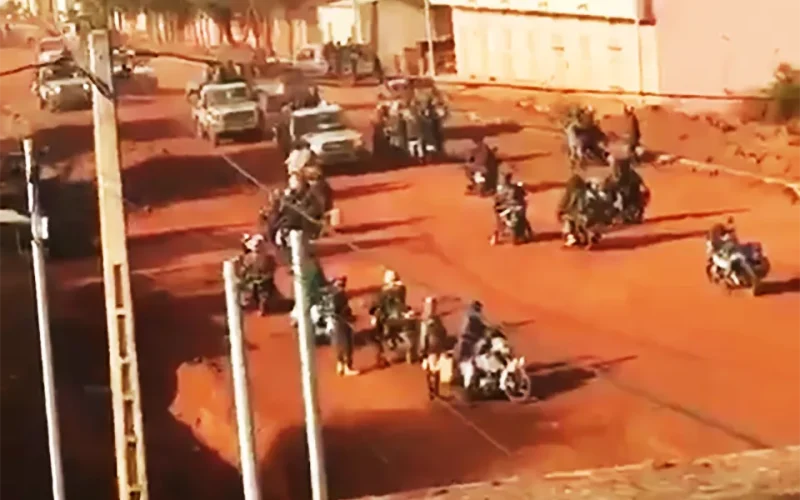
On Saturday, I stood on a road leading to Senou, a district south of Bamako, among a crowd who had seen a JNIM column heading towards the nearby international airport. The reaction was not so different from a decade ago: shock.
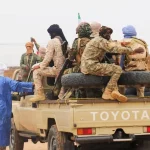
The attacks over the weekend were of unprecedented magnitude in Mali – hitting cities spanning hundreds of kilometres of territory – but the sheer number of fighters that stormed Bamako and nearby districts felt especially unparalleled.
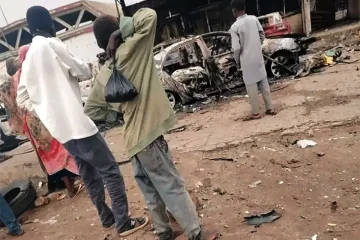
The attacks saw our minister of defence killed by a JNIM car bomb, the residence of President Assimi Goïta targeted, and days of near-psychosis as false reports circulated of jihadists turning up in schools and markets in Bamako.
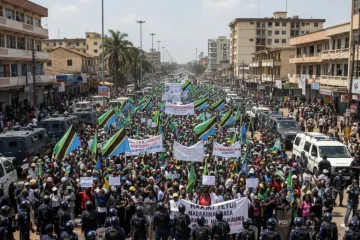
Videos have meanwhile been circulating of Bamako residents taking the law into their own hands, arresting – and in some cases killing – suspected fighters who had become separated from their groups.
While this reflects the population’s resistance to JNIM, it worries me deeply. After years of documenting the impact of jihadist attacks on villages across the country, I have seen the reprisals that follow when communities respond this way.
Already, JNIM has retaliated to the vigilantism by announcing a blockade on Bamako, banning movement in and out of the city. Last year, it imposed a similar measure – cutting off fuel – with severe consequences for schools, hospitals, and daily life.
What comes next remains unclear. Is JNIM capable of seizing power nationwide? Does it want to, or is it content to keep weakening the state, hoping it collapses under its own weight?
Collective punishment
The jihadist presence in Mali is not new. Its roots stretch back to the 2000s, though the current conflict began in 2012 in the north before moving into the centre, and increasingly now into the south as well.
Attacks on Bamako, however, have remained rare, as fighters have focused on controlling rural rather than urban areas. That is why it was so striking that they were able to enter the capital and its surrounding areas in such large numbers.
The operations targeted installations belonging to the government, which has been led by military rulers for several years. Those rulers expelled UN peacekeepers and forces from France (the former colonial power) in 2022 and 2023, replacing them with Russian contractors.
The Russians played a key role in helping the Malian army seize northern towns in recent years. But with some of those gains lost over the weekend, senior military figures I know are questioning whether the millions paid each month are worth it.
Initially, when news of the attack on the capital and its environs started filtering through, many people thought it was a coup by soldiers. How else, they reasoned, could jihadists enter Kati, which is home to the country’s main military base?
On Saturday, I tried to reach Kati to report on developments, but it was too dangerous. Instead, I headed towards the airport, where other fighters were moving, only to find roadblocks. I called friends in other cities to understand what was happening, but most were sheltering in place.
Panic continued in the days that followed. Earlier this week, a friend shared a video of gunshots at a Bamako market. I called somebody who works there and asked what was happening. “We’ve heard things,” he said, “but we haven’t seen anything.”
Unsatisfied, I drove there myself and spoke to several people. None had witnessed any shooting. It seemed likely the video had been manipulated – images of the market paired with added gunfire to provoke panic.
Later that same day, students fled schools amid rumours that jihadists had been spotted. But again, it was false. Journalists who went to the scene found no evidence, and students leaving said they had seen nothing.
It appears that JNIM did not set out to target civilians in and around Bamako. But the reaction of some residents – taking matters into their own hands – raises the risk that this could change if the group returns.
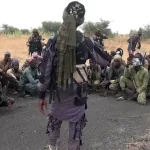
During my years reporting in central and northern Mali, I have seen how collective punishment is part of JNIM’s strategy: Entire villages are expelled if anti-jihadist militias are present, or if communities are suspected of helping the army.
People in Bamako are not accustomed to this modus operandi. They don’t know that when civilians involve themselves in the fight, they risk becoming targets. This is not their war to wage. It is, as I have come to understand it, a fight between two lions.
Fight or negotiate?
While my conversations over the past week point to deep uncertainty in the capital, they also suggest continued support for the authorities, who promote an agenda of national sovereignty, resistance, and the restoration of Malian pride.
The reappearance of Goïta after several days of silence appeared to bring a sense of relief to many Malians, amid rumours of power vacuums and possible palace coups.
In urban centres like Bamako, the appetite for negotiations with JNIM seems small to me. Many reject its strict interpretation of sharia, and fear what a JNIM-influenced or JNIM-led government might look like.
At the same time, I am conscious that dialogue and negotiation can bring moments of respite. I have seen this especially in central Mali, where some communities have agreed to stop resisting JNIM in exchange for a chance to breathe.
Recently, I travelled to Bandiagara in the Mopti region, after a local militia had reached an agreement with JNIM negotiated through community intermediaries. The change in atmosphere was striking.
In the town, many Fulani people – often unfairly stigmatised as supporting jihadist groups – were able to return to the market safely for the first time in a long time. Even fighters themselves passed through, albeit without weapons.
One thing I have observed is that after such agreements, communities are expected to follow the jihadists’ version of sharia law, yet in practice, it is not always enforced. That raises a question: What was all the fighting about?
I know that what works in local pacts in rural areas does not necessarily translate to the national level. It is unclear what an acceptable peace would look like for the government, for JNIM, and for Malians more broadly.
For now, more fighting appears likely. Alongside Bamako and Kati, JNIM fighters attacked the central cities of Mopti and Sévaré on the weekend, as they have done several times in the past.
In the north, the group allied with the separatist FLA, which is mostly composed of Tuareg fighters who have revolted repeatedly since Mali’s independence. They seized the city of Kidal and have promised further operations in the north.
In Bamako, our attention is now turning to the blockade. My latest information is that people have been allowed to leave Bamako but not to come in. We are waiting to see how things pan out and for the government to communicate clearly.
The last time JNIM imposed a fuel blockade on Bamako, hospitals struggled, schools closed, and factory production slowed. Electricity supplies were limited, and panic buying surged whenever fuel became available.
Still, people adapted to the conditions. Solar panels started selling like peanuts, and families swapped costly meat for cheaper fish. I expect that same resilience will be needed again in the days ahead.
Edited by Philip Kleinfeld.
–––––
The New Humanitarian puts quality, independent journalism at the service of the millions of people affected by humanitarian crises around the world. Find out more at www.thenewhumanitarian.org.