JOVIAL RANTAO
CORRUPTION has been described by many South Africans as one of the biggest threats to building the country that millions who fought apartheid dreamt of. The scourge has siphoned billions meant to provide a better life to Nelson Mandela’s nation, bringing the country to the verge of hopelessness. However, there is hope – found in institutions that continue winning victories against graft and citizens dedicating their expertise to fight criminals who loot state coffers.
Hope is embodied by the Special Investigations Unit (SIU), which has taken the war against corruption and won handsomely over the past decade. The SIU’s success is remarkable: recovering over R41 billion stolen from the state, demonstrating that effective anti-corruption work delivers tangible results for South Africa.
This success hasn’t gone unnoticed. The Institute for Security Studies (ISS) and National Anti-Corruption Advisory Council (NACAC) have researched the SIU’s operations extensively, revealing a blueprint for anti-corruption excellence that could transform South Africa’s approach to fighting graft.
Leadership Excellence: The Mothibi Model
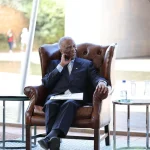
Hope is found in Advocate Andy Mothibi’s leadership of the SIU. His unique skills and leadership style have driven the unit’s successes through vision and strategic approach, partnering with like-minded organisations to stop corruption, recover stolen money, and hold perpetrators accountable.
Mothibi’s comprehensive recipe for success involved developing a clear strategy and communicating it across the organisation, ensuring everyone understood their work’s impact and public expectations. “We really realised that strategic and focused communication of our results is very important,” Mothibi explained, emphasising the importance of incorporating feedback to improve strategies.
What sets the SIU apart is its cultivated organisational culture. Researcher Colette Ashton noted the excellence evident upon entering SIU headquarters: “People are busy. They are purposeful. They are working. They are motivated. So many people are studying part-time for an advanced degree. There’s this real sense of excellence in the SIU and excellence being rewarded.”
This culture stems from “leadership with vision and values, and courage” that creates purpose among staff – a lesson applicable across other institutions struggling with corruption and inefficiency.
Critical Challenges
Despite remarkable achievements since 1996 – recovering R7.9-billion in assets, setting aside R17-billion in irregular contracts, and preventing R11.6-billion in potential losses – the SIU faces significant obstacles.
The unit confronts critical funding shortages linked to expanding caseloads, ineffective funding models, and poor debt collection. Administrative delays in processing Presidential proclamations further constrain operations, while inadequate systems to enforce recommendations undermine impact.
Most concerning is personnel and whistleblower safety, identified as a major threat to continued effectiveness. The unit’s dependence on Presidential proclamations, while protecting from political interference, simultaneously compromises operational independence by preventing unilateral investigations of high-level officials.
As researcher David Bruce noted: “The most useful thing that could be achieved is if disciplinary measures could be implemented consistently, so people implicated in corruption wouldn’t be permitted to continue working for the government.” South Africa lacks an effective governmental disciplinary system, with implicated individuals often staying in the system or finding other positions.
Beyond Recovery: A Multi-Pronged Approach
The SIU’s comprehensive approach extends beyond recovering stolen funds:
Asset Recovery and Pension Freezing: Pioneering pension freezing for corrupt officials who resign before disciplinary proceedings, ensuring consequences even for those trying to escape.
Disciplinary Action: Working with authorities to ensure implicated officials face measures, with the Presidency establishing monitoring mechanisms for referrals.
Criminal Referrals: Despite criminal justice system challenges, continuing referrals to the National Prosecuting Authority and Hawks.
Regulatory Action: Identifying professional corruption enablers – auditors, lawyers, estate agents – and working with regulators to address vulnerabilities.
As the SIU approaches three decades of existence, it increasingly focuses on prevention. The organisation has established the SIU Anti-Corruption and Cyber Academy, training investigators and rendering training across the country and the continent.
Civil Society’s Vision: Office of Public Integrity
The SIU’s success has led civil society to recognise its achievements as a foundation for building a future anti-corruption agency. ISS research and NACAC discussions recommend establishing an Office of Public Integrity, with the SIU as its central foundation.
This proposed office would revolutionise South Africa’s anti-corruption capabilities, combining the SIU’s proven civil law expertise with enhanced criminal investigation powers. Unlike the current system requiring criminal matter referrals, the Office of Public Integrity would pursue matters on both criminal and civil fronts – dramatically improving conviction rates and asset recovery.
Comprehensive Reform Blueprint
ISS research has culminated in comprehensive reform proposals to President Ramaphosa, targeting the SIU as the foundation for enhanced anti-corruption architecture:
Presidential Action: Take direct control of processing SIU motivations for Presidential proclamations, removing costly administrative delays, and continue developing automated monitoring systems.
National Treasury Mandate: Increase corruption prevention funding and partner directly with the SIU to improve debt collection from government entities.
Civil Society Role: Assess NACAC’s proposal for the SIU to serve as South Africa’s new Chapter 9 anti-corruption agency, including comprehensive risk analysis and cost assessments.
Revolutionary Legislative Changes: Make SIU recommendations legally binding, revolutionise funding models allowing retention of recovered fund percentages, enable direct criminal referrals to priority crime investigators, and establish statutory asset preservation powers.
These comprehensive recommendations represent a blueprint for transforming South Africa’s anti-corruption landscape. By addressing funding constraints, operational independence, legal powers, and safety concerns, the proposed reforms could multiply the SIU’s already impressive recovery record.
The policy brief and Accountability Tracker (www.accountability-tracker.org) provide citizens with unprecedented transparency tools to monitor progress. With South Africa facing ongoing corruption challenges across government institutions, timing proves critical. The SIU’s proven track record provides an expansion foundation, but only if structural impediments are systematically addressed.
The evidence-based recommendations now await action from President Ramaphosa, the National Treasury, and civil society organisations. Their response will determine whether South Africa’s most successful corruption-fighting institution can evolve into an even more powerful force against graft, potentially transforming the country’s anti-corruption landscape for generations.