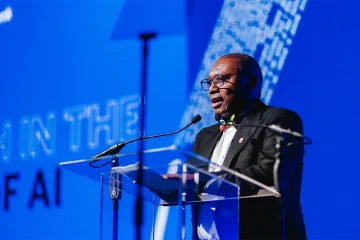
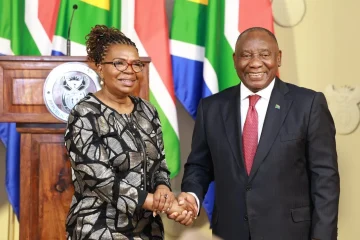
STANDING before delegates from across Africa at the Industrial Skills Week for Africa conference in Lusaka, I was struck by a profound realisation: we are witnesses to history in the making. Africa stands at the threshold of its greatest opportunity, yet we risk squandering it if we fail to act with the urgency this moment demands.
More than 80 percent of Zambia’s population is under 35. Across our continent, we are the youngest in the world. This is not merely a statistic – it is our defining characteristic, our greatest asset, and our most pressing challenge rolled into one. The question that haunts me, and should haunt every African leader, is simple: What are we doing about it?
The Uncomfortable Truth About Demographic Dividends
Let me be clear about something that too many of us still fail to grasp: demographic dividends are not automatic windfalls. They are not gifts bestowed upon nations simply because they happen to have young populations. They must be earned through deliberate, sustained, and often difficult investments in human capital.
Look around the world. Nations that have successfully harnessed their youth bulges—from South Korea to Singapore – did not stumble into prosperity. They built it, brick by brick, through systematic investment in education, skills development, and economic opportunities for their young people.
Africa has all the ingredients for this transformation. What we lack is the collective will to make the hard choices necessary to unlock our potential.
Five Pillars for Continental Transformation
At the National Youth Development Council, we have identified five critical areas where immediate action can transform rhetoric into results. These are not aspirational goals – they are practical roadmaps for change that every African nation can adapt and implement.
First, we must revolutionise our approach to policy integration. Too often, youth development exists in silos, disconnected from broader economic planning. Our education systems churn out graduates for jobs that no longer exist, while emerging sectors struggle to find skilled workers. This madness must end.
We are working to embed digital literacy, entrepreneurship, and green economy skills into every level of education. When our national development plans align with continental frameworks like Agenda 2063 and the African Continental Free Trade Area, we create pathways for our youth to compete not just locally, but across the entire African market of 1.3 billion people.
Second, we must forge genuine partnerships between public and private sectors. I have seen too many well-intentioned training programs that lead nowhere – graduates with certificates but no jobs, skills but no opportunities. This is not just wasteful; it is cruel.
Real skills development requires apprenticeship programs, mentorship schemes, and incubation hubs that create direct bridges between classrooms and workplaces. When young people can see clear pathways from learning to earning, they invest themselves fully in the process.
Third, we must embrace entrepreneurship as a core economic strategy. The future of work will not be defined by wage employment alone. Across Africa, our young people must become job creators, not just job seekers.
This means targeting high-potential growth areas – agribusiness, renewable energy, digital innovation, and creative industries – where young entrepreneurs can build sustainable enterprises that respond to both local and continental needs. The African market is vast and largely untapped. Our youth should be the ones tapping it.
Fourth, we must ensure that no young person is left behind. Rural youth, young women, and persons with disabilities face additional barriers to opportunity. These barriers are not just morally wrong – they are economically stupid. We cannot afford to waste any talent in this competitive global economy.
Through decentralised programs extending beyond capital cities into every corner of our nations, we must ensure that skills development becomes a national asset, not a privilege for the urban elite.
Fifth, we must ground everything we do in evidence and accountability. Too much of our development work is based on good intentions rather than good data. We need robust mechanisms for tracking labour market trends, identifying skills gaps, and monitoring outcomes.
When we can demonstrate measurable progress in transforming young lives, we build the credibility necessary to attract more investment and political support for youth development.
The Stakes Could Not Be Higher
Let me paint two pictures of Africa’s future.
In the first, we fail to act decisively. Our youth bulge becomes a youth burden. Unemployment and underemployment rise. Social tensions increase. Migration pressures mount. Our demographic advantage transforms into a demographic disaster.
In the second, we seize this moment. We invest systematically in our young people. They become the driving force behind Africa’s economic renaissance. They build the businesses, develop the technologies, and create the innovations that position Africa as a global economic powerhouse.
The choice is ours. But the window for making this choice is narrowing.
A Personal Commitment
I have dedicated my career to youth development because I believe deeply in Africa’s potential. I have seen what happens when young people are given real opportunities—they don’t just succeed, they soar.
But I have also seen what happens when we offer empty promises instead of genuine pathways to prosperity. The disappointment in young eyes. The waste of human potential. The squandering of our collective future.
We cannot allow this to continue.
At the National Youth Development Council, we are not just talking about change – we are implementing it. We are building the partnerships, creating the programs, and measuring the results that will transform Zambian youth from passive beneficiaries into active drivers of our national development.
But Zambia cannot do this alone. No African nation can. This requires continental commitment, shared learning, and mutual support.
The Time for Action is Now
The future of Africa will not be secured by the natural resources extracted from our ground, but by the skills, creativity, and resilience of our people. Our youth are our most valuable resource. But like any resource, they must be developed, refined, and put to productive use.
If we equip our youth with skills today, they will power Africa tomorrow. This is not just a slogan – it is a promise we must keep to ourselves, to our children, and to the generations of Africans yet to be born.
The demographic dividend is within our grasp. The question is: Are we bold enough to seize it?
- Waana Kankinza is Council Secretary of the National Youth Development Council of Zambia. This is an edited version of her remarks at the Industrial Skills Week for Africa (ISWA) in Lusaka.