
FOR thirty-six consecutive years, the Chinese Foreign Ministry has designated Africa as the first foreign destination in its packed annual diplomatic calendar.
This practice – come hell or high water – remains a tradition that the People’s Republic of China holds dear. Virtually all African states maintain flourishing diplomatic relations with China. The sole exception is eSwatini, which is nonetheless understood to be reviewing its position on the One-China policy in line with the October 25, 1971, UN Resolution 2758.
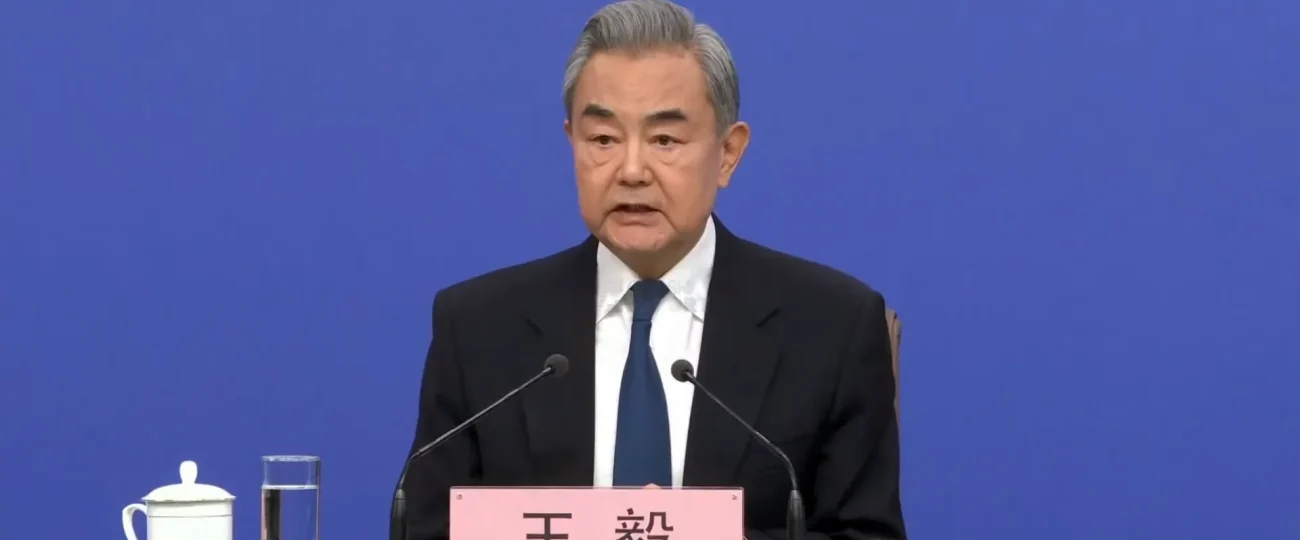
Chinese Foreign Minister Wang Yi recently addressed a global media briefing following the conclusion of the annual “Two Sessions” – the crucial plenary meetings of the country’s top legislature, the National People’s Congress (NPC), and its top political advisory body, the Chinese People’s Political Consultative Conference (CPPCC).
Held in early March each year, the “Two Sessions” are used to deliberate on the country’s economic, social and political roadmap, covering indicators such as GDP targets, policy shifts amid a rapidly changing world order, and personnel changes for the year ahead.
China-Africa relations have weathered extraordinarily challenging periods across their 70-year history. Those challenges have withstood the test of time, enduring through vastly different chapters of history.
It was no surprise, then, that Wang Yi devoted considerable attention to the China-Africa friendship and its resilience amid the ongoing reconfiguration of the international order.
“It’s no exaggeration to say that China-Africa friendship has been passed down from generation to generation – forged heart to heart, and built with sweat and blood,” Wang Yi said.
On that basis, he affirmed, the continent can count on China’s steadfast support for Africa’s development and revitalisation alongside China’s own modernisation drive.
If relations between China and Africa were not already firmly cultivated, 2026 appears set to be a landmark year – one in which ties are elevated to a higher level, offering one of the clearest examples yet of enduring trust, honesty and foresight premised on shared values and a shared future.
According to Wang Yi, China will this year alone host multiple African leaders in order to “strengthen support as all-weather partners and write a new chapter of our shared journey.”
He added that China will implement zero-tariff access for 100 percent of African imports from May 1. As part of China’s commitment to high-standard opening up, he said, “we are removing tariffs completely to boost trade, multiply benefits for the people, and help Africa access the enormous opportunities of the Chinese market.”
This is a significant development for a continent that continues to face deep structural economic challenges. The removal of tariffs will offer meaningful relief to the bulk of Africa’s member states at a time when the unilateral imposition of punitive tariffs by the Trump administration has left many developing economies reeling.
China’s economy is the second largest in the world, behind only that of the United States – a country that has positioned itself at the forefront of a push for a unipolar world order, one that has generated diplomatic unpredictability and fuelled global division and conflict.
In many respects, China occupies a central role in the maintenance of a multilateral world order – one in which UN member states can feel equal before international law and in accordance with the founding principles of the UN Charter, which recognises the sovereignty of nations regardless of geographic size or economic power.
Wang Yi further revealed that 6,000 events are planned under the China-Africa Year of People-to-People Exchanges. The scale is remarkable. Such sustained attention to one continent can only be read as a signal that Africa occupies the status of a top priority – a trusted ally with whom China has travelled a long road and overcome no small number of obstacles.
Wang Yi put it well: “We are always ready to work with our African brothers and sisters to draw inspiration from our civilizational heritages, forge a stronger bond between our people, and carry forward our friendship for many, many generations to come.”
Under the leadership of President Xi Jinping, China-Africa relations have become a catalyst in the reshaping of the new world order. The bonds between the two are not merely unshakeable – they are unbreakable. When ties run that deep, prosperity becomes the inevitable outcome, particularly when allies embrace one another with humility, respect and a genuine commitment to a shared future built on mutual trust.
Abbey Makoe is Founder and Editor-in-Chief of the Global South Media Network (gsmn.co.za).