MATSHABA Tsedu/Tseto Muleya alias Joe Mkhaba, alias Joe Mbatha, alias W Williams, alias Frank Martin Nkosi alias Frank Martin returned home in September last year in a box. His remains, buried under the name Frank Martin Nkosi, had been exhumed from grave no 1052 at Warren Hills Cemetery in Harare, Zimbabwe, where he laid from 1987 to 2024. The exhumation was part of the repatriation of freedom fighters who fell and were buried in foreign lands.
The multiple identities testify to the various roles he had played in the ANC and in Umkhonto we Sizwe, the liberation army. And this Saturday, in the Heroes Acre of the Tembisa cemetery, he will reclaim his true identity and become plain Matshaba Joseph Tsedu Muleya.
And that reburial shall mark the end of the wandering fighter who had left the country in January 1978, and according to an official entry in the records of the Housing Division of the Johannesburg City, this was because the security police were looking for him. He was by that time no stranger to the police, having been detained and interrogated about the activities of the ANC and in particular, those of people such as Tokyo Sexwale.
The police had wanted him to turn state witness against Sexwale and his co accused. But Tsedu, instead of ratting on his comrades, chose exile. That decision meant abandoning a good paying job at Standard Bank, and a thriving transport business with his two kombi minibuses. The latter ferried more than just paying passengers, it carried MK recruits, trained guerillas and weapons coming and going through eSwatini.
His sister, Madira Tsedu Muleya, who grew with him, tells the story of how Tsedu had arrived in a hurry at her place of work in January 1978, took off his jacket and told her she should give it to his mum. “I asked him why and he said he was going away. I cried and said where are you going Matshaba, but he said just give my mother the jacket. And he was gone. We later heard that the car was found abandoned near the Botswana border,” she said.
And for some time no one knew where he was and what had happened to him, until a woman friend from Tembisa, who was also in exile and used to come in and out of the country, arrived at Tsedu’s uncle, John Muleya, with news that he was in Maputo, Mozambique.
Records at the Alexandra Housing Division which were accessed by the family recently, show that his departure had led to a flurry of activities even by the municipality. On February 05, 1978, just under a month after he disappeared, an entry into his residence permit file reads: “Joseph Tseto has (sic) disappeared on 13/1/1978. It appears that he is wanted for questioning by the security police. He disposed of all his belongings and deserted his wife and children. Martha [the wife] has subsequently obtained lodging with her parents at 121 Moletsane. Lodgers Permit dated 14/2/1978 produced. Permit withdrawn”.
What this entry reveals is the tight control that was exercised by the then government over people. It is clear that a municipality official traced Martha to her new abode, and demanded to see that she had been registered as a lodger in her parents’ place. All these led to the cancellation of Tsedu’s permit in Alexandra where he lived. At the same time, many of Tsedu’s close relatives were raided by security police who demanded to know where he was.
In fact, one of Tsedu’s sons from a previous marriage, Elias Tsedu, had to change his surname and take that of his uncle to protect him from harassment by the police. He is still struggling to change to his father’s surname even today.
Meanwhile, ANC records show that from Botswana, Tsedu had gone to Angola where he trained under “Commander Peter Boroko and Chief of Staff Willie Williams”. He then went to Mozambique, where he lived in an ANC house in Matola, a suburb of Maputo. On the 30th of January 1981, Tsedu did not sleep in the house but had visited a fried from back home. That night, a killer squad of the racist regime attacked the house, leaving 12 ANC members dead and many others injured.
He later left Mozambique in 1983 and headed for Budapest in Hungary, The German Democratic Republic, and the Soviet Union for advanced training that included intelligence gathering and counter espionage. When he returned, he was posted in Zambia where he was in charge of “the Frontline States bordering Mozambique”.
In late 1986 he was transferred to Zimbabwe where he fell sick. A message was sent to Muleya that he was seriously unwell. A family delegation went to Harare to see him. When his condition deteriorated, Muleya’s delegation went back and found him in hospital where the doctors told them he had reached the end of life stage.
“About two months later he died. We went back and buried him under the name Frank Martin Nkosi. Frank was his great grandfather. He was wearing a suit. We later went back in 1997 and collected all the documents like his burial notice and death certificate as his mother wanted us to bring his remains here at home”, Muleya said.
According to the “Certificate of Death No 825041” signed by Dr Gora, Tsedu died on September 27, 1987 of “Respiratory Arrest, Carcimona (Cancer) and Bronchus”, which simply means he died of lung cancer. The certificate records his occupation as “Journalist”, which could have been a decoy for his intelligence work in Zimbabwe.
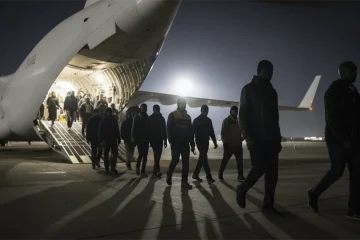
The touching down of the plane carrying the remains of 42 ANC and PAC members on September 25 marked the beginning of the end of the long journey for combatants who had laid down their lives to free us from the yoke of colonialism and apartheid. It represented the reclamation of identities that had been replaced by pseudonyms such as Frank Martin Nkosi.
And Saturday shall herald the completion of that reclamation as the family and the nation honours one of those who risked all and gave up sometimes cushy jobs, to ensure that we live in a free country today.
- Mathatha Tsedu is a family member.