LET us be precise about what happened on the night of 18 January 2026 at the Prince Moulay Abdellah Stadium in Rabat. Senegal played football. Morocco played football. The referee blew the final whistle. Senegal won. That is the incontrovertible truth of the matter – the only truth that should matter to any governing body that places the integrity of sport above politics and pressure.
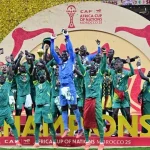
What happened on Tuesday, 17 March 2026, is something altogether different. The CAF Appeals Board declared that Senegal had “forfeited” their 1-0 extra-time victory, and that the result would be “officially recorded as 3-0” in favour of Morocco. Two months after the championship was decided on the field of play. Two months after Pape Gueye’s brilliant 94th-minute strike sent millions of Africans into ecstasy. Two months after Sadio Mané stood in the Moroccan night air and lifted the Africa Cup of Nations trophy skyward. CAF has now announced, with a straight face, that none of that happened.
It happened. Africa saw it. The world saw it. No boardroom decision – no matter how many bureaucratic clauses are cited – can erase what unfolded under the floodlights of Rabat.
You cannot award a penalty to a team days after the final whistle has been blown. What CAF has done is precisely that – and worse.
Let us address the substance of CAF’s justification. The governing body invoked Articles 82 and 84 of the AFCON Regulations, which state that a team leaving the pitch without the referee’s authorisation shall be declared the loser by a score of 3-0. It is a rule that exists. Nobody disputes that it exists. But rules exist within a context, and that context is decisive.
Senegal’s players left the pitch. They also returned to the pitch. They did so under the authority and jurisdiction of the match referee. The referee – the sole arbiter of events on the field – allowed play to resume. The match was then completed in full: extra time was played, a goal was scored, and the referee blew the final whistle to end proceedings. At that moment, by any reasonable interpretation of sporting law, the match was concluded. Finished. Done.
The referee’s whistle is the highest authority on a football pitch. It is not subordinate to subsequent appeals committees, boardroom deliberations, or the political calculations of a host nation’s football federation. CAF’s own disciplinary board understood this: in January, it imposed fines and bans but left the result untouched. That was the correct decision. What the Appeals Board has done is not a correction of a sporting error – it is the creation of a far graver one.
To argue otherwise is to commit an absurdity. Imagine telling a cricket team they have lost a Test match because of an incident in the second session – three months after the final day’s play concluded. Imagine awarding a penalty in football days after the final whistle. That is precisely what CAF has done, and no invocation of regulatory articles changes the fundamental injustice of it.
If CAF’s rules were violated, CAF officials were present on the night. They should have acted on the night. Full stop.
If the walk-off by Senegal’s players constituted a forfeit under CAF regulations, then the appropriate moment to apply that regulation was the night of the final itself. CAF officials were there. Match commissioners were there. The entire apparatus of the governing body was present in Rabat. They had the authority and the obligation to act immediately if they believed a forfeit had occurred. They did not act. The match was allowed to continue. It was completed.
That is not a technicality. That is the essence of sporting justice. You cannot referee a game retrospectively, months after the final whistle, when one aggrieved party – the host nation – finds themselves on the losing side. To do so is not the application of the rules. It is the weaponisation of them.
And let us speak plainly about who wielded that weapon. The Royal Moroccan Football Federation appealed CAF’s initial decision. They pressed relentlessly and with the considerable influence that comes with being the host nation, a nation with significant political and financial clout within African football institutions. CAF’s disciplinary board – correctly – dismissed the appeal. The Appeals Board capitulated. That sequence tells its own story about the nature of this decision.
The Moroccan federation has issued a statement framing its appeal as a matter of “respecting the rules” and the “clarity of the competitive framework.” We are to believe, then, that Morocco’s interest was purely procedural. That they would have pursued the same appeal with equal vigour had they been the team that walked off the pitch. That the fact of their being the host nation, playing before a partisan home crowd, with their government’s prestige invested in the tournament, had absolutely no bearing on their determination to pursue this matter to the highest level of CAF’s appeals structure. We are to believe this.
With respect: no one in Africa believes this. Senegal’s Moussa Niakhaté posted a photograph of himself holding the trophy. “Come and get it,” he wrote. He is right. No trophy cabinet in Rabat changes what happened in Rabat. Senegal’s players know what they won. Africa knows what they won.
Morocco may have been given the title in a boardroom. Senegal are the champions — as witnessed by hundreds of millions across this continent and across the globe.
There is also the matter of the wider damage this decision inflicts. Under the presidency of Dr Patrice Motsepe, CAF has made genuine strides in raising the profile and standard of African football. The 2025 AFCON was a well-organised tournament that captured the imagination of the continent and drew international attention. Attendances were strong, broadcasting reach expanded, and the standard of football was a source of continental pride. That is Motsepe-era progress, and it deserves to be acknowledged.
But one decision of this magnitude can undo years of credibility-building. What sponsor, broadcaster, or investor can place confidence in a competition whose results are apparently negotiable months after the fact? What player can commit fully to a tournament knowing that his team’s triumph on the pitch may be reversed in a committee room? What fan can celebrate a title knowing it might be confiscated by bureaucratic fiat long after the final whistle?
CAF has handed every critic of African football governance a weapon of devastating force, and it has done so at a moment when the continent’s football was beginning to assert itself on the world stage. The timing, coming just months before the 2026 FIFA World Cup, in which both Morocco and Senegal will compete, makes this even more grotesque.
This is not the first instance where CAF inflicts damage on itself. At the 2025 CAF Awards ceremony held in Rabat in November last year, Dr Motsepe took it upon himself to present honorary awards to three sitting heads of state: Kenya’s William Ruto, Tanzania’s Samia Suluhu Hassan, and Uganda’s Yoweri Museveni. The rationale offered was their contribution to football development, in the context of the three nations jointly hosting the CHAN tournament and bidding to co-host AFCON 2027.
We do not question the hosting of those tournaments. We question the judgment of an African continental body choosing to bestow public honours on political leaders at a football ceremony – particularly when two of the three recipients preside over governments whose records on democratic rights and the treatment of political opponents are matters of profound and documented concern. Museveni, who has governed Uganda for four decades and whose security forces have been credibly accused of the brutal suppression of opposition, received a CAF plaque. This is an organisation that claims to serve African people, including the young Africans who play and watch this game.
CAF must be asked: what signal does it send to African people – including Ugandan football supporters, including Senegalese football supporters – when an institution devoted to their sport rewards their leaders rather than holding power to account? When it bestows prizes on the powerful and strips titles from the victorious?
The answer, sadly, is becoming clearer. Senegal will appeal to the Court of Arbitration for Sport. That process, by its nature, will take approximately a year to resolve – long after the World Cup, long after the celebrations and the grief have faded. Justice, if it comes at all, will come cold and late.
But the record stands regardless. Pape Gueye scored in the 94th minute. Édouard Mendy saved the penalty. Sadio Mané held the trophy. Senegal won the Africa Cup of Nations on 18 January 2026 on African soil, in front of Africa and the world. The referee said so. The laws of football said so. The scoreboard said so.
No CAF Appeals Board can change what happened. They can only reveal what they are.
African nations must rise as one against this decision. CAF must be made to understand that the credibility of our football is not a bargaining chip. This is not a procedural irregularity. This is football treason.
Senegal – their players, their coach, their federation, their people – deserve an apology. They deserve their title restored. They deserve better from the institution that is supposed to defend their interests and those of every football-loving person on this continent.
Until that day comes, let it be stated plainly in this publication and in every publication that dares to call itself a servant of African truth: Senegal are the 2025 Africa Cup of Nations champions. That is not opinion. It is fact. And no bureaucratic decree, however many articles it cites, will make it otherwise.