THE SAHEL region has emerged as a critical flashpoint of geopolitical upheaval in Africa, where military takeovers, shifting international alignments, and escalating jihadist violence are reshaping the continent’s security landscape. Since 2020, the democratic backsliding in Mali, Burkina Faso, and Niger has fundamentally altered the region’s political trajectory, with implications extending far beyond Africa’s borders.
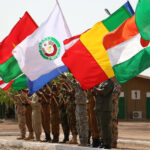
In December 2024, the military regimes of Mali, Burkina Faso, and Niger formalized their withdrawal from the Economic Community of West African States (ECOWAS), establishing the Alliance of SAHEL States (AES) as an alternative regional bloc. This unprecedented fragmentation has severely weakened ECOWAS’s influence and undermined decades of regional integration efforts.
The AES formation represents more than just institutional realignment – it signals a philosophical shift prioritising national sovereignty over collective security frameworks. For the military leaders who orchestrated coups in each country, this move provides mutual legitimisation and insulation from external pressure to return to democratic rule.
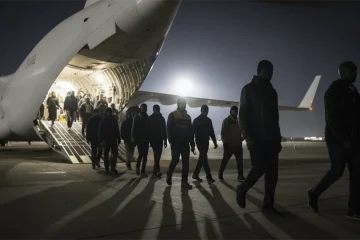
The retreat from democracy has coincided with a dramatic realignment of foreign partnerships. French forces, once central to counterterrorism operations across the SAHEL, have been systematically expelled from the region amid growing anti-colonial sentiment. The departure of American troops from Niger’s drone base in 2024 further underscores the declining Western influence.
Russia has adeptly filled this vacuum, deploying mercenaries from the Wagner Group, now reorganized under its Africa Corps. Recent shipments of Russian military equipment through Guinea and reports of Syrian fighters arriving in Niger highlight Moscow’s deepening footprint. This eastward pivot reflects both pragmatic security calculations by the juntas and a broader ideological rejection of Western involvement.
“The withdrawal from ECOWAS and alignment with Russia represents the most significant geopolitical realignment in West Africa since decolonisation,” notes one regional analyst. “It’s fundamentally changing the security architecture that has defined the region for decades.”
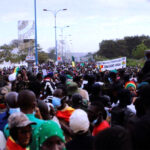
The military takeovers have garnered significant domestic support, revealing a complex relationship between citizens and democratic institutions. Years of corruption, ineffective governance, and deteriorating security under elected administrations left populations disillusioned with democracy’s promises. Military leaders have effectively harnessed this frustration, positioning themselves as patriotic saviours addressing deep-seated national crises.
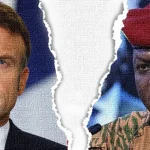
Captain Ibrahim Traoré in Burkina Faso exemplifies this trend, cultivating a populist image that resonates with younger generations frustrated by the status quo. However, this populist appeal masks a troubling reality: security conditions have worsened under military rule, with Burkina Faso alone recording over 15,500 deaths since its 2022 coup, including 6,000 in 2024.
Burkina Faso, once a hopeful democracy in West Africa, has fallen into a dark era of repression under military rule. Since Captain Ibrahim Traoré seized power in a coup in September 2022, the country has witnessed an alarming erosion of press freedom, human rights violations, and economic instability. Journalists, who are crucial for transparency and accountability, have become primary targets in the junta’s campaign to silence dissent.
The SAHEL now accounts for over half of global terrorism fatalities, with groups like Jama’at Nusrat al-Islam wa al-Muslimeen (JNIM) and Islamic State SAHEL Province (ISSP) exploiting governance gaps and intercommunal tensions. Despite claims of self-sufficiency, the military regimes rely heavily on Russian support, local militias, and forced conscription – approaches often accompanied by serious human rights abuses.
Remote communities bear the brunt of this violence, caught between militant attacks and heavy-handed military responses. Environmental pressures, including climate change-driven resource conflicts, further exacerbate these security challenges, creating a feedback loop of instability and suffering.
The effects of this instability now threaten to spill beyond the SAHEL’s traditional boundaries. Jihadist groups are expanding operations into northern Nigeria, Ghana, and Ivory Coast, jeopardising these countries’ relative stability and economic prospects. Tourism, aid operations, and development initiatives across West Africa face growing constraints as insecurity spreads.
More concerning still is the ideological contagion. The anti-Western, sovereignty-focused rhetoric of the AES leaders has found resonance beyond Francophone Africa, signalling a potential shift in how a new generation of African leaders approaches relationships with traditional Western partners.
The SAHEL’s ongoing transformation represents a profound challenge to Western policy paradigms that have linked democracy promotion with security assistance. As military regimes consolidate power with Russian backing, traditional Western leverage points have diminished significantly.
The crisis reveals deeper tensions between security imperatives, sovereignty claims, and democratic values. While military leaders promise stability through authoritarian measures, their approach has thus far intensified violence while narrowing political space. Without addressing the underlying governance deficits and socioeconomic grievances that fueled democratic disillusionment, sustainable stability remains elusive.
For international actors and regional neighbours alike, the SAHEL presents a complex dilemma: how to engage with regimes that enjoy domestic support despite their undemocratic nature, and how to address security threats without legitimizing authoritarian governance. As this crisis continues to unfold, the SAHEL increasingly serves as a bellwether for conflicts where security concerns, sovereignty claims, and democratic principles collide in an evolving multipolar world.
- Jovial Rantao is the Editor of The African Mirror. He is a former Chairperson of The African Editors Forum.