THEY didn’t arrive on horseback, but they might as well have. From the rolling hills and coastal winds of the Eastern Cape, a formidable alliance of women politicians has descended upon Gauteng – South Africa’s economic heartland -and they’re not here to play supporting roles. They’re here to rule.
Meet the power quartet reshaping the African National Congress from within: Loyiso Masuku, Nomantu Nkomo-Ralehoko, Khusela Sangoni-Diko, and Vuyo Mhlakaza-Manamela. Educated, politically astute, battle-tested, and unapologetically ambitious, these women are engaged in a sophisticated game of political chess that would make Machiavelli take notes.
The New Queen of Johannesburg: Loyiso Masuku’s Triumphant Coronation
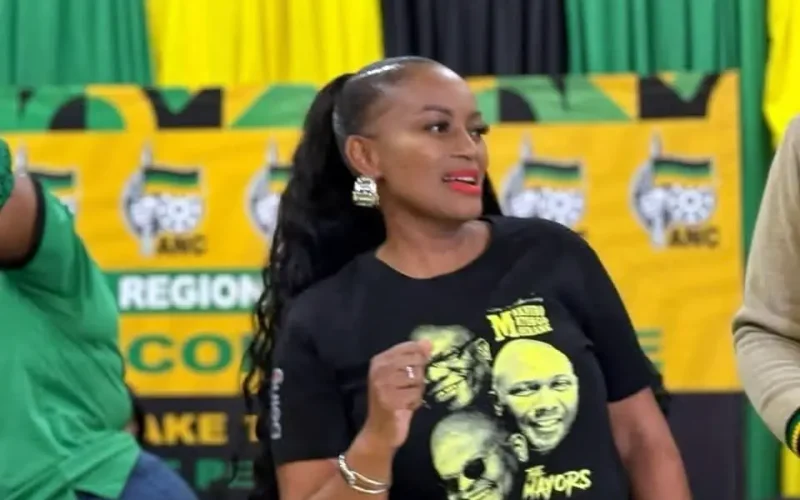
Born in Butterworth but now the undisputed power broker in Johannesburg’s corridors of influence, Loyiso Masuku has just won the political battle of the decade. After serving as the City’s MMC for Finance – appointed to rescue Johannesburg from a staggering R24.4 billion financial crisis – she has successfully defeated incumbent Dada Morero to claim control of the ANC’s regional leadership.
The victory was seismic. Masuku is now the first female ANC mayor of Johannesburg, the wealthiest and most powerful city on the continent. Not bad for someone who began in student politics and weathered the storm of a controversial COVID-19 PPE scandal that would have ended lesser careers.
Her political dribbling skills proved unstoppable: she held the finance portfolio while simultaneously mobilising branches against her own boss. Her slate, dubbed the “people’s choice,” wasn’t just populist branding – it was prophetic. She has mastered both policy detail and grassroots politicking, a rare combination in contemporary South African politics that has now delivered her the ultimate prize.
The checkmate is complete. The question now isn’t whether she’ll claim the mayoral chain, but what she’ll do with the power once she has it.
The Premier-in-Waiting: Nomantu Nkomo-Ralehoko’s Calculated Gambit
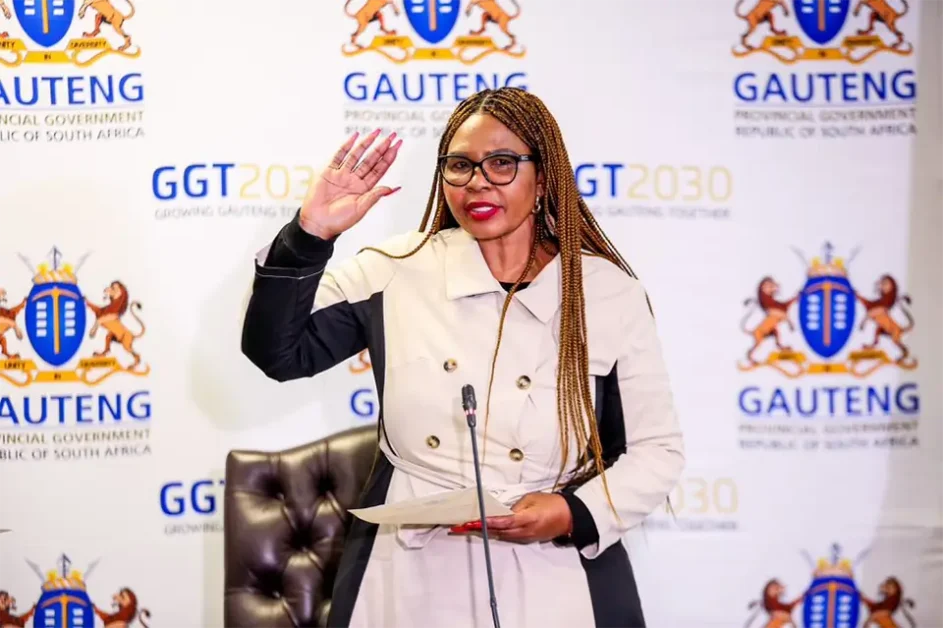
If Masuku has conquered Johannesburg, Nomantu Nkomo-Ralehoko is playing an even longer game in the provincial arena. The current Health MEC has held some of Gauteng’s most powerful portfolios – Finance, Education, Agriculture – accumulating influence and institutional knowledge like a political dragon hoarding treasure.
Born in Ngcobo in 1966, Nkomo-Ralehoko cut her teeth in trade unions and worked her way through the ranks with methodical precision. Now, at 58, she’s reportedly locked in “all-out war” with Premier Panyaza Lesufi, whom she accuses of betraying a 2022 agreement that would have seen her ascend to the premiership after his first term.
The fallout is spectacular. According to party insiders, their alliance – forged in cold political necessity to defeat a common rival – has disintegrated into a brutal ground-level battle for branch control. Nkomo-Ralehoko’s camp claims dominance in Ekurhuleni, Johannesburg, Sedibeng, and Tshwane – essentially encircling the premier’s headquarters.
With Masuku’s victory in Johannesburg now secured, Nkomo-Ralehoko’s hand has only strengthened. Victory in this showdown would make her Premier of Gauteng, the province that generates over a third of South Africa’s GDP and whose political machine can make or break national ambitions. Not too shabby for someone who started as a maternity leave replacement at a trade union in 1988.
The Kingmaker: Khusela Sangoni-Diko’s Resurrection
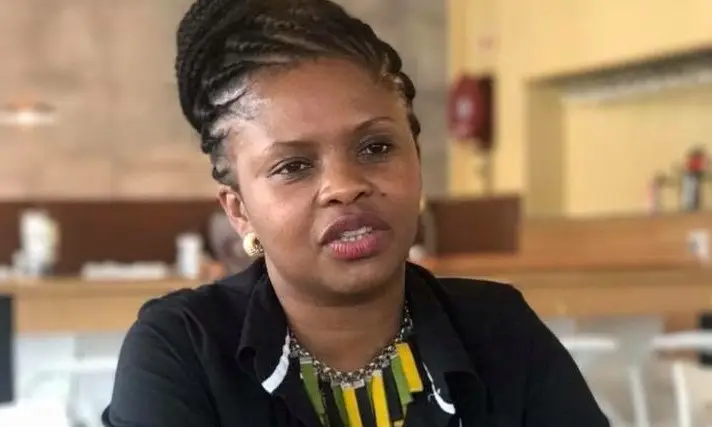
Perhaps no story is more compelling than that of Khusela Sangoni-Diko. An abaThembu princess, former ANC national communications manager, and President Cyril Ramaphosa’s spokesperson until the 2020 COVID-19 procurement scandal, Sangoni-Diko experienced what would be career annihilation for most politicians.
But here’s where the political acumen shines: she not only survived but thrived. Re-elected to the Gauteng ANC’s Provincial Executive Committee in 2022, she then secured a seat on the party’s National Executive Committee later that year, receiving 1,439 votes to become the 28th most popular candidate among 80 elected members.
Now serving as an MP and Chairperson of the Communications and Digital Technology Portfolio Committee, Sangoni-Diko is perfectly positioned. With her deep understanding of communications, her royal lineage, and her resilience, she’s being tipped as a future Minister of Communications – provided the ANC’s electoral fortunes improve.
The Legislative Power Broker: Vuyo Mhlakaza-Manamela’s Quiet Influence
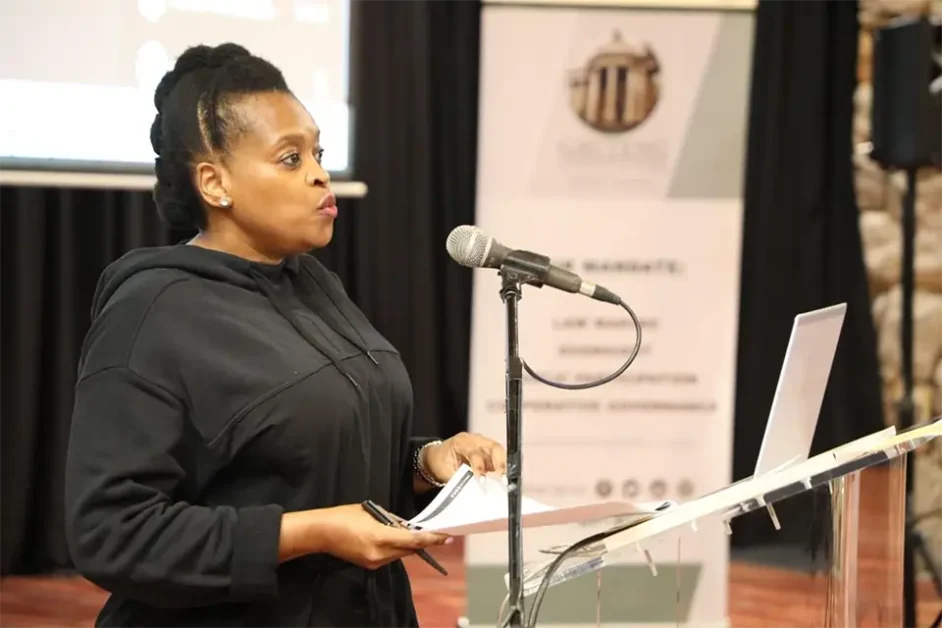
While her colleagues grab headlines, Nomvuyo “Vuyo” Mhlakaza-Manamela operates with a quieter but no less effective touch as Deputy Speaker of the Gauteng Provincial Legislature. Born in Cofimvaba, this human resources specialist by training holds influence over legislative processes and has served on the boards of major state entities, including PetroSA and the SABC.
Her trajectory – from student politics through corporate HR to legislative leadership – demonstrates the diverse skill sets this generation of women politicians brings to the table. They’re not just ideologues; they’re technocrats who understand budgets, governance structures, and institutional power.
The Eastern Cape Connection: More Than Geography
What unites these women beyond ambition is their shared origin story. All hail from the Eastern Cape, a province that has produced some of South Africa’s most formidable political figures – from Nelson Mandela to Thabo Mbeki to Cyril Ramaphosa himself. There’s something in that coastal soil that breeds political steel.
They’ve transplanted themselves to Gauteng, where the real power lies, and built sophisticated political machines while maintaining the networks and cultural capital from home. They live, as the saying goes, like queens – balancing high-profile portfolios with strategic positioning for even greater power.
The ANC’s Dilemma: Empowerment Meets Succession Politics
The rise of these women presents the ANC with a fascinating contradiction. The party has long championed women’s empowerment and maintains policies promoting gender equity in leadership. Yet when women actually position themselves to claim the highest offices, the response from establishment figures is often resistance rather than celebration.
Masuku challenged Morero – and won. Nkomo-Ralehoko battles Lesufi. Both men are incumbents reluctant to cede territory. Both women are determined not to wait their turn anymore. The result is a party tearing itself apart at precisely the moment it needs unity – having lost its national majority for the first time and now governing in coalition with opposition parties.
What’s at Stake: The Future of South Africa’s Economic Core
This isn’t just palace intrigue. Whoever controls Johannesburg and Gauteng controls access to the economic engine of southern Africa. These provinces generate the tax revenue, house the corporate headquarters, and set the policy agendas that ripple across the continent.
The upcoming provincial leadership battles will determine whether this quartet of Eastern Cape-born, Gauteng-based women complete their sweep of power. Masuku has already become Johannesburg’s regional ANC leader and is poised to claim the mayoral chain. Nkomo-Ralehoko could become Premier. Sangoni-Diko could return to the national Cabinet. Mhlakaza-Manamela could ascend to Speaker.
Or they could be outmanoeuvred by male rivals who still control some levers of incumbency and institutional power. The ANC’s internal democracy – messy, brutal, and unpredictable – will decide.
The Verdict: The Conquest Has Begun
What makes this moment extraordinary is not just that women are competing for power – that’s been happening for decades. It’s that they’re doing so with such sophistication, building multi-regional coalitions, mastering both policy and politicking, and refusing to accept supporting roles as their final destination.
They’ve studied the playbook, learned from setbacks (and scandals), and are now executing strategies that rival anything their male counterparts have attempted. Masuku’s victory proves they can win the biggest battles. The question now is whether the others will follow her lead in claiming their crowns.
The next 18 months will reveal whether this Eastern Cape sisterhood completes its conquest of Gauteng – or whether the old guard manages one more defensive stand. Either way, South African politics will never quite be the same.
The queens are on the board. And they’re not just playing to win – they’re already winning.
In the immortal words often attributed to various politicians: “If you’re not at the table, you’re on the menu.” These four women have not only secured seats – they’re redesigning the entire dining room. And Loyiso Masuku just claimed the head of the table.