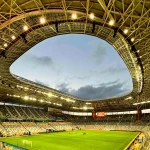
WHEN A football institution born in 1937 out of the dust and determination of Orlando East, Soweto in South Africa, announces a transformative naming rights partnership, it signals more than commercial evolution. The Orlando Pirates-Amstel deal, which rechristens Orlando Stadium as the Orlando Amstel Arena, represents a fundamental recalibration of how African cities, legacy sports brands, and global corporate entities collaborate to unlock economic value, forge emotional connections, and project continental ambition onto the world stage.
This is South Africa’s most significant football stadium branding moment – and it arrives at precisely the time when African sport must professionalise or risk irrelevance in an increasingly globalised industry where infrastructure, fan experience, and brand equity determine competitive standing.
Orlando Pirates is not merely a football club. Founded in 1937 during the consolidation of apartheid spatial engineering, it became a cultural institution – a symbol of Black excellence, resistance, and community pride. For nearly nine decades, the club has carried the aspirations of Soweto and beyond. That this storied entity now leads African football into sophisticated commercial terrain is both fitting and strategically brilliant.
The stadium itself, like the surrounding Orlando precinct, is woven into South Africa’s liberation narrative. Aligning its modern identity with both its historical custodian (Pirates) and a premium brand partner (Amstel) creates rare authenticity. This is not corporate erasure – it is evolution with roots intact.
Critically, the stadium remains publicly owned by the City of Johannesburg but commercially operated through Stadium Management South Africa (SMSA). This hybrid model – public asset, private efficiency – enables revenue generation without privatisation, funding upgrades without burdening municipal budgets. It is infrastructure pragmatism for fiscally constrained governments across the continent.
South Africa’s rugby provinces understood this model years ago – and their stadiums now stand as proof of concept for what Orlando Pirates is pursuing.
In Gauteng, both Ellis Park (now Emirates Airline Park) and Loftus Versfeld (Vodacom Loftus Versfeld) secured lucrative naming rights that financed modernisation, enhanced fan amenities, and elevated their global profiles. These deals transformed ageing infrastructure into world-class venues capable of hosting Lions tours, Rugby Championships, and international concerts.
In KwaZulu-Natal, Kings Park became Hollywoodbets Kings Park – a partnership that injected capital into the Sharks franchise while reinforcing Durban’s identity as a premier sports tourism destination. The deal enabled digital upgrades, hospitality expansion, and improved accessibility – all critical to attracting international events and high-value visitors.
In the Western Cape, DHL Newlands (before its closure) and the current DHL Stadium (formerly Cape Town Stadium) demonstrated how naming rights could support operational sustainability for stadiums built for major tournaments but struggling with post-event utilisation. Cape Town has since leveraged stadium branding to anchor its positioning as Africa’s events capital.
What rugby established, football, with its vastly larger fanbase and deeper cultural penetration, can now amplify. The Orlando Amstel Arena deal is not experimental. It is the application of proven strategy to Africa’s most popular sport, in its most economically significant city, involving one of its most storied clubs.
The world’s most successful clubs and cities have long understood that stadium naming rights are not transactional – they are transformational.
● Spotify Camp Nou (Barcelona) merged football with music culture, creating a brand ecosystem that transcends sport.
● SoFi Stadium (Los Angeles) became the most expensive sports venue ever built, funded largely through naming rights, and now anchors a new urban entertainment district.
● Allianz Arena (Munich) and Emirates Stadium (London) are inseparable from their cities’ global identities – mentioned in tourism literature, broadcast worldwide, and embedded in popular culture.
These are not just stadiums. They are destination markers, economic engines, and urban brands. Johannesburg, through this deal, asserts its claim as Africa’s leading sports and entertainment metropolis. The Orlando Amstel Arena becomes shorthand for Soweto, for Pirates, for Johannesburg – broadcast across television networks, social media platforms, and international sports commentary.
Strategic Implications for Destination Marketing and Economic Development
From a destination marketing perspective, this partnership offers Gauteng Tourism Authority and allied stakeholders extraordinary leverage:
1. Tourism Amplification
Stadium names travel. Every broadcast, every social media post, every international fixture embeds “Orlando Amstel Arena” into global consciousness. This reinforces Johannesburg’s positioning as Africa’s gateway city for major events – complementing existing assets like FNB Stadium, Ellis Park, and the Wanderers.
2. Infrastructure Modernisation Without Public Expenditure
Naming rights revenue typically funds stadium upgrades: digital connectivity, renewable energy systems, premium hospitality zones, and improved accessibility. These enhancements elevate visitor experience while reducing municipal capital expenditure – a critical consideration for cities managing competing budget priorities.
3. Sports Tourism Circuit Development
The deal creates potential for a Gauteng Sports Tourism Route – a curated experience linking Orlando Amstel Arena, FNB Stadium, Ellis Park, and Soweto’s heritage sites. This transforms isolated assets into an integrated product capable of attracting multi-day visitors and generating significant economic multiplier effects.
4. Youth Development and Social Impact
Strategic partnerships of this scale create opportunities for grassroots football investment, expanded academies, and support for emerging initiatives like a formal Orlando Pirates Ladies team. These programs anchor community development while building future talent pipelines – ensuring football’s sustainability beyond elite competition.
Today’s sports consumers demand immersive, digitally connected, premium experiences. The Orlando Amstel Arena partnership enables:
● Enhanced hospitality zones for corporate and premium ticketing
● Integrated digital platforms for ticketing, merchandise, and engagement
● Branded activations that deepen emotional connection
● Upgraded amenities that reflect international standards
These improvements are not superficial. They determine whether fans choose live attendance over digital streaming, whether corporates invest in partnerships, and whether international events select Johannesburg over competing African cities.
Navigating Complexity: Heritage, Health, and Reputational Risk
No commercial partnership of this magnitude is without tension. Three considerations demand careful stewardship:
Heritage and Cultural Sensitivity
Renaming a venue intertwined with liberation history requires transparent communication, community consultation, and heritage preservation commitments. The “Orlando” prefix remains – a deliberate nod to continuity. But ongoing dialogue with supporters, residents, and cultural custodians will determine whether this is perceived as evolution or erosion.
Alcohol Sponsorship in a Context of Harm
South Africa’s alcohol-related social challenges—from gender-based violence to road fatalities—make responsible branding non-negotiable. Amstel and Pirates must embed public health messaging, responsible consumption campaigns, and youth education initiatives into the partnership. Failure to do so risks undermining social license and inviting regulatory intervention.
Brand Risk and Long-Term Contractual Governance
Reputational crises affecting either party will impact stadium identity. Robust contractual safeguards, crisis management protocols, and ethical governance frameworks are essential to protecting both the club’s legacy and the city’s brand equity.
A Blueprint for Africa’s Sports Business Future
If executed with strategic discipline, ESG alignment, and genuine community investment, the Orlando Amstel Arena deal becomes the reference case for how African football clubs, cities, and corporate partners collaborate to create shared value.
This is not about selling heritage. It is about leveraging heritage to fund infrastructure, professionalise operations, and compete globally. It is about ensuring that a club born in 1937 in the townships of Johannesburg remains relevant, competitive, and sustainable in 2025 and beyond.
For South Africa, this partnership demonstrates that we can match global sophistication while retaining African authenticity. For the continent, it proves that African football can generate the commercial returns necessary to attract investment, retain talent, and build institutions capable of competing with Europe and the Americas.
The Orlando Amstel Arena is more than a renamed stadium. It is a statement of intent, from Pirates, from Johannesburg, from South African sport, that we are ready to claim our place in the global sports economy, on our terms, with our stories intact.
● Barba Gaoganediwe Matshogo is the Brand Leadership Specialist and Chief Marketing Officer, Gauteng Tourism Authority (Visit Gauteng)