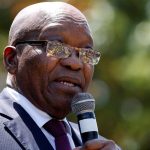
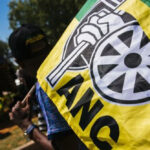
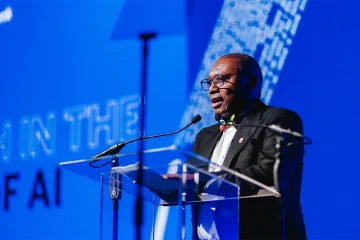
IN a frank conversation, renowned political analyst Professor Sipho Seepe offers interesting food for thought on the ANC’s foreign policy stance regarding Western Sahara.
“The ANC should not confuse sovereignty with self-determination. Nations have been able to create self-determining regions within one sovereign state,” he says, before adding: “Canada, for instance, is composed of English and French-speaking regions. However, Canadians have been able to rise above regional identities to forge a spirit of patriotism in support of their nation.”
Prof Seepe’s advice comes amid a globalised world of interconnected political discourse, characterised by old parties such as the ANC facing enormous challenges to reposition and repurpose their historical missions.
Legitimate struggles for liberation have been waged—with some won and others lost. Ultimately, people grow war-fatigued. Humanity by nature desires peace and, at times, in pursuit of cordial coexistence, peace can be better than being right.
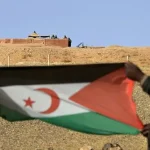
For too long, the ANC has thrown its weight behind the Western Sahara people’s struggle for self-determination. This is terrain that various generations of ANC leadership have championed with relentless determination.
Unsurprisingly, support for Western Sahara has historically pitted the ANC against Moroccan authorities, at times leading to unsavoury public utterances on both sides.
But with time not being static, the latest developments in international affairs appear to have caught the ANC unaware, posing a major foreign policy conundrum for Mandela’s party, whose fortunes have continued to wane since assuming power in 1994.
After decades of struggle by the Western Sahara people, led by the POLISARIO guerrilla movement, a solution appears to be on the horizon. In October 2025, the UN Security Council passed Resolution 2797, based on Morocco’s Autonomy Proposal for the people of Western Sahara.
The resolution seeks to expedite international dialogue between Morocco, Algeria, Mauritania, and the Frente POLISARIO, representing the people of Western Sahara. Algeria has always supported POLISARIO against Morocco and Mauritania, who partitioned Western Sahara after Spanish colonial rule ended in 1975. In 1979, Mauritania withdrew from the territory, and Morocco took sole control of the entire area. Since 1991, a UN peacekeeping mission has been deployed to the area following a ceasefire, which lasted until 2020 when renewed clashes resurfaced after POLISARIO accused Morocco of undermining the agreement. Sporadic clashes continue to this day.
According to UN records, Resolution 2797 seeks to assist the parties in achieving “a just, lasting, and mutually acceptable political solution based on compromise consistent with the principles and purposes of the Charter of the United Nations.”
Resolution 2797 is, however, at variance with the ANC’s historical mission and objective for the total emancipation of Western Sahara from Morocco. It is also supported by the African Union as a chance for a genuine solution.
The resolution calls for negotiations based on Morocco’s stance that autonomy is a preferred endgame over total secession by Western Sahara. Morocco’s argument is based on the belief that the Western Sahara people are one with the rest of the people of Morocco.
According to UN Resolution 2797, Morocco’s Autonomy Proposal is a potential path “to a mutually acceptable political solution for self-determination.” It was first presented by Morocco to the office of the UN Secretary-General on April 11, 2007. It also proposes “autonomy under Moroccan sovereignty” as a foundation for “the most feasible solution” to the conflict that began in 1973 and escalated in 1975 when Spain withdrew as a colonial power. The resolution shifts focus from past referendum plans supported by the ANC while reaffirming core UN principles.
The impact of UN Resolution 2797 on the conflict between Western Sahara and Morocco remains unclear. However, the resolution extends the “UN Mission for the Referendum in Western Sahara” (MINURSO) for another year.
The resolution also “encourages parties to engage in discussions using Morocco’s Autonomy Proposal (rather than secession) as a basis for seeking a just, lasting, and mutually acceptable resolution” to the conflict.
A member of the ANC Sub-Committee on International Relations, who spoke on condition of anonymity, explained: “We are faced with a really big challenge here. Our support for the people of Western Sahara has always been about their full independence from Morocco, but now the adopted UN Resolution 2797 seems to offer a half-baked cake in the form of autonomy only.”
The person added, “We cannot go against a UN resolution. As members of the UN, we are bound to support the resolution as written. It will now be up to the Western Sahara people to determine their eventual political settlement in the same or similar way to how the ANC led negotiations that resulted in the New South Africa.”
The person further said, “The will of the people of Western Sahara will have to be respected, regardless of what outsiders think or had wished for.”
Historical relations between Morocco and the ANC have been noble and comradely. In 1961, it was Morocco that offered Nelson Mandela military training in the period leading up to the formation of Umkhonto we Sizwe (MK), the ANC’s military wing.
Seepe noted: “This is part of history that is not commonly known because the ANC itself has not told or taught this part of history often enough to be widely known.”
He concluded: “The conflict between Morocco and Western Sahara is a centuries-old problem rooted in colonialism. Colonialists, in their arrogance, arbitrarily partitioned native lands to serve colonial interests. This was part of the divide-and-rule strategy. The UN Resolution 2797 should not be seen as a victory against Western Sahara. It should instead form a basis for an alternative way of reducing the balkanization of Africa. The challenge facing Morocco and Western Sahara should be about fostering unity while respecting regional self-determination. The resolution also forces Africans to revisit colonially determined sovereign states. This could reduce or eradicate disunity among Africans.”