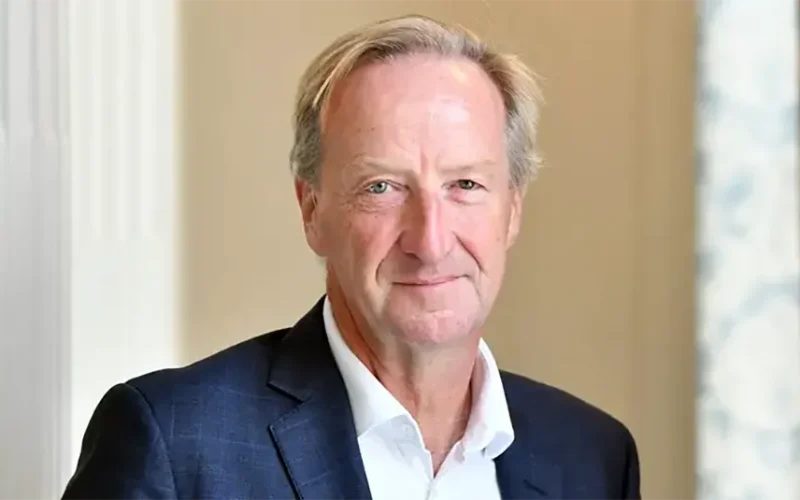
THERE is a kind of bond forged only in the spaces where ordinary language runs out — in back channels and secured rooms, in the grammar of classified cables and the weight of unspoken obligation. It is not friendship in the casual sense. It is something older, something harder-earned. It is the recognition between two people who have chosen, above comfort and above convenience, to stand between their nations and the worst that the world can offer. Sir Alex Younger, the 16th Chief of the British Secret Intelligence Service, who died on 3 June 2026 at the age of 62, understood that bond completely. And to those who shared it with him — whether from Langley or from anywhere else in the alliance of the willing — his passing is felt not merely as a loss, but as a diminishment of the world.
“Within hours of my CIA nomination, a hand-delivered note arrived on MI6 stationery, signed simply ‘C’ in green ink. Legendary.”
Mike Pompeo, former CIA Director
The Green Ink
Former CIA Director Mike Pompeo tells a story that says everything. Within hours of being announced as the nominee to lead America’s premier intelligence agency, a hand-delivered message arrived on MI6 stationery. It was signed simply “C” — in green ink. Pompeo shared it with his son. Even a teenager knew: this was different. This was history. This was a man who understood that the ceremony of the craft matters, that traditions carry meaning, that when a partner reaches across the Atlantic to say ‘we see you and we are with you,’ the message is about far more than protocol.
That was Alex Younger. Precise. Considered. Quietly theatrical in the way only the genuinely confident can afford to be. He flew to Langley the day Pompeo was confirmed — not in weeks, not through intermediaries, but the day. He convened both senior teams in the United Kingdom in those first critical weeks, laying down in unmistakable terms what the Five Eyes relationship meant at its most fundamental: not an arrangement of convenience but a covenant of purpose. As Pompeo would later say, when America needed help, the answer from Younger was never “let me see.” It was: “This matters to you and to America — we’ll get it done.” And they always did.
A Life Built in the Shadows
Alexander Younger was born on 4 July 1963 — a date that might read, to a certain kind of romantic, as cosmically appropriate for a man who would spend his career in the service of the Anglo-American alliance. He joined the Secret Intelligence Service in 1991, having served first as an army officer with the Royal Scots and Scots Guards. He was posted in the Western Balkans in the 1990s during the bloodiest European conflicts since the Second World War. He served in the Middle East. He led the MI6 station in Kabul, Afghanistan — a posting that required everything a man could give. In 2009, he became head of counterterrorism, shepherding the United Kingdom through threat landscapes of extraordinary complexity.
He was appointed Chief — C — in October 2014, succeeding Sir John Sawers. He would hold that position until September 2020, becoming the longest-serving MI6 chief in fifty years. The extension of his tenure in 2019, during the storm of Brexit, was itself a statement: some things are too important to be disrupted by political weather. Under his watch, MI6 was modernised with purpose and rigour. He championed what he called “fourth-generation espionage,” the fusion of human intelligence with technological capability, understanding before many of his peers that the wars of the future would be fought as much through algorithms and disinformation as through any kinetic action.
“He knew what evil was and he was ruthless in his efforts to crush it with every legal tool at his command. And he knew who his friends were.”
A Public Reckoning with Private Wars
One of the remarkable features of Alex Younger’s tenure was his willingness — unusual in a profession defined by silence — to speak publicly about threats the nation faced. He warned of Russia’s cyber warfare and disinformation campaigns years before the broader policy establishment caught up. He exposed the perpetrators of the Novichok poisoning in Salisbury. He cautioned, with clarity and precision, that hostile states viewed themselves as being in “perpetual confrontation” with democratic societies — and that democracies had better be prepared to respond in kind, within the law, without apology. He was not, as his admirers noted, a man who sought attention. But he understood that leadership sometimes required lifting the veil just enough to warn, to deter, to rally.
When he was diagnosed with prostate cancer in 2025, he met the news with the same quality he had brought to every hard briefing in his professional life: without flinching. Those close to him reported that, with characteristic dark wit, he nicknamed his tumour “Putin.” Even in mortal combat, Alex Younger faced his adversary with composure, with defiance, and — apparently — with humour. He died in Boston on 3 June 2026. He was 62 years old.
The Measure of a Man
Prince William said Sir Alex “embodied the very best of what the Secret Intelligence Service stands for — integrity, courage, and an unwavering commitment to protecting this country and its people.” Prime Minister Keir Starmer spoke of an exemplary life and career. Foreign Secretary Yvette Cooper said the nation owed him an enormous debt. Former Prime Minister David Cameron, who worked alongside him, said the news “knocked me for six.” The current Chief of MI6, Blaise Metreweli, remembered his values: integrity, courage, creativity, respect.
But perhaps the tribute that will endure longest comes from the man who received that green-ink letter in 2017. Pompeo wrote that many Americans are alive today because of Alex Younger’s leadership — and that he never knew how to thank him enough. He called him a role model. He said that every minute spent in his company was valued and savoured. In the cold accountancy of intelligence partnerships, that is not the language of diplomacy. That is the language of love — the spare, undemonstrative love of soldiers and spies, of people who have stood back-to-back in the dark and known, without having to say it, that the other would not break.
Why This Matters to Africa
The African Mirror is a publication of the Global South, and our readers may reasonably ask: why does the passing of a British spymaster carry weight in Johannesburg, in Nairobi, in Accra, in Dakar? The answer is this: the architecture of global security, for all its imperfections and all its colonial shadows, is an architecture in which African lives are embedded. The threats that Alex Younger spent his career confronting — state-sponsored terrorism, hostile-state disinformation, the erosion of democratic norms by authoritarian powers — are not confined to the North Atlantic. They wash up on every shore. The quality of the people who stand watch at the gates matters to everyone, everywhere.
More than that: Alex Younger represented a model of public service that transcends geography. A man of exceptional gifts who chose, at every fork, to serve rather than to profit. Who preferred the unmarked grave of classified achievement to the applause of public recognition. Who brought to the work of protecting human life the same ferocious moral seriousness that the work demands. That is a model worth honouring from any meridian.
Farewell, ‘C’
He was quiet, not attention-seeking — as espionage requires. He was decent and proper, and funny as hell, as those who loved him remember. He knew what evil was and he was ruthless in his efforts to crush it. He knew who his friends were and he never let them down. He loved his country with everything he had, and he loved his family more.
To the family of Sir Alex Younger: the community of those who understood what he was and what he gave extends further than you may know. There are people in places you will never visit who are safer for his having lived. There are children who will grow up without knowing his name but who owe something of their future to his vigilance. That is the paradox and the gift of a life lived in service of the secret art: the world is changed, quietly and permanently, and the world never finds out.
Sir Alex Younger, C, KCMG. 4 July 1963 – 3 June 2026. Brother in intelligence arms. May you rest in the peace you spent a lifetime trying to make possible for the rest of us.
“Well done, and may you rest in peace in His hands.”
Mike Pompeo