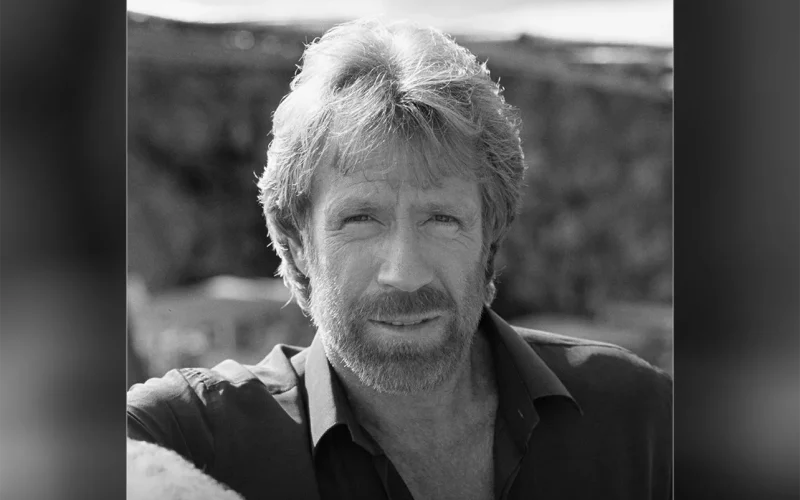
YOU will not find a death certificate for Chuck Norris. You will find a very politely worded request from the Grim Reaper asking him to consider resting – and Chuck Norris, for the first time in 86 years of roundhouse kicks, running gun battles, and impossible push-ups, graciously agreed.
The world woke on the morning of 20 March 2026 to news that would have seemed, to several generations of devoted fans, like the punchline to a joke too cruel to be funny. Carlos Ray “Chuck” Norris – martial arts grandmaster, action star, Texas Ranger (honorary and otherwise), internet demigod, and the man whose beard allegedly concealed a second fist – had passed away peacefully in Hawaii, surrounded by his family. He was 86.
Except that last sentence has a critical error. Chuck Norris does not “pass away.” Chuck Norris grants the universe a momentary retirement. The distinction matters enormously to a generation of broken hearts currently refusing to believe any of this.
“On March 10th, just days before his passing, he posted a video of himself sparring with a trainer, declaring: ‘I don’t age… I level up.’ The man was not bluffing.”
THE MAN, THE MYTH, THE MARTIAL ARTS FACTORY
Born in Ryan, Oklahoma, in 1940 – an unremarkable town that thereafter had nothing left to prove – Chuck Norris was not always Chuck Norris. He was once a nervous, quiet boy from a broken home who found his salvation not in therapy (though therapists are fine people) but in the Korean martial art of Tang Soo Do, which he encountered during his US Air Force deployment to Osan Air Base in South Korea in the late 1950s.
What followed was one of the great personal transformation stories in sporting history. The shy kid from Oklahoma became a six-time undefeated World Professional Middleweight Karate Champion. He founded his own discipline, Chun Kuk Do, and built a United Fighting Arts Federation that has awarded over 3,300 black belts bearing his name. Black Belt magazine eventually credited him with a 10th degree black belt – the maximum possible – as if to say: we have run out of belts for this man.
Across the African continent and beyond, there are dojos whose founding myth begins with a VHS tape of a Chuck Norris film, rented on a Friday night by someone who came home Monday morning with registration forms for the nearest martial arts school. From Nairobi to Durban, from Lagos to Dakar, the man inspired more flying kicks than any government fitness initiative ever managed.
WALKER, TEXAS RANGER – AND THE ENTIRE INTERNET
On screen, Norris was never the most subtle actor in the room. But cinema, as he understood it with the wisdom of a man who had been punched in the face by experts, was not always about subtlety. It was about the satisfying collision between good and evil – and the equally satisfying sound it made.
“Missing in Action.” “The Delta Force.” “Lone Wolf McQuade.” “Code of Silence.” These were not films so much as declarations of intent, action movies that arrived in theatres like a boot through a door. And then came Walker, Texas Ranger, eight seasons of CBS television (1993–2001) in which Norris played Cordell Walker, a man who apparently had no concept of due process but made up for it in moral clarity and left hooks.
The internet, that ungovernable republic of collective imagination, eventually found Chuck Norris and did what the internet does best: turned him into a god. “Chuck Norris had a staring contest with the sun – and won.” “They wanted to put Chuck Norris on Mount Rushmore, but the granite wasn’t tough enough for his beard.” These were the Chuck Norris Facts — tens of thousands of them, circulating the web since the mid-2000s, absurdist hymns to an indestructible masculine mythology that even Norris himself found charming enough to publish in an official collection.
“Death Tried Chuck Norris once. Out of respect, we will not discuss what happened to Death.”
BRUCE LEE, THE COLOSSEUM, AND A BEARD THAT PRECEDED HIM BY FIFTEEN MINUTES
No tribute to Chuck Norris is complete without the scene in the Roman Colosseum from The Way of the Dragon (1972), in which Norris – playing the villain Colt – squared off against Bruce Lee in what remains, half a century later, one of the most electrifying fight sequences ever committed to film. That Lee was a friend, training partner, and mentor makes the scene even richer. Two grandmasters, playing at war, neither holding back.
Lee, who died just a year later, would not live to see where his Oklahoma protégé’s career would go. But the scene they made together is eternal: two men at the peak of human physical capability, framed by ancient stone, producing something that transcended entertainment and became, for millions of young people watching in packed cinemas across Africa and Asia and everywhere else, a proof of concept for what the human body – disciplined, trained, committed – could do.
Chuck Norris understood this. He believed, publicly and repeatedly, that martial arts were not merely physical. It strengthened a person “mentally, psychologically, and emotionally.” He built schools. He created programmes. He gave the discipline away to anyone who wanted it. That, in the long run, may be his most durable legacy.
EIGHTY-SIX YEARS AND NOT A RETIREMENT IN SIGHT
The particular cruelty of this death – if “cruelty” is the word one uses for the passing of an 86-year-old man who was sparring with a personal trainer ten days before he died – is its sheer unexpectedness. The Norris family described it as a “sudden passing.” Sources said he was in good spirits on Wednesday, cracking jokes, working out on the island of Kauai as the sun came down.
On his 86th birthday, March 10th, he posted a video of himself in training, landing punches, grinning at the camera, and declaring: “I don’t age… I level up.” One struggles, genuinely, to argue with the evidence.
He is survived by his wife Gena, five children, and an indeterminate number of grandchildren who will grow up knowing that their grandfather once made the internet declare him incapable of dying. He is also survived by every person who ever signed up for a martial arts class because of him – and that number runs, conservatively, into the millions.
A FINAL NOTE TO THOSE IN DENIAL
We understand. We truly do. There is a corner of the collective imagination – inhabited by everyone who ever rented a Cannon Films VHS at age ten, everyone who watched Walker, Texas Ranger on a Sunday evening, every kid who threw their first kick at a tree in the backyard because Chuck Norris made it look reasonable – that simply cannot process this information.
You are not wrong to feel that something has gone slightly wrong with the laws of nature. Chuck Norris was, for most of his public life, less a man than a force – something more akin to weather, or gravity, or the internet’s conviction that certain things are simply too powerful to be mortal.
But here is the thing about true heroes: they do not actually die in the way that ordinary people die. They calcify into myth. They become the story a parent tells a child who has just been knocked down for the first time in a sparring match. They become the reason someone gets up off the mat.
Chuck Norris did not become a legend by accident. He did it one kick at a time, one film at a time, one student at a time, across eight decades of extraordinary discipline and unflinching commitment to the idea that the best of what a human being can be is earned through hard work, not bestowed.
He rested his cape at 86, in Hawaii, surrounded by family, at peace.
The cape, for the record, is still warm.