VIOLENCE in Myanmar is spiralling as the military junta increases its attacks on monasteries, schools and camps sheltering people uprooted by the civil war, a top independent human rights investigator warned.
In an update on the grave situation in the Southeast Asian nation, Special Rapporteur Tom Andrews said that more than 6,800 people have been killed since generals seized power in a coup in February 2021.
Today, Myanmar’s military – the Tatmadaw – has lost considerable territory, soldiers and facilities to resistance fighters, the independent rights expert maintained.
Armed with support from allies outside the country, the generals have resorted to an “acceleration of airstrikes” on civilian targets in a bid to cut opposition forces’ supply lines, Mr. Andrews insisted.
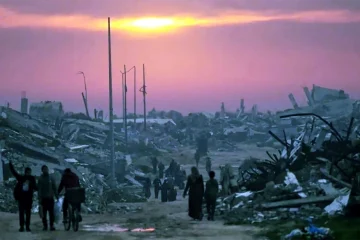
“The use of aircraft has been increasing and the use of bombing has been increasing,” he told journalists, adding that these “indiscriminate” aerial attacks have struck schools and monasteries. “We’ve documented that they have hit centres for internally displaced persons. I met a dad who lost his two – only two children – two daughters, after he brought them to an IDP centre for safety, because the IDP centre was hit.”
Speaking on the sidelines of the Human Rights Council in Geneva, Mr. Andrews insisted that Myanmar’s generals were “loathed” by the country’s people, who face forced military conscription and human rights abuses.
More than 22,000 political prisoners are now in prison, “most of whom are guilty of only exercising their fundamental rights, including speaking out and participating in demonstrations, opposing a brutal military junta”, the Special Rapporteur maintained.
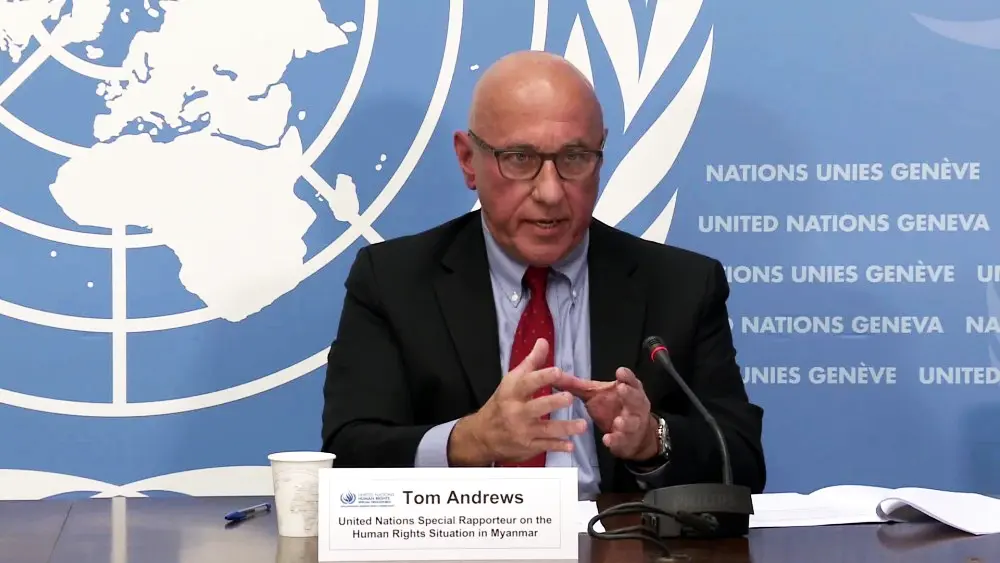
“They’re losing ground, literally and figuratively, but they have significant resources available to them, financial resources and weapons that are being provided to them from abroad,” Mr. Andrews maintained. “And as long as those resources continue to flow, they’re going to continue to wreak significant havoc, and they’re not hesitant to do so.”
In the aftermath of the devastating 7.7-magnitude earthquake that struck Myanmar on 28 March, Mr. Andrews also alleged that the Tatmadaw moved to divert aid relief to areas under its control and reportedly evicted earthquake survivors from their shelters. “The junta has taken the same approach with earthquake relief that it takes to all humanitarian aid generally: block the delivery of aid to opposition-controlled areas and attempt to force all donors and agencies to deliver aid only into its own hands,” he said.
In a call to the international community to condemn upcoming elections in Myanmar – the first since the coup – as “a charade and a fraud”, the rights expert urged UN Member States to show solidarity with the country’s people.
Highlighting a rare piece of good news about Myanmar, Mr. Andrews welcomed the “one-third reduction in the flow of weapons…into the hands of the military junta” thanks to measures involving the international financial system supported by Member States”.
According to the Special Rapporteur, Singapore took action that reduced 90 per cent of the weapons flowing from the country into Myanmar. In Thailand, the Bangkok Bank also ceased dealings with the junta-controlled Myanmar Economic Bank, cutting off the financing needed to buy weapons. “These are specific actions that are extremely positive and very fruitful,” Mr. Andrews said.
Meanwhile, the global humanitarian funding crisis is already having major negative repercussions in Myanmar, Mr. Andrews explained, noting that its humanitarian needs and response plan is only 12 per cent funded.
“Before the coup, there were 300,000 people internally displaced in Myanmar; now there are more than 3.5 million,” Mr. Andrews explained. “Nearly 1.5 million refugees from Myanmar are currently living in other countries. Nearly a third of the population of Myanmar is facing acute food insecurity; 21.9 million people are in need of humanitarian aid.”
Special Rapporteurs are independent human rights experts who work on a voluntary basis; they are not UN staff and do not receive a salary for their work.