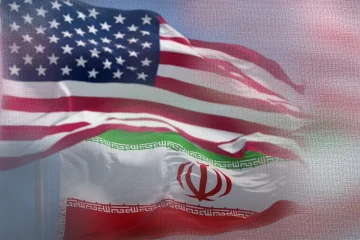
THE world may be hours – or weeks – away from the most consequential diplomatic agreement since the Abraham Accords. Three months after the United States and Israel launched a war on Iran that upended global energy markets, shattered the fragile post-pandemic economic recovery and plunged hundreds of millions of people from Lagos to Lahore back into fuel poverty, a peace framework is close. Tantalisingly, maddingly close.
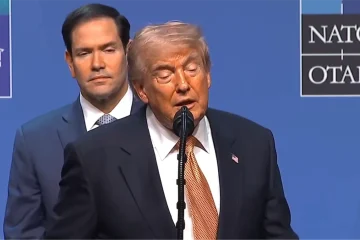
United States President Donald Trump confirmed on Saturday that Washington and Tehran had “largely negotiated” a memorandum of understanding, brokered by Pakistan, that would end the fighting, reopen the Strait of Hormuz, and begin a structured process toward a broader settlement. “Final aspects and details of the Deal are currently being discussed, and will be announced shortly,” Trump wrote on Truth Social.
Shortly, in Trump’s lexicon, has occasionally meant never. But the diplomatic signals this time are different – and more serious.
| ‘Even if the war ends now, full flows through the Strait will not return before the first or second quarter of 2027.’ |
A World Economy Still Bleeding
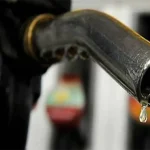
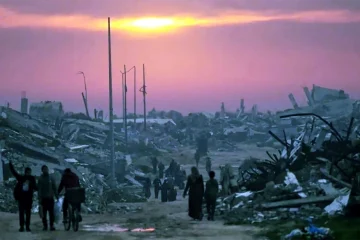
Since the US-Israeli assault on Iran began in February, the price of Brent crude has surged to around $103.50 a barrel – a 43% spike that has cascaded through every corner of the global economy. Fuel, food, fertiliser: the triple commodity shock has disproportionately savaged the Global South, where subsidy buffers are thin, currencies are weaker, and the margin between food security and hunger is measured in cents per litre of diesel.
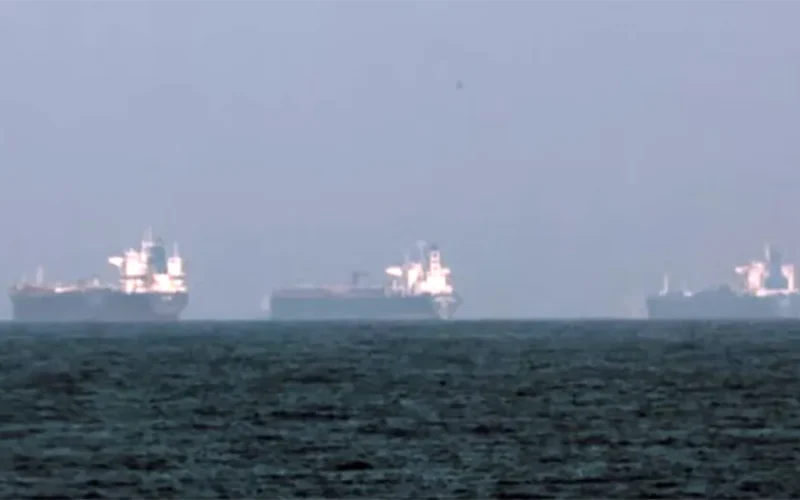
Even the most optimistic reading of a deal’s timeline offers cold comfort. The head of Abu Dhabi National Oil Company warned last week that full flows through the Strait of Hormuz – through which roughly a fifth of the world’s oil transits – would not be restored until the first or second quarter of 2027. The strait cannot simply be switched back on. Shipping insurers, tanker operators, and port logistics systems require time, confidence and clear legal guarantees before normalising.
For Africa, already reeling from dollar-denominated debt servicing costs inflated by the energy shock, a deal is less a cause for celebration than for cautious hope. The wounds are already inflicted. What a ceasefire buys, at minimum, is the end of the bleeding.
‘If the U.S. restarted the war, the consequences would be more forceful and bitter than at the start of the conflict.’
Iran’s chief negotiator Mohammad Baqer Qalibaf
What the Deal Actually Says — and Doesn’t
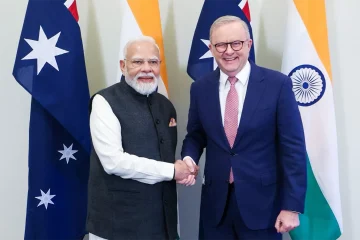
The memorandum, as reported by multiple US and Iranian outlets, is a framework in three stages: a formal end to hostilities, resolution of the Strait of Hormuz crisis, and a 30-day negotiating window – extendable — on a broader agreement. The critical detail: the Strait would reopen immediately upon the US lifting its naval blockade on Iranian ports. US Secretary of State Marco Rubio, speaking from New Delhi, confirmed the agreement would mean “completely open straits” and “without tolls” – a pointed rebuke to Iran’s earlier position that it could exact passage fees.
Under the emerging framework, the US would also waive some sanctions on Iranian oil exports, unfreezing a portion of Iran’s global assets in the deal’s first phase. In return, Iran would commit – formally and in writing – never to pursue nuclear weapons. Iran has long maintained it was not doing so, while its enrichment levels have far exceeded those needed for civilian power generation. The nuclear dossier itself would be left to a 30-to-60-day negotiating window: a deliberate ambiguity that allowed both sides to claim the harder issue had not been surrendered.
Iran’s position, conveyed through Foreign Ministry spokesperson Esmail Baghaei, was carefully calibrated: “The trend this week has been towards a reduction in disputes, but there are still issues that need to be discussed through mediators.” Translation: we are close, but not there yet, and we are not rushing.
The Sticking Points
Iran’s Tasnim news agency – a reliable outlet for the position of the hardline Revolutionary Guard establishment – threw a bucket of cold water on premature triumphalism, citing a source who warned there would be “no final understanding if the U.S. continued to create obstacles.” One or two clauses remained unresolved. The Iranian negotiating team’s priority is not just the economic blockade: it is a guarantee that the US and Israel will not strike again. The Lebanese front – where Israeli troops are battling Hezbollah — is deeply entangled.
Prominent Israeli opposition politician Benny Gantz declared it would be a strategic mistake for Israel to accept a ceasefire in Lebanon as part of any Iran deal. An unnamed Israeli official told local media that Prime Minister Benjamin Netanyahu had insisted to Trump that Israel retained freedom of action against all threats, including in Lebanon – and that Trump had agreed. Trump’s own account of the Netanyahu call was characteristically terse: it had gone “very well”.
Iran’s chief negotiator Mohammad Baqer Qalibaf offered a pointed counter-message: Iran’s armed forces had rebuilt their capabilities during the ceasefire, and if the US restarted the war, the consequences would be “more forceful and bitter” than at the start of the conflict. It was a warning, not a boast – but a warning calibrated to focus minds in Washington.
| For Africa, reeling from dollar-denominated debt inflated by the energy shock, a deal is less a cause for celebration than cautious hope. The wounds are already inflicted. |
Islamabad Holds the Thread
The unlikely hero of this diplomatic drama is Pakistan. Islamabad’s role as the principal mediating channel between Washington and Tehran reflects a remarkable rehabilitation of Pakistan’s international standing, and the particular genius of using a Muslim-majority nuclear-armed state with credibility on both sides. Two Pakistani sources confirmed that the memorandum stipulates the Strait would open immediately after the US blockade is lifted — a sequencing Iran has insisted upon to prevent Washington from pocketing the Strait opening before delivering its own commitments.
One of the Pakistani sources indicated that if the US accepted the memorandum, further talks could proceed after the Muslim Eid holiday concludes. That gives the framework — if agreed — a soft launch pad of this week at the earliest.
Trump himself spent Saturday on the phone: Saudi Arabia, Qatar, the UAE, Jordan, Egypt, Turkey and Pakistan all reportedly encouraged him to sign on. The Arab Gulf states have perhaps the most concentrated economic interest in a deal — their sovereign wealth funds, their oil export revenues, and their own regional security calculus are all hostage to a conflict they neither started nor can stop unilaterally.
The View From Africa: Watching, Waiting, Wanting
For the African continent, this war has been an object lesson in the brutal asymmetry of global economic exposure. Africa produces oil; it also imports refined fuel. It exports agricultural commodities whose input costs are pegged to energy prices. The fertiliser crisis triggered by the war has arrived just as Southern and Eastern Africa were beginning to stabilise food systems disrupted by El Niño. The timing could not have been worse.
A deal that genuinely reopens the Strait and begins a de-escalation trajectory does not automatically translate into lower prices at African petrol stations. It takes time for commodities markets to reprice, for shipping routes to normalise, for the risk premium baked into every barrel to soften. But it breaks the directional momentum. It signals that the worst may be over.
And that, right now, is what millions of people from Dakar to Dar es Salaam need more than a celebration. They need the bleeding to stop.
The Bottom Line
A Strait of Hormuz deal is closer than it has ever been since this war began. The framework exists. The mediator — Pakistan — has the trust of both parties. The regional powers have applied their full diplomatic weight. The economic pain on the American side, where rising energy prices have dented Trump’s approval ratings, provides genuine incentive for closure.
But “largely negotiated” is not the same as done. One or two unresolved clauses can, and regularly do, unravel months of careful diplomacy. Iran’s insistence on iron-clad guarantees against future attack, and Israel’s insistence on freedom of action in Lebanon, pull in opposite directions. The question is whether the exhaustion of three months of war, and the scale of the economic wreckage it has caused, is finally enough to make both sides blink.
The world will know soon enough. The Strait of Hormuz, and the millions who depend on what passes through it, cannot wait much longer.