RECENT clashes in northeast Syria have once again thrust the unresolved situation of children in detention camps holding people suspected of being affiliated with the so-called Islamic State (IS), their families, and some of the group’s victims into international headlines.
Following years of inaction, it is time for governments to finally address this issue once and for all by repatriating these children. A vast body of good practice and experience shows that this is the best way to both answer security concerns and uphold these children’s fundamental rights.
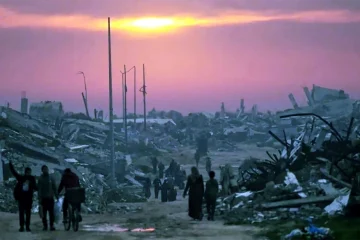
Since 2019, the al-Hol and al-Roj camps in northeastern Syria have caused grave concern among human rights advocates and security experts alike. Initially used as displacement camps following the fall of IS, they rapidly became detention centres.
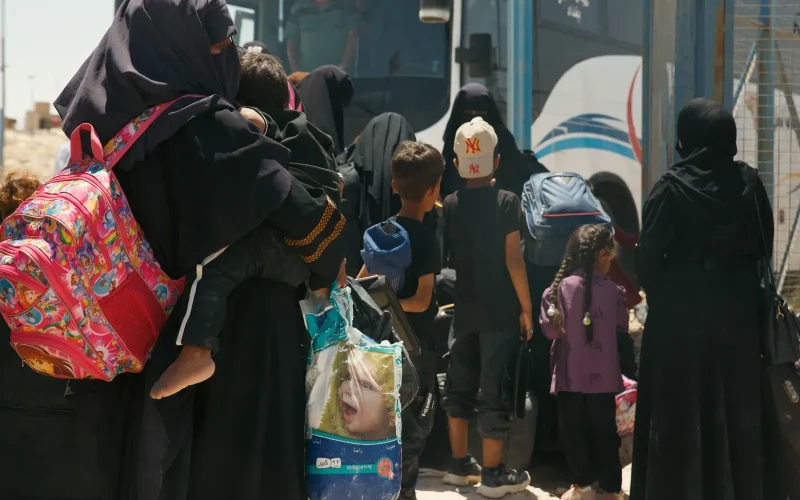
Today, the camps house roughly 30,000 people, including about 8,500 third-country nationals, mostly women and young children, many with alleged links to IS. While never designed to function as long-term facilities, they have become sites where tens of thousands of children are unlawfully and arbitrarily confined.
The living conditions in al-Hol and al-Roj have always been dire, especially for children. Early reports confirmed a lack of basic healthcare and education, exposure to extremist ideology, and high levels of violence, and the situation has progressively worsened over time. Experts unanimously agree that detaining children in the camps constitutes a gross violation of their fundamental rights to safety, dignity, and life, and deprives them of the chance to develop into healthy adults.
Clashes in recent weeks between the Kurdish-led Syrian Democratic Forces (SDF), which has been in control of the area where the camps are located, and the new Syrian government have further exacerbated the threat to these children.
Women inside al-Roj camp have described to us an unprecedented climate of fear, panic, and exhaustion. They report that shots have been fired by SDF forces inside and around the camp, and that families no longer dare to leave their tents.
Food is limited and unaffordable, and winter conditions are worsening the situation, with many families unable to heat their tents due to the scarcity of fuel. The fighting in northeast Syria has forced aid organisations to withdraw, further limiting access to information, but fragmented reports suggest that humanitarian needs are even greater inside al-Hol camp.
Upholding rights mitigates risks
For those who have followed the situation in these camps since the fall of the so-called IS caliphate in 2019, the current deterioration of human rights and security is not surprising. It is the foreseeable result of years of inconsistent and insufficient action that has left thousands of children from around 60 countries across the world unlawfully detained under deteriorating living conditions.
Many of these children have been barred from leaving the camps because of their parents’ former, ongoing, or suspected affiliation with IS. In any other context, this would be deemed collective punishment. However, many countries appear to have accepted and normalised the idea that keeping women and children detained serves their national security interests.
The camps maintain environments shaped by fear, coercion, and unaddressed trauma – precisely the dynamics that violent extremist movements have historically exploited.
Human rights organisations, child protection experts, and humanitarian and security specialists have long warned that the continued detention of families in al-Hol and al-Roj is neither sustainable nor helpful in dismantling IS’s legacy. Instead, the camps maintain environments shaped by fear, coercion, and unaddressed trauma – precisely the dynamics that violent extremist movements have historically exploited.
Prolonged child detention under these conditions does not contain or prevent risk. Rather, it poses a dual security concern: the immediate threat to children forced to grow up in constant danger, and the longer-term threat to society if and when these children are exploited and recruited by extremist predators. Al-Hol and al-Roj demonstrate that security and an international commitment to children’s rights and international legal standards are inextricably linked: The erosion of the latter precipitates the erosion of the former.
Countries that remain reluctant to repatriate their citizens from the camps need to move beyond a simplistic understanding of security.
Precedent to follow
Repatriating mothers and children from the camps is not a simple task, but it is possible. Despite initial concerns over security risks and voter alienation, over the past few years, some 40 countries have repatriated some or many of their citizens from al-Hol and al-Roj. These women and children were brought home through coordinated efforts involving multiple authorities, and then supported by child protection agencies, social services, and civil society organisations.
Over the past six years, we have monitored the trajectories of families repatriated from the camps to multiple countries. Adults suspected of crimes were investigated and, where appropriate, prosecuted, and children were protected when a parent posed a genuine risk. We found that many children adjusted well – enrolling in schools and forming friendships. Surviving war, detention, and family separation leaves a mark, and some require ongoing support, but it is important to distinguish between the problems children have and those they were expected to pose.
Once adjusted to their new environments, none of the children have displayed behaviour suggesting deep-rooted radicalisation or a propensity to violence. In the vast majority of cases, mothers and other family members, such as grandparents, aunts, and uncles, play a crucial role in children’s recovery and healthy long-term development. Cases in which professional support was combined with support from civil society and public services proved particularly effective.
While inevitable during pre-trial detention and prosecution, or due to serious concerns about a child’s well-being, we found that family separation can have a highly adverse impact on children, especially separation from mothers who functioned as their only source of comfort and security abroad. Maintaining family unity has been a crucial factor in the successful and swift reintegration of both mothers and their children.
The longer children remain detained in al-Hol and al-Roj, the more support they will require once repatriated, but this is no longer uncharted territory. New child protection systems have emerged. Schools, healthcare services, and local communities have successfully integrated returning children and monitoring frameworks exist for both women and children.
Six years’ worth of experience following these families shows that repatriation and rehabilitation not only ensure children’s safety and restore their well-being, but also function as effective long-term prevention against their exploitation by extremists. The time to end their harmful and dangerous limbo and bring them home is now.
–––––
The New Humanitarian puts quality, independent journalism at the service of the millions of people affected by humanitarian crises around the world. Find out more at www.thenewhumanitarian.org.