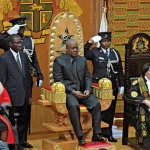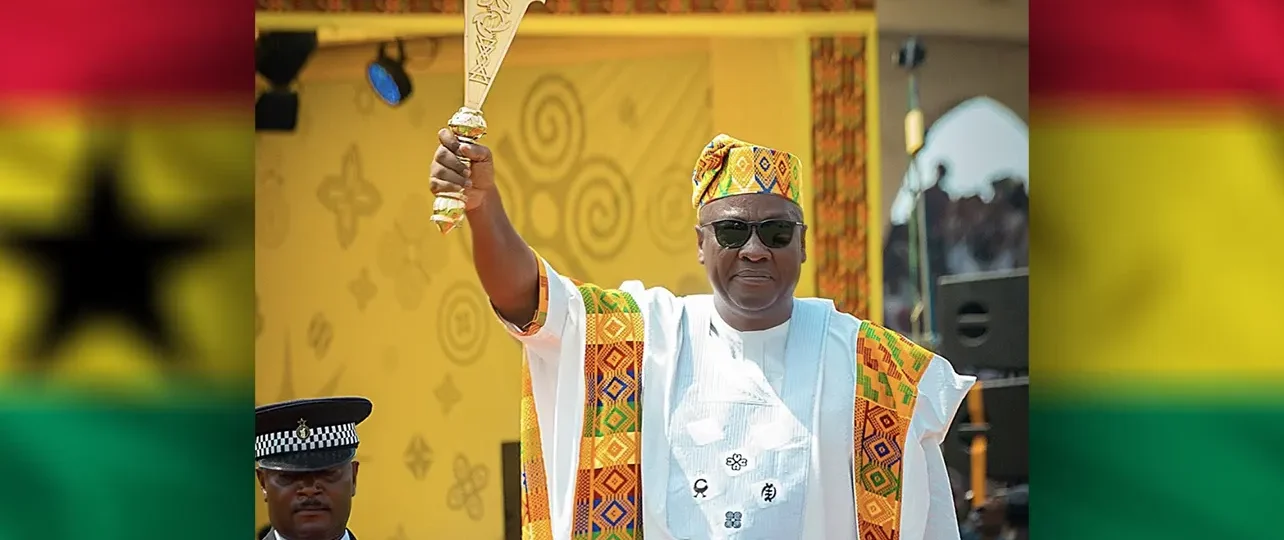

ON a sun-drenched January morning in Accra, Ghana wrote a new chapter in its democratic story – one of resilience, redemption, and the enduring spirit of its people. John Dramani Mahama once defeated and twice denied, stood before his nation to reclaim the presidency he lost eight years ago, completing one of Africa’s most remarkable political comebacks.
The streets of Accra pulsed with the red, white, and black colours of the National Democratic Congress (NDC), as crowds gathered to witness what seemed improbable just a few years ago. Mahama’s journey back to power reads like a political odyssey: a former president defeated in 2016, rejected again in 2020, only to rise from the ashes with a stunning victory that saw him secure 56.55% of the vote – the largest margin in Ghana’s democratic era in 24 years.
But this wasn’t just Mahama’s triumph. Beside him stood Professor Jane Naana Opoku Agyeman, making history as Ghana’s first female Vice President. A literature professor and former education minister, her presence marked a seismic shift in the nation’s political landscape.
The mandate they received wasn’t just a victory; it was a cry for change. Ghana, once hailed as West Africa’s economic beacon, had stumbled under the weight of crushing inflation that peaked at 50.3%, unsustainable debt, and widespread youth disillusionment. The streets that today echo with celebration had, just months ago, thundered with protests against the cost of living and illegal gold mining.
The symbolism of Mahama’s return resonates beyond Ghana’s borders. In a region where democracy has recently faltered – with military takeovers in Mali, Niger, and Burkina Faso – Ghana’s peaceful transition stands as a beacon of hope. The presence of Nigeria’s President Bola Tinubu, European Union delegates, and American representatives at the inauguration underscored the global significance of this democratic milestone.
Yet, the poetry of this political resurrection now gives way to prose. Mahama inherits a Ghana vastly different from the one he left in 2016. The economy that once surpassed South Africa as Africa’s leading gold producer now grapples with junk-status credit ratings. The promise of new oil fields discovered in 2019 remains overshadowed by mounting debt and an IMF bailout.
For Mahama, this second chance comes with towering expectations. His promise of “a new beginning” must now translate into tangible solutions for a nation yearning for economic stability and renewed hope. The man who once gracefully accepted defeat must now prove he can lead Ghana back to prosperity.
As the sun sets on this historic day in Accra, the challenge ahead is clear: transform this moment of democratic triumph into lasting change for Ghana’s people. For Mahama, the clock starts now – four years to turn the promise of comeback into the reality of progress.