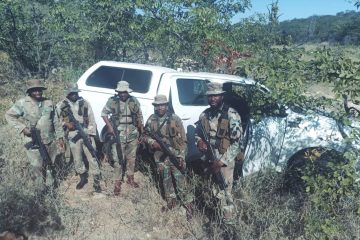
THE golden sun beats down on Juba’s dusty streets as convoys of Ugandan special forces roll across the border. Their mission: to shield President Salva Kiir’s government from the gathering storm. These aren’t peacekeepers in blue helmets—they’re battle-hardened soldiers carrying the will of Uganda’s longtime ruler, Yoweri Museveni, a kingmaker once more flexing his muscles in the fragile landscape of East African politics.
“This is not the first dance by the Uganda army. Indeed, Uganda has walked this path before, rushing to Kiir’s aid when civil war erupted in 2013. Now, as the tenuous peace between Kiir and his deputy Riek Machar threatens to unravel like a frayed rope under tension, Uganda’s soldiers return – uninvited guests at a volatile political feast.
The corridors of power in Juba have become a labyrinth of suspicion. President Kiir’s recent arrest of officials loyal to Machar has sent shockwaves through the capital. In the marketplace, vendors exchange worried glances as they remember the blood that once ran through these streets. “We’ve seen what happens when these men quarrel,” says a woman selling mangoes, her eyes reflecting the memory of past horrors.
Meanwhile, in Kampala, President Museveni sits in his high-backed chair, a chess master contemplating his next move. His recent cabinet reshuffle – installing his son Muhoozi Kainerugaba as defence chief – was no mere bureaucratic shuffling. It was the positioning of pieces on a regional game board where oil, power, and survival are the prizes.
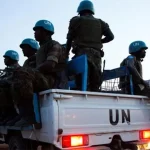
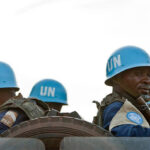
At the United Nations compound on the outskirts of Juba, blue helmets patrol with increasing unease. UNMISS peacekeepers, mandated to remain neutral, now find themselves in an impossible position. How can they protect civilians when another country’s army has explicitly taken sides?
“We’re supposed to be the impartial guardians,” confides a UN official, watching Ugandan troops establish positions across the city. “But when a neighbour sends guns instead of mediators, our credibility bleeds away drop by drop.”
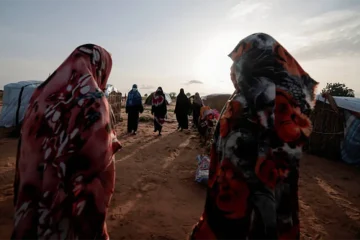
In the sprawling Protection of Civilians sites, where thousands of South Sudanese sought refuge during previous fighting, anxiety ripples through the displaced communities. “If fighting comes again, who will people trust?” asks a community leader. “The UN who promises neutrality, or Uganda who promises victory?”
The brass-and-mahogany conference rooms of Addis Ababa fall silent as African Union diplomats absorb the news of Uganda’s intervention. Years of careful mediation, delicate as spider silk, threatened by the heavy hand of military force.
“Uganda speaks of protection while pursuing petroleum,” whispers one diplomat to another. The oil fields of South Sudan – still pumping despite the political chaos—represent a vital economic lifeline for both nations. Uganda’s planned pipeline through South Sudanese territory makes stability there not just a political priority but an economic imperative.
Across the border in Uganda’s refugee settlements—already hosting over a million South Sudanese – aid workers prepare for a potential new exodus. “Every time the politicians rattle their sabres, it’s the ordinary people who must flee,” says a humanitarian coordinator, looking out over endless rows of shelters that stretch toward the horizon.
As night falls over Juba, the Ugandan forces establish their presence – visible, unmistakable, a message in olive drab. In Washington, officials order non-essential personnel to evacuate, reading the same ominous signs. The international community watches, holding its breath, as Uganda’s intervention writes a new chapter in South Sudan’s troubled story.
“We deny any foreign troops on our soil,” South Sudan’s information minister tells reporters with a straight face, even as Ugandan soldiers move through the capital. The contradiction speaks volumes about the murky waters of regional politics, where public statements and ground realities rarely align.
In the shadow of these events, Museveni’s son settles into his new role as Uganda’s military chief. His appointment signals not just a father preparing for succession but a nation preparing for a more muscular foreign policy. Uganda, already juggling military engagements from Somalia to Congo, now commits its forces to yet another neighbour’s troubles.
As dawn breaks over Juba, market women set up their stalls under the watchful eyes of foreign troops. Children walk to school past armoured vehicles. Life continues in the fragile bubble of an artificial peace—a peace maintained not by reconciliation but by the implicit threat of force.
“They call it protection,” muses an elder in a tea shop near the parliament building. “But history teaches us that protectors eventually demand payment for their service.”
The question hanging over South Sudan is simple but profound: Will Uganda’s intervention prevent a war, or merely postpone it while deepening the divides that make peace so elusive? As the sun climbs higher in the African sky, only time will reveal whether the shadow of the protector brings shelter or darkness to a nation still searching for its path to lasting stability.