IF Ugandans thought the present was unbearable, they should be terrified of the future. In a chilling display of impunity that should alarm every citizen contemplating their country’s trajectory, the man positioned to inherit Uganda’s presidency has openly confessed to crimes that would typically be concealed, denied, or justified through official propaganda.
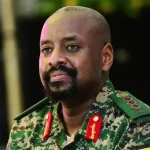
Lt. General Muhoozi Kainerugaba, son of 81-year-old President Yoweri Museveni and chief of Uganda’s military, has done something unprecedented in the annals of authoritarian succession: he has publicly bragged about systematic state violence. In a series of social media posts following the disputed January 15 election that secured his father a seventh term, Kainerugaba revealed that security forces had killed 30 opposition supporters, detained 2,000 more, and were actively hunting opposition leader Bobi Wine and his associates.
“So far we have killed 30 NUP terrorists,” Kainerugaba declared on X, using dehumanising language to describe supporters of the National Unity Platform. “Most NUP terrorist leaders are in hiding. We shall get them all.”
This is not leaked intelligence. This is not an opposition allegation. This is the country’s military chief and presumed future president openly acknowledging extrajudicial killings and mass detention in his own words, on his own social media accounts, for the world to see.
A Darkness Visible
For nearly four decades, Ugandans have endured Museveni’s increasingly authoritarian grip. The current regime has been characterised by the systematic harassment, detention, and torture of opposition figures. Unofficial detention centres operate beyond the rule of law. Political opponents disappear. Wine himself has alleged that hundreds of his supporters have been illegally detained in recent months, targeted solely for their political beliefs in what he describes as a campaign of fear and intimidation.
But Kainerugaba’s posts reveal something more sinister than the typical machinery of dictatorship. They expose a successor who does not even pretend to respect democratic norms or human rights obligations. Where previous generations of autocrats at least maintained the fiction of legality, Kainerugaba dispenses with such pretence entirely. His casual admission of state killing suggests a man who believes himself utterly above accountability.
The international community has taken note. UN Secretary-General António Guterres expressed concern over the arrests and violent incidents, calling for restraint and respect for Uganda’s international human rights obligations. But such diplomatic language rings hollow against Kainerugaba’s blunt declarations of violence.
The Architecture of Fear
The post-election crackdown has intensified systematically. Muwanga Kivumbu, a lawmaker and Wine’s deputy in the NUP, was detained on Thursday. Two other senior NUP figures have been missing for days. Wine, 43, fled his residence after security forces raided it shortly after the election, and remains in hiding while the military chief publicly promises to capture him and all his associates.
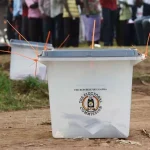
The election itself was conducted under an internet blackout, a now-familiar tool of modern authoritarianism designed to prevent opposition organising and the documentation of electoral fraud. Wine has rejected the results, alleging widespread irregularities, including ballot stuffing. The government accused Wine’s supporters of violence; the opposition says its members were attacked by security forces. In the information vacuum created by state control, the truth becomes whatever power declares it to be.
A Future Written in Blood
What makes Kainerugaba’s succession particularly ominous is that he has already shown Ugandans exactly who he is. Unlike his father, who came to power amid promises of democratic reform after years of civil war, Kainerugaba has no liberation credentials, no revolutionary legitimacy, no pretence of being a man of the people. He is a general who inherited his position through nepotism and who has now publicly demonstrated that he views political opposition as terrorism deserving of death.
Kainerugaba has previously expressed presidential ambitions, and is widely believed to be his father’s chosen successor. This is not speculation about what kind of leader he might become. He is already acting as Uganda’s de facto leader, directing security operations, making public statements about state policy, and quite literally deciding who lives and who dies.
For Ugandans contemplating their future, the message could not be clearer. The current repression is not an aberration that might end with Museveni’s eventual departure from power. It is a system being institutionalised and intensified, prepared to continue seamlessly under new management that has already proven itself more openly brutal than what came before.
The Confession as Warning
In authoritarian states, leaders typically deny atrocities, blame rogue elements, or claim self-defence. Kainerugaba’s social media confessions represent something different: a promise. He is telling Ugandans that the violence is deliberate, systematic, and will continue. He is announcing that he has killed, that he has detained thousands, and that he will hunt down everyone associated with opposition to his family’s rule.
This is a man who does not fear accountability because he does not believe accountability exists for people like him. This is a man who views the military not as an institution that serves the nation but as a personal instrument of political control. This is a man who is showing Uganda its future, and that future is written in the blood of those who dare to dissent.
For any Ugandan citizen looking ahead, wondering whether to hope for change, whether to speak out, whether to believe that the next generation might bring something better than the last, Kainerugaba has provided an answer. He has confessed to his crimes before even taking full power. He has promised more violence to come. He has made clear that the succession from father to son will not bring reform or reconciliation, but rather the consolidation of a dynastic dictatorship that no longer bothers to hide its brutality.
Be afraid. Be very afraid. The heir has already told you exactly what he plans to do.