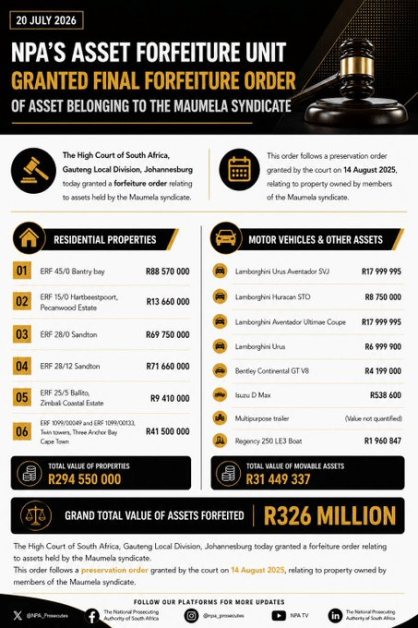
IN a courtroom victory that South Africa’s anti-corruption architecture will present as proof it still has teeth, the High Court in Johannesburg has granted a final forfeiture order stripping an alleged criminal syndicate of assets worth approximately R326 million – the accumulated spoils of a scheme prosecutors say bled Tembisa Hospital dry while patients queued for care that never came.
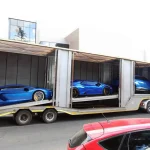
The order, secured by the National Prosecuting Authority’s Asset Forfeiture Unit (AFU), permanently hands the state control of a portfolio that reads like a catalogue of impunity: a R88.57-million Bantry Bay mansion on Cape Town’s Atlantic seaboard, twin Sandhurst properties in Sandton worth a combined R141 million, a Pecanwood Estate home beside the Hartbeespoort Dam, a Zimbali Coastal Estate residence on the KwaZulu-Natal coast, and two units in a Sea Point tower block. Parked alongside them: a Lamborghini Urus Aventador SVJ, a Lamborghini Huracán STO, a Lamborghini Aventador Ultimae Coupe, a second Lamborghini Urus, a Bentley Continental GT V8, and a Regency 250 LE3 pleasure boat — vehicles collectively worth tens of millions of rand, bought, investigators allege, with money meant for hospital beds, medicine and equipment.
The forfeiture traces its origins to a single act of conscience. Babita Deokaran, Chief Director for Financial Accounting in the Gauteng Department of Health, flagged suspected procurement irregularities in Tembisa Hospital’s supply chain before she was assassinated outside her Johannesburg home on 23 August 2021. Her killing, still unresolved in the courts, transformed a routine finance query into one of the defining corruption scandals of South Africa’s democratic era.
A subsequent review by National Treasury’s Specialised Audit Services unit, examining payment data between April 2016 and August 2022, corroborated what Deokaran had tried to expose: fourteen entities linked to what investigators call the Maumela Syndicate had irregularly captured contracts worth more than R400 million at a single public hospital. Forensic investigators would later describe a procurement system that was not merely exploited but methodically hijacked — companies denying they had ever submitted the bids attributed to them, “cover quoting” firms recruited to simulate competition, and a flow of funds that led overwhelmingly to bribes, luxury purchases and personal enrichment rather than to a single hospital bed, syringe or bandage.
“A TRAVESTY OF JUSTICE”
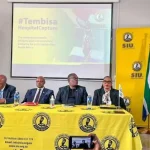
National Director of Public Prosecutions Advocate Andy Mothibi framed the forfeiture as both a victory and an indictment. The pursuit of justice for South Africans continues, he said, particularly where ordinary people become victims of corruption through inadequate healthcare, under-resourced facilities, medicine shortages and a lack of essential equipment – conditions he did not hesitate to call a travesty of justice. Deputy National Director Advocate Chuma Mtengwane, who heads the Asset Forfeiture Unit, said the recovered proceeds would be ring-fenced in the Criminal Asset Recovery Account for use by the Gauteng Department of Health, with a dedicated committee overseeing their application.
For a National Prosecuting Authority still rebuilding public confidence after years of state capture, the order is a rare, tangible win: a public hospital’s stolen money, converted into a Bentley and a fleet of Lamborghinis, formally and permanently returned to the state that was robbed of it.
THE GODFATHER QUESTION
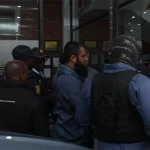
But the triumph sits uneasily alongside an unresolved and increasingly uncomfortable fact. The Special Investigating Unit has publicly identified Hangwani Morgan Maumela as the alleged architect of the syndicate that bears his name – a network the SIU says touched more than R816 million across 1,728 procurement bundles and roughly forty linked companies, part of a wider Tembisa Hospital plunder investigators now estimate at over R2 billion. Maumela was arrested and briefly detained in August 2025 before being released, and the AFU has since frozen or seized assets in his name approaching R520 million. Yet as this masthead went to press, he had not been criminally charged.
The gap between exposure and prosecution has become a national talking point. Opposition parties, most vocally the Democratic Alliance in Gauteng, have accused the state of slow-walking the case, pointing to revelations that Maumela acquired a R52-million Italian hypercar in the months after Deokaran flagged his companies, part of a reported R208-million fleet of designer vehicles amassed over two years. In April 2026, responding to parliamentary questions, Justice and Constitutional Development Minister Mmamoloko Kubayi confirmed that no charges had yet been preferred against Maumela, attributing the delay to the painstaking work of converting SIU findings into evidence that can withstand cross-examination in court.
The scrutiny has been sharpened by Maumela’s reported family proximity to South Africa’s first family — he has been described in multiple accounts as a nephew of President Cyril Ramaphosa through a former marriage, a connection the Presidency has repeatedly said involves no knowledge of or relationship with Maumela himself. For critics, the optics remain corrosive regardless: a system that can freeze a Bentley but has not yet charged the man alleged to have ordered it bought.
OTHERS HAVE ALREADY FACED THE DOCK
The contrast is heightened by the fact that other, more junior figures swept up in the broader Tembisa investigation have already been arrested and charged while the alleged kingpin remains free. A Tembisa Hospital operations manager and a Hawks sergeant appeared in court in December 2025 on corruption charges after allegedly attempting to bribe an investigating officer. A hospital supply-chain official was separately arrested and has since repaid more than R13.5 million in what the SIU described as ill-gotten gains. A Mpumalanga car dealership owner has been hauled before the Special Tribunal for defying a preservation order and selling a Maumela-linked Bentley. Even a second syndicate leader, identified only in recent months as businessman Stefan Joel Govindraju and allegedly linked to a further R596 million in irregular contracts, has been named publicly. Maumela, named first and implicated most extensively, has not.
THE BIGGER PICTURE
Tembisa Hospital serves a catchment of close to two million people in one of Gauteng’s most densely populated corridors. The SIU’s findings paint a picture of a facility hollowed out from within: dilapidated infrastructure, chronic overcrowding, and a procurement system so thoroughly captured that, investigators say, almost none of the diverted funds reached patients. That reality gives this week’s forfeiture order its moral weight — and gives the continued absence of criminal charges against the syndicate’s alleged godfather its political sting.
For the National Prosecuting Authority, the R326-million order is proof of what asset forfeiture law can achieve even before a single criminal trial begins. For millions of South Africans who depend on hospitals like Tembisa, and for a whistleblower who paid for her diligence with her life, the harder question is whether the law’s slower, criminal arm will ever catch up with the man they call the syndicate’s godfather.
| AT A GLANCE: THE TEMBISA HOSPITAL FILE • R326 million — value of assets under the final forfeiture order granted this week. • R816 million — SIU estimate of funds linked to the wider Maumela Syndicate across 1,728 procurement bundles. • R2 billion+ — total value SIU investigators say was looted from Tembisa Hospital across multiple syndicates. • 23 August 2021 — date whistleblower Babita Deokaran was assassinated after flagging the fraud. • 0 — criminal charges laid against Hangwani Maumela, the syndicate’s alleged leader, as of this report. |