THE face of geopolitics changed dramatically following the Presidential election in America. Africa is clearly not a priority for the current leader of the free world, and Europe is gearing up to become an even more substantial voice in global politics.
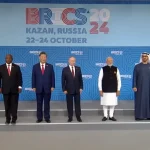
South Africa’s current alignment with the BRICS family presents both opportunities and challenges. On the continent, government debt, slow economic growth, and corruption hinder forward economic mobility.
Against this backdrop, we as leaders should consider the following strategies:
- Prioritize boosting economic growth by “throwing off the chains” of regulation
- Fight corruption through actions, not just words
- Avoid populist and knee-jerk politics
- Consider a non-aligned stance in geopolitics
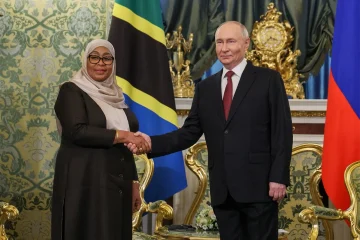
- Take time to carefully evaluate whether and how to respond to world leaders
- Unite as a continent on matters of policy and action
- Ensure government is cost-effective, efficient, and less bloated than it currently is
- Understand that people will vote with their feet, as they did in South Africa when they felt ignored
- Be cautious of the second and third waves of colonialism; participate actively in foreign investment in your country, but don’t be seduced by payoffs
Without robust governance from the highest office and across all leadership structures, the country will not regain the trust of its citizens, nor will it earn the confidence of investment and trading partners in the West. Poor governance and inept, unethical leadership will significantly reduce South Africa’ – and indeed, the continent’s – growth trajectory, while undermining our sustainability.
I would like to illustrate the role of leaders in Africa today with three examples:
Vision
Nelson Mandela embodied the values of leadership by demonstrating vision, foresight, and resilience at a time when the international community feared the worst for our beautiful country. He served a five-year term after several years of deprivation, whereas in other countries, people struggle to secure extra mandates. Instead of civil war, we experienced peace and stability. This is an important element that deserves reflection.
Humility
Our late brother, Tito Mboweni, the former Minister of Finance, Labour and ex-governor of the South African Reserve Bank, embodied leadership through his activism, his simplicity, and his jovial humour. Despite his heavy state responsibilities, he loved to share with his compatriots his thoughts, hobbies, and culinary passions, which made him known as a gourmet and a lover of good food. This is clear proof that a leader is not a disembodied being, but lives within us and identifies with our daily joys and worries. Mboweni humanised politics in South Africa. This is a merit that must be recognised and that should inspire new generations.
Good governance
Then US President Barack Obama declared in Ghana that: “Africa does not need strong men, but strong institutions.” It was a way of demonstrating his preference for a healthy political environment, a bulwark against tyranny and democratic deficits, evils that have bloodied our continent. The Senegalese understood this well and, a year ago, elected a 43-year-old as president of the republic in a continent where nearly 60% of the population is young.
South Africa MUST immediately implement digitised governance frameworks in EVERY state organization. This will help boards identify areas of governance that need redress. With the transparency of seeing where the challenges and bottlenecks lie, leadership will collectively understand what needs to be done and how to prioritize resources. These systems will align all leaders, and with inbuilt management, measurement, reporting, and auditing functions, all key stakeholders will become part of the solution.
Far too many leaders in South Africa lament the problems without offering any solutions. In the past few weeks, I’ve engaged with professors and other academics, including advisors to the Presidency. They were all shocked when I demonstrated Praefectus – showing how state organisations can turn around failed governance through a digitised framework, which can prevent an eventual failed state. We are rapidly heading in that direction if we don’t act now!
Two days ago, Rob Hersov saw the power of our digitised governance work, and he immediately said the software should be taken to Austin, Texas.
Yesterday, another advisory board member from the state was put in contact with me. He, too, was in disbelief when he saw how quickly the government could self-correct the damage.
So, if it were me on the platform today, I would focus on one theme: implementing and acting on good governance – without exception and without fail – and applying it uniformly across the board.
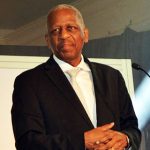
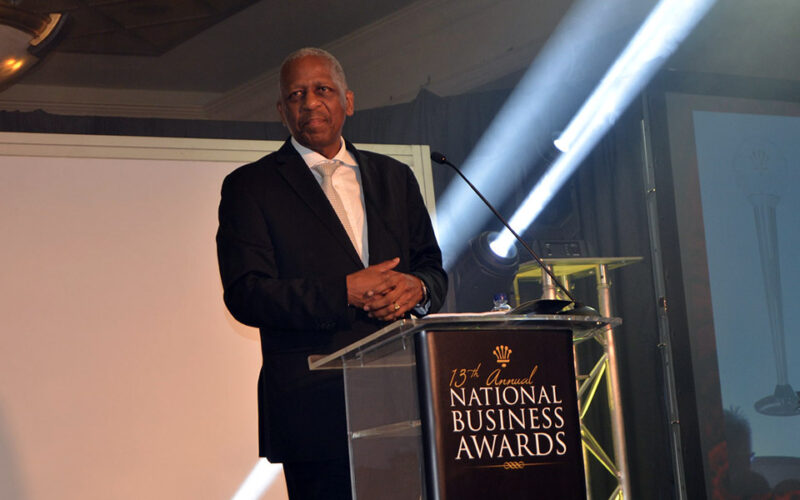
This is an edited version of Dr. Mathews Phosa’s address to a special Unisa seminar, held in Durban, KwaZulu-Natal, South Africa, on the topic: “What Leadership Does Africa Need, and How Do We Achieve It?”