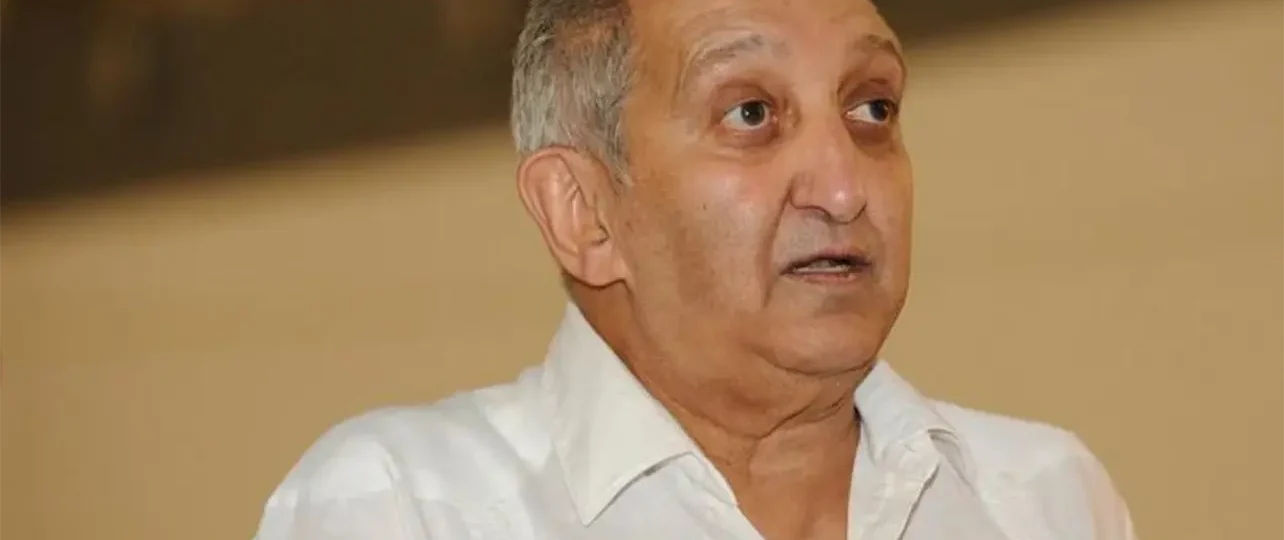

THE current generation of South Africans must deepen the foundations we have inherited from previous generation stalwarts, such as the former Deputy Minister of International Relations and Cooperation, Aziz Pahad, a true servant diplomat. Known as the “Insurgent Diplomat,” as the title of his biography suggests, Aziz Pahad will be remembered as a man of deep conviction and principle.
He was steadfast in his belief in anti-imperialism, anti-racism, and the protection and promotion of non-racialism, genuine partnership – not paternalism – solidarity instead of unilateral enforcement, multilateralism, and genuine international cooperation.
Just as we stand for peace and peaceful settlement of disputes and conflicts, we hereby give credit and notice that we were socialized to believe in these cardinal, non-negotiable principles by Pahad and his comrades, under the leadership of the then Minister Dr. Dlamini Zuma, Presidents Mandela and Mbeki, and what was described as the “Renaissance coalition.” In Pahad, we had a true Progressive Internationalist.
All of us, including all members in the Government of National Unity (GNU), despite our different political persuasions, must pursue, as did Aziz Pahad with deep commitment, the goal of transforming our country into a non-racial, non-sexist, and united South Africa. With those who hold different views and perceptions, we must deepen consensus-building through dialogue and negotiations.
The GNU also took a leaf from this strong foundation when it declared in its statement of intent: Foreign policy based on human rights, constitutionalism, the national interest, solidarity, and peaceful resolution of conflicts, to achieve the African Agenda 2063, South-South, North-South and African cooperation, multilateralism and a just, peaceful and equitable world.
The foundational elements of redress are powerfully articulated in the preamble of the Constitution, where the spirit of justice resonates through its founding principles and the human rights framework of the Bill of Rights. As a sovereign state, we will continue to pursue the transformative objectives as recently outlined in the Bela Act, NHI, and the Expropriation Act.
The preamble not only serves as a guiding beacon for our quest for restitution but also embodies a new set of values and a commitment to building an inclusive South African society, one that honours the dignity and aspirations of every individual.
We must not fall for the simplistic idea that after six electoral cycles, we should abandon the premise that we have inherited two nations in one: one white and prosperous, and another black, stratified along tribal lines without any economic agenda.
Organizations like AfriForum and their ilk, who pursue a different path from that of our Constitution, do not only stand against the reconstruction of a new South Africa; they also stand against the will of the people.
It is not just to our Constitution that we should remain unwaveringly committed. We should also own the African Constitutional Normative values and architecture: from the Constitutive Act of the African Union to the AU-NEPAD Framework, the African Peer Review Mechanism, the African Peace and Security Architecture, and the African Governance Architecture. Aziz Pahad would have expected nothing less.
During the transition phase that set the contours for the new democratic South Africa, many of our leaders played instrumental roles in conflict resolution, mediation, and negotiating the country’s post-apartheid future. But they simultaneously played this role in the continent and further internationally.
This was the legacy of those negotiations, which was both a learning experience for all involved and a human experience in building trust and confidence.
Aziz Goolam Hoosein Pahad was part of that legacy.
Pahad was a dedicated democrat who fought for freedom as a stalwart of the anti-apartheid movement in exile. He was a sharp thinker, a deceptively fierce debater who could disarm you with that infectious smile, a careful listener, and a radical warrior for justice, but also a pragmatic negotiator. A stalwart of the global anti-apartheid movement, his name is easily recognized and mentioned amongst global anti-apartheid activists.
As the longest-serving Deputy Minister of Foreign Affairs in democratic South Africa, Pahad played a very active role in South Africa’s mediation efforts and confidence-building measures under the Spier Process, when the Israeli-Palestinian peace process was navigating its way through the post-assassination period of Yitzhak Rabin.
More importantly, in Africa, Pahad played an active role in the negotiations with the warring factions of the Democratic Republic of Congo, Burundi, and Angola. He always understood that resolutions should be pursued through dialogue.
As the South African Government, we welcome the decision of SADC to withdraw SAMIDRC from the Eastern DRC, which will be a phased process to be operationalized through the reopening of the GOMA Airport as agreed upon by the Chiefs of the Defence Forces with the M23. This will enable SAMIDRC to carry its equipment from the Goma Airport.
According to the Stockholm International Peace Research Institute, there were active armed conflicts in at least 46 states in 2021 and in 2024, of which 18 were in sub-Saharan Africa.
These statistics clearly reflect that there are too many areas of conflict around the world, which most certainly do not contribute to stability, human security, and economic growth. South Africa is and remains a strong proponent of dialogue.
In a speech delivered in Greece in 2006 titled “Conflicts in the 21st Century in Africa,” Pahad said, and I quote: “Globalisation has brought the world closer, yet we are still incapable of living at peace with ourselves or with each other and are unwilling to eradicate the scandal of global poverty and hunger.”
This powerful observation is even more relevant today as we navigate the conflicts on our continent and the attempted shifts towards unipolarity nationalism over multi-polarity and entrenching diversity.
The global governance system, stacked against Africa and the global South, was a major priority of Pahad, and ensuring the transformation of this opaque system was a key concern. As a result, multilateralism is part of the DNA of the foreign policy of South Africa; but that the UN and its agencies, particularly the UN Security Council, have to be transformed is not even a debate—it simply has to happen.
The primary objective of this Annual Peace, Security, and Human Rights Dialogue is to bring together participants to share knowledge and experiences and encourage collective reflection on the requirements for building sustainable peace and advancing post-conflict reconstruction and development processes worldwide. One of Pahad’s preoccupations was the abuse of power by powerful states who believed that “might make right,” and he was determined to constantly and consistently analyze the “global balance of forces.”
He was meticulous in analyzing the “war on terror” after the September 2001 attacks on the US. He was just as distraught about “the new scramble for Africa” under the guise of “Africa Rise,” which he regarded as a cover for mineral extraction in Africa. For us, honoured guests, the issue of “Africa’s critical minerals” will be on the agenda of the G20, and we will have to be as vigilant as was Aziz Pahad when he analyzed “the new scramble for Africa.”
Aziz Pahad played a crucial envoy role in Iraq, and his commitment to the self-determination of the Palestinians and the People of Western Sahara was indispensable. It is against this background that South Africa insisted on value addition at source, beneficiation, and investment for industrialization in our continent at FOCAC and our recent engagement with the EU. We will continue in this trajectory in all our trade engagements.
We continue to value our mutually beneficial trade relations with the USA, and we continue to extend a hand to bridge our recently challenging relationship with the US.
I know that there is a yearning from some among us that, to show we’re courageous, we should be trading insults with countries, ignoring all the firm and courageous positions we’ve taken on progressive internationalism. We’re practising diplomacy; we’re not in the business of trading insults with anyone in the world. We will remain firm on our principled positions and continue to pursue our national interest in line with diplomatic decorum. If we disagree with any country, it should not be on the basis of insults but on the substance of the matter.
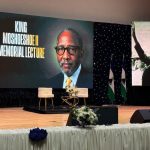
In recognition of the contributions and groundbreaking work of the late Pahad, the former Chairperson of the Forum of Former South African Ambassadors, I am pleased to officially launch the Annual Aziz Pahad Peace, Security, and Human Rights Dialogue. Our Non-Aligned posture, Pahad insisted, had to be constantly reaffirmed, and NAM had to be strengthened. This is especially true in the year of the 80th anniversary of the Non-Aligned Movement.
Pahad continues to speak to us even though he’s no longer with us. In the same speech I quoted earlier, he says, “We cannot indulge in the luxury of scepticism and despondency, but we must constructively and critically examine the challenges facing Africa.”
I do not doubt that our theme for the G20, as we hold the Presidency, fits neatly into this advice.
We will continue to strengthen our communication with all the embassies we’re hosting in South Africa.
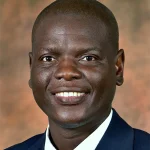
- This is an edited version of the keynote address by Ronald Lamola, SA’s Minister of International Relations and Co-operation at the inaugural annual Aziz Pahad Inaugural Annual Peace, Security and Human Rights Dialogue