IN the arena of international relations, truth is often the first casualty. The United States’ recent policy of granting refugee status to Afrikaner families based on dubious claims of “persecution” represents not merely a diplomatic misstep but a dangerous continuation of a troubling pattern – one where falsehoods serve as pretext for undermining the sovereignty of nations that dare chart an independent course.
This is not South Africa’s first encounter with American diplomatic deception. In 2023, South Africa was forced to formally demarche the US Ambassador after he made explosive and entirely false claims that a South African vessel had loaded arms destined for Ukraine – an allegation that threatened to compromise South Africa’s carefully maintained non-aligned stance in the Russia-Ukraine conflict. The Ambassador’s fabrication required formal diplomatic repudiation, embarrassing both nations and straining already tenuous relations.
Today’s manufactured narrative of “white farmer persecution” follows this same playbook: create a crisis from whole cloth, use it to justify interference, and ultimately pressure a sovereign nation to realign with American geopolitical interests.
The audacity is breathtaking. A nation born from anti-colonial struggle now finds its domestic affairs – specifically, its constitutionally mandated efforts to address apartheid’s profound economic inequities – subject to external manipulation based on false pretenses. President Cyril Ramaphosa’s defiant declaration that “we will not be bullied” reflects the sentiment of a nation weary of having its sovereignty trampled by powers claiming to champion democracy while undermining it abroad.
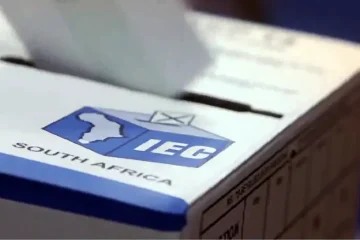
This intervention comes at a precarious moment in South Africa’s democratic journey. With the ANC holding its smallest parliamentary majority since 1994 and facing challenges from parties exploiting ethnic and racial divisions, American interference serves only to pour fuel on smouldering tensions. By legitimising factually baseless claims of persecution, the US effectively takes sides in South Africa’s complex internal politics, empowering extremists and undermining moderates working toward national reconciliation.
Make no mistake – this is not about protecting human rights. If it were, the US would not simultaneously threaten to withdraw vital AGOA trade privileges that support millions of South African livelihoods. This is about punishing South Africa for its independent foreign policy stance, particularly its decision to charge Israel for genocide in Palestine and its refusal to abandon its principles of non-alignment by joining Western condemnation of Russia and China.
The boycott of South Africa’s G20 meetings, paired with increasingly hostile rhetoric, reveals the true agenda: regime change or, at minimum, forced realignment. These tactics bear disturbing similarities to Cold War-era interference in African politics, where sovereignty was sacrificed on the altar of superpower rivalry.
The implications extend far beyond South Africa’s borders. If the continent’s most developed democracy can have its domestic policies dictated by foreign powers wielding fabricated narratives, what hope exists for African sovereignty writ large?
South Africa’s land reform efforts – far from the chaotic seizures portrayed in American media – represent a deliberate, constitutional process aimed at addressing the profound economic disparities that threaten long-term stability. By undermining these efforts, the US risks not only South Africa’s future but sets a dangerous precedent for external interference across the continent.
South Africa need not choose between capitulation and isolation. Through strategic engagement with diverse international partners – leveraging relationships within BRICS, the EU, and across Africa – South Africa can maintain its policy independence while mitigating American pressure. The solution lies not in confrontation but in demonstrating the falsity of American claims through continued commitment to constitutional governance and rule of law.
For the United States, a return to fact-based diplomacy is long overdue. Fabricating crises serves neither American interests nor global stability. True partnership requires respect for sovereignty and truth – something conspicuously absent in current US approaches to South Africa.
The world is watching. In an era of increasing multipolarity, how America engages with African democracies will determine not only regional stability but the credibility of American claims to support democracy globally. Thus far, the signs are deeply troubling – and the costs of continued diplomatic deception may prove far greater than any short-term geopolitical advantage.
- Jovial Rantao is Editor-in-Chief of The African Mirror