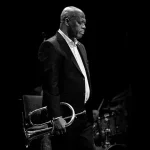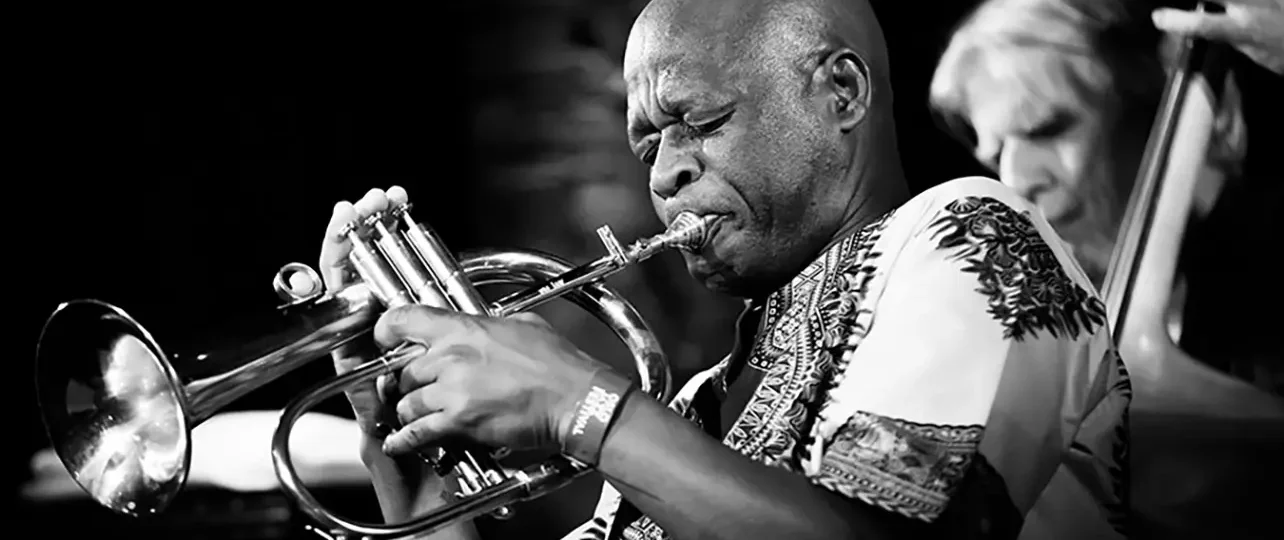

THE golden brass is silent now. On June 23, 2025, in the distant mountains of Switzerland, Feya Faku drew his final breath, and with it, one of Africa’s most luminous musical voices fell quiet. But even in death, his trumpet continues to sing – echoing through the townships of New Brighton, reverberating in the jazz clubs of Durban, and soaring across continents where his music touched souls and transformed hearts.
In the vibrant township of New Brighton, Port Elizabeth – a crucible where South African jazz was forged in struggle and hope – a young Feya Faku discovered magic in metal and breath. This was no ordinary musical awakening. While other children learned scales in conservatories, Faku learned the language of the streets, absorbing the wisdom of local saxophonists who became his first teachers. Their influence would forever colour his trumpet with a distinctive warmth, a soulful expressiveness that seemed to channel the very heartbeat of Africa.
He came to the trumpet later than most, without formal training, yet perhaps this was destiny’s design. For Faku didn’t simply learn to play jazz – he learned to speak it, to make his instrument a vessel for stories that had never been told, emotions that had never been given voice.
By 1992, the self-taught prodigy had earned his Performers Diploma in Jazz Studies from the University of Natal, where the legendary Darius Brubeck recognised and nurtured his extraordinary gift. But Faku’s true university remained the bandstands of Durban, where he stood shoulder to shoulder with titans of South African jazz.
Picture this: the youngest member of the Mankunku Ngozi Quintet, learning at the feet of Winston “Mankunku” Ngozi, trading melodies with Abdullah Ibrahim, absorbing the mystical innovations of Bheki Mseleku, feeling the fire of Zim Ngqawana, and dancing through the rhythmic complexities alongside Barney Rachabane. These weren’t just collaborations – they were master classes in the art of African jazz storytelling.
Faku’s trumpet possessed an almost supernatural ability to bridge worlds. In his hands, the ancient rhythms of marabi and mbaqanga flowed seamlessly into contemporary jazz forms, creating something entirely new yet deeply rooted. His music carried the DNA of struggle and celebration, of Ubuntu and cosmopolitanism, of township dust and international stages.
His discography reads like a love letter to African jazz evolution:
- Hommage (1998) announced his arrival like a sunrise—brilliant, inevitable, transformative
- The Colours They Bring (2005) painted the full spectrum of South African musical heritage in bold, beautiful strokes
- Hope and Honour (2008) stretched across borders, weaving international threads into his African tapestry
- Impilo (2021) stripped away everything unnecessary, leaving only the pure, crystalline essence of his trumpet voice in an intimate drumless trio setting
Each recording was more than music- it was autobiography, history, prophecy.
As South African jazz mourned the passing of giants like Hugh Masekela and Jonas Gwangwa, Faku stepped forward not as a replacement, but as a continuation – a living bridge connecting the legends of yesterday with the promise of tomorrow. He carried their torch while lighting new paths, leading ensembles like The Core and the Swiss South African Quintet, fostering cross-cultural collaborations that expanded African jazz’s global footprint.
His mentorship extended far beyond technique. In townships and international workshops alike, young musicians didn’t just learn how to play from Faku – they learned how to be. How to honour tradition while embracing innovation. How to remain rooted while reaching skyward. How to make their instruments sing not just notes, but stories, dreams, and the deepest truths of the human experience.
Recognition followed naturally. The Nelson Mandela Metropolitan University Council Prestige Award acknowledged what the world already knew – that Faku was more than a musician; he was a cultural ambassador whose trumpet spoke fluent Ubuntu, whose melodies translated hope across every language barrier.
From the dusty streets of New Brighton to the pristine concert halls of Switzerland, his music carried the same message: that art transcends borders, that beauty emerges from struggle, that the human spirit – when expressed through passionate, purposeful creativity – can heal, inspire, and unite.
The Final Note
On that June day in Switzerland, thousands of miles from the township that shaped him, Faku played his final note. But here’s the beautiful truth about great artists – their music doesn’t end with their last breath. It continues in every young trumpeter who picks up their instrument with newfound purpose. It echoes in every jazz club where his recordings still play. It lives in the hearts of everyone who ever felt their soul stirred by the pure, golden voice of his trumpet.
Faku didn’t just play African jazz – he was African jazz in all its complexity, beauty, and boundless possibility. A self-taught master who became a teacher. A township kid who conquered the world. A trumpet player who learned to speak the language of the soul.
The brass is silent, but the song plays on. In every note that honours tradition while embracing tomorrow, in every musician who chooses courage over comfort, in every moment when music bridges what seemed unbridgeable – there, Feya Faku’s trumpet sings eternal.
Rest in rhythm, maestro. Your music made us all a little more human.