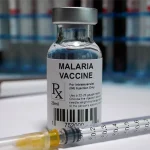
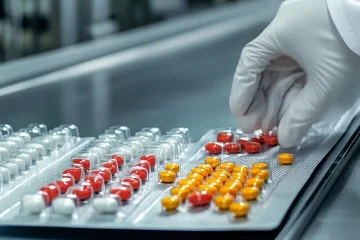
IN the shadows of Africa’s bustling pharmaceutical markets, a silent epidemic claims nearly half a million lives each year. The culprit is not a virus or bacteria, but something far more insidious: substandard and falsified medical products (SFMP) that masquerade as lifesaving treatments while delivering death instead.
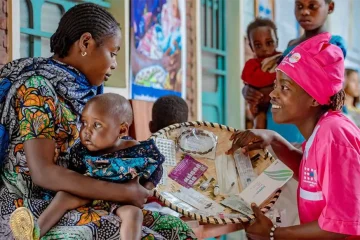
The statistics paint a devastating picture. According to the United Nations Office on Drugs and Crime (UNODC), trafficked medical products kill almost half a million sub-Saharan Africans every year. Behind these numbers lie the faces of children who died from fake malaria treatments, mothers who succumbed to ineffective antibiotics, and countless others whose trust in medicine was betrayed by criminal networks prioritising profit over human life.
The breakdown is particularly harrowing: as many as 267,000 deaths per year are linked to falsified and substandard antimalarial medicines, while up to 169,271 are linked to falsified and substandard antibiotics used to treat severe pneumonia. These are not abstract statistics—they represent preventable tragedies that tear apart families and communities across the continent.
The Scale of a Criminal Enterprise
The fake medicine trade has evolved into a sophisticated criminal enterprise that exploits Africa’s regulatory vulnerabilities. One in 10 drugs sold in developing countries is fake or substandard, creating a landscape where seeking medical treatment becomes a dangerous gamble for millions of Africans.
Africa bears a disproportionate burden of this global crisis. Between 2013 and 2017, the WHO reported that 42% of all fake medicines reported to them were from Africa, despite the continent representing only about 17% of the world’s population. This concentration reflects the continent’s particular vulnerability to criminal exploitation.
The economic dimensions are staggering. The counterfeit drug market is worth around $200 billion worldwide annually, making it one of the most lucrative forms of organised crime. Africa, with the highest prevalence (18.7 per cent) of falsified and substandard medicines, is particularly at risk, creating a perfect storm where criminal networks can operate with relative impunity while legitimate healthcare systems struggle to compete.
Recent tragedies underscore the urgency of the crisis. Between July and October 2023, about 70 Gambian children under the age of 5 died after drinking cough syrup containing high levels of ethylene glycol and diethylene glycol, both of which are toxic to humans. These deaths exemplify how fake medicines don’t just fail to heal—they actively kill.
The Multifaceted Nature of the Crisis
The SFMP crisis extends far beyond immediate deaths. These products undermine public confidence in healthcare systems, fuel antimicrobial resistance by exposing patients to subtherapeutic doses of active ingredients, and perpetuate cycles of poverty by forcing families to spend limited resources on ineffective treatments.
The scope encompasses all categories of medical products: medicines, vaccines, medical devices, and diagnostics. This breadth means that no aspect of healthcare is immune to the threat, from emergency rooms relying on fake cardiac medications to routine immunisation programs potentially compromised by counterfeit vaccines.
Criminal networks have adapted to exploit Africa’s specific vulnerabilities: porous borders, limited regulatory capacity, fragmented oversight systems, and high demand for affordable medicines. They operate with the sophistication of multinational corporations, complete with supply chains, distribution networks, and marketing strategies that specifically target vulnerable populations.
A Continental Response Takes Shape
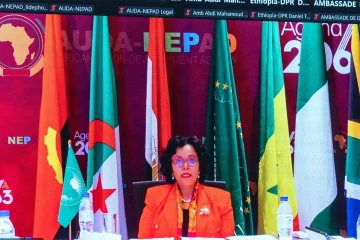
Recognising that fragmented national responses are insufficient against transnational criminal networks, Africa is mounting an unprecedented continental response. The African Union Ministers of Health, during the Fifth Ordinary Session of the AU Specialised Technical Committee on Health, Population, Nutrition, and Drug Control in August 2024, adopted the AU Declaration on the Fight against Substandard and Falsified Medical Products.
This declaration mandated the African Union Development Agency – NEPAD (AUDA-NEPAD) to develop a comprehensive Continental Plan that integrates health and criminal justice strategies. The plan represents a paradigm shift from reactive, sector-specific responses to a proactive, multisectoral approach that addresses the root causes and systemic vulnerabilities that criminals exploit.
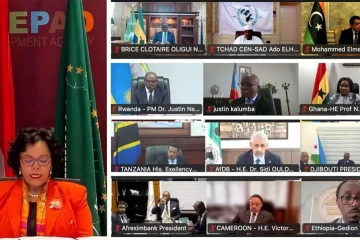
From July 9-11, 2025, a pivotal meeting in Addis Ababa, Ethiopia, will finalise concrete steps to empower governments across the continent. This gathering represents more than a policy conference – it marks the operationalisation of Africa’s most ambitious effort to protect public health from organised crime.
The SFMP Working Group: A New Model for Coordination
At the heart of Africa’s response is the newly launched SFMP Working Group, an innovative body that brings together experts from regulatory authorities, procurement agencies, customs, law enforcement, and judiciary sectors. This multisectoral approach recognises that combating SFMP requires more than just healthcare solutions—it demands a comprehensive strategy that treats fake medicines as both a public health crisis and a criminal justice challenge.
The Working Group’s mandate extends across multiple domains:
Regulatory Harmonisation: Creating consistent standards, definitions, and procedures across African countries to eliminate the regulatory gaps that criminals exploit. When one country has stringent controls while its neighbour has weak oversight, criminal networks simply redirect their operations to the path of least resistance.
Intelligence Sharing: Establishing real-time information exchange systems that allow authorities to track criminal networks across borders. When fake medicines are detected in one country, neighbouring nations can be immediately alerted, enabling rapid containment and removal from regional markets.
Capacity Building: Strengthening the technical capabilities of national regulatory authorities, law enforcement agencies, and judicial systems. This includes training programs, technology transfer, and the development of specialised units dedicated to combating pharmaceutical crime.
Technology Integration: Promoting advanced technologies such as digital reporting tools, track-and-trace systems, and artificial intelligence for product authentication. These tools can help authorities distinguish genuine medicines from fakes more effectively and monitor supply chains in real-time.
Breaking Down Silos: The Power of Multisectoral Collaboration
The continental response recognises that SFMP is not solely a health issue—it’s a complex challenge that spans multiple sectors. By bringing together diverse stakeholders, the initiative leverages complementary strengths: health agencies provide technical expertise on product quality and safety, law enforcement and customs enforce laws and intercept illicit goods, while the judiciary prosecutes offenders.

This collaboration optimises the use of limited resources, a critical consideration given the financial constraints many African countries face. Rather than duplicating efforts, the multisectoral approach enables resource sharing and coordinated responses that amplify impact.
The model also recognises the importance of community engagement. Civil society organisations and community leaders play crucial roles in raising awareness about the dangers of fake medicines and encouraging the reporting of suspicious products. This grassroots engagement creates societal pressure against counterfeiters while building trust in legitimate healthcare systems.
Policy Harmonisation: Closing Criminal Loopholes
A key element of Africa’s strategy is policy harmonisation- aligning legal frameworks, regulatory standards, and enforcement protocols across countries. This harmonisation is crucial because criminals specifically exploit differences between national systems.
When countries have varying definitions of what constitutes fake medicine, different penalty structures, or incompatible regulatory procedures, criminal networks can operate in the gaps. They manufacture products in countries with lax controls, transit through nations with weak border security, and sell in markets where enforcement is limited.
Harmonised policies eliminate these safe havens by creating consistent standards across the continent. This includes standardising inspection procedures, aligning quality control measures, and ensuring that legal definitions and penalties are uniform. The result is a level playing field where criminals cannot exploit regulatory arbitrage.
The harmonisation effort also extends to customs procedures and cross-border cooperation protocols. When countries share compatible systems for information exchange and joint investigations, it becomes much easier to track criminal networks and coordinate enforcement actions.
Technology and Innovation: Modern Tools for Ancient Crimes
The continental response embraces cutting-edge technology to combat pharmaceutical crime. Digital reporting tools enable healthcare workers and patients to quickly report suspicious products, while track-and-trace systems allow authorities to monitor medicines throughout the supply chain.
Artificial intelligence is being deployed for product authentication, helping authorities distinguish genuine medicines from sophisticated counterfeits. These technologies are particularly valuable in Africa, where traditional laboratory-based testing may be limited or slow.
The establishment of a continental clearinghouse for quality-related information represents a significant step forward in transparency and accountability. This system will enable real-time sharing of information about product quality, safety alerts, and regulatory actions across the continent.
Building Sustainable Capacity
The continental initiative recognises that long-term success depends on building sustainable capacity within African institutions. This includes strengthening national regulatory authorities, training law enforcement personnel, and developing specialised judicial expertise in pharmaceutical crime.
The focus on capacity building extends beyond technical skills to include institutional development. Countries are being supported to develop national action plans tailored to their specific contexts while aligned with continental standards. This approach ensures local ownership while maintaining regional coherence.
The initiative also emphasises the importance of continuous monitoring and adaptation. Criminal networks constantly evolve their methods, and the continental response must be equally adaptive. Regular assessment of emerging threats and continuous refinement of strategies ensure that the response remains effective over time.
A Test Case for Continental Integration
Africa’s response to SFMP represents more than a public health initiative – it’s a test case for continental integration and cooperation. The success of this effort will demonstrate Africa’s capacity to address transnational challenges through coordinated action.
The initiative aligns with broader continental objectives, including the African Continental Free Trade Area (AfCFTA). As trade barriers fall and economic integration deepens, ensuring that health and safety regulations keep pace becomes crucial. The SFMP response creates the regulatory infrastructure necessary to support legitimate pharmaceutical trade while blocking criminal networks.
The multisectoral approach also serves as a model for addressing other transnational challenges, from terrorism to environmental crime. The institutional mechanisms being developed for SFMP could be adapted and expanded to address other forms of organised crime that threaten African development.
Looking Forward: The Road to Success
The July 2025 meeting in Addis Ababa represents a crucial milestone, but it’s just the beginning of a long-term commitment. The expected outcomes include an improved Continental Plan, adoption of the Working Group’s operational framework, and clear priority interventions for immediate implementation.
Success will be measured not just in policy documents and institutional arrangements, but in lives saved and families protected. The ultimate goal is a continent where patients can trust that the medicines they receive are safe, effective, and genuine.
The continental response to SFMP demonstrates Africa’s growing maturity as a political and economic entity. Rather than relying on external actors to solve internal problems, African countries are taking collective ownership of their challenges and developing homegrown solutions.
Conclusion: A Fight for Africa’s Future
The battle against substandard and falsified medical products is fundamentally a fight for Africa’s future. It’s about whether the continent can provide its people with the basic dignity of safe and effective healthcare. It’s about whether African institutions can protect their citizens from sophisticated criminal networks. And it’s about whether regional cooperation can triumph over transnational crime.
The half million lives lost each year to fake medicines represent not just a public health crisis, but a fundamental violation of human rights. Every person deserves access to quality medicines, and every government has a responsibility to protect its citizens from criminal exploitation.
Through the African Union Development Agency’s leadership and the continent’s unprecedented coordinated response, Africa is sending a clear message: criminal networks that profit from human suffering will find no safe haven on the continent. The stakes could not be higher, and the time for action is now.
The comprehensive approach being developed – combining regulatory harmonisation, multisectoral collaboration, technology integration, and capacity building – represents the most ambitious effort ever undertaken to combat pharmaceutical crime in Africa. Its success will not only save lives but also strengthen the continent’s health systems, build trust in public institutions, and demonstrate Africa’s capacity for effective self-governance.
As the continent prepares for the crucial July 2025 meeting, one thing is clear: Africa is no longer willing to accept that nearly half a million of its people should die each year from preventable causes. The fight against fake medicines has become a fight for the soul of African healthcare – and the continent is determined to win.