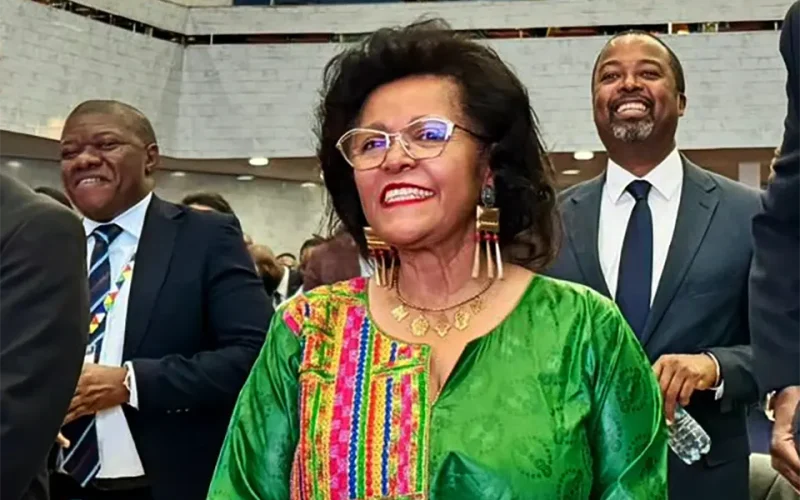
IN the gleaming conference halls of Addis Ababa and the bustling pharmaceutical factories emerging across Africa, a quiet revolution is taking shape. At its helm stands Dr Nardos Bekele-Thomas, a woman whose vision extends far beyond spreadsheets and policy papers—she sees a continent of 1.4 billion people finally commanding their own health destiny.
As Chief Executive Officer of the African Union Development Agency-New Partnership for Africa’s Development (AUDA-NEPAD), Dr Bekele-Thomas isn’t just managing programs; she’s orchestrating a continental awakening. Her mission is audacious yet achingly necessary: to break the chains of pharmaceutical dependency that have left Africa importing 61% of its medicines, vulnerable to supply disruptions, and paying premium prices for essential drugs that could be manufactured at home.
Breaking Glass Ceilings, Building New Foundations
When African Union Heads of State and Government unanimously endorsed Dr Bekele-Thomas as AUDA-NEPAD’s first woman CEO in May 2022, they weren’t simply making history—they were betting on transformation. And she has delivered with the force of someone who has spent nearly four decades understanding that Africa’s health security is inseparable from its economic sovereignty.
Her influence now extends beyond health and development. In a testament to her growing stature as a pan-African leader, Dr Bekele-Thomas was recently appointed to the Supervisory Board of the Global Centre on Adaptation (GCA)—joining former Senegalese President H.E. Macky Sall, Gates Foundation’s Rodger Voorhies, and Miami Mayor Francis X. Suarez. This strategic positioning places African priorities at the heart of global climate adaptation decision-making, particularly crucial as the continent bears the most severe climate impacts despite contributing least to the crisis.
Her leadership style blends diplomatic finesse with activist urgency. She speaks with the authority of technical expertise and the empathy of someone who understands that behind every statistic about medicine shortages lies a mother unable to access antibiotics for her child, a diabetic patient rationing insulin, a tuberculosis ward running low on treatment.
“The era of business as usual cannot continue,” she declares with characteristic directness. “Development must be reimagined, rooted in self-reliance, economic sovereignty, and transformative investments.”
A Market Worth Fighting For
The stakes could hardly be higher. Africa’s pharmaceutical market, valued at approximately $27.65 billion in 2024, is projected to surge toward $37 billion by 2033, with some analysts forecasting growth beyond $118 billion by 2032. This explosive expansion reflects urbanisation, rising healthcare needs, and the dual burden of infectious diseases like malaria and tuberculosis alongside chronic conditions such as diabetes and hypertension.
Yet this multi-billion-dollar market serving over 1.4 billion people remains largely dependent on foreign manufacturers, leaving the continent perpetually at the mercy of global supply chains, price fluctuations, and geopolitical tensions. The COVID-19 pandemic laid bare this vulnerability with devastating clarity—vaccine apartheid, treatment delays, and supply chain breakdowns exposed how external dependency translates directly into preventable deaths.
Dr Bekele-Thomas inherited this challenge and chose not to merely manage it but to radically reimagine it.
The AfCFTA Masterstroke
Her most ambitious gambit centres on harnessing the African Continental Free Trade Area (AfCFTA) as the engine for pharmaceutical transformation. Where others see a trade agreement, she envisions an integrated ecosystem where African-made medicines flow freely across borders, where regulatory standards are harmonised, and where economies of scale finally make local manufacturing competitive.
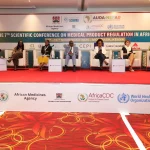
The strategy is elegant in its comprehensiveness. Through the African Medicines Regulatory Harmonisation (AMRH) initiative, AUDA-NEPAD is dismantling the bureaucratic barriers that have long fragmented Africa’s pharmaceutical landscape. Standardised regulatory frameworks mean a medicine approved in Kenya can more easily reach patients in Ghana, Senegal, or South Africa—creating the continental market scale necessary to attract serious manufacturing investment.
Pooled procurement mechanisms leverage the collective bargaining power of 54 nations, driving down costs while incentivising manufacturers to establish local production facilities. Why ship medicines from Mumbai or Manchester when you can produce them in Morocco or Mozambique for a guaranteed continental market?
Trade facilitation measures under AfCFTA are lowering barriers for raw materials, finished products, and technology transfer—the practical infrastructure needed to transform policy into production. And crucially, this isn’t about scattering isolated factories across the continent but creating regional pharmaceutical hubs with genuine economies of scale and specialised expertise.
The 24 Priority Medical Products Initiative
Dr Bekele-Thomas’s pragmatism shines in the 24 Priority Medical Products Initiative, which focuses AUDA-NEPAD’s resources on scaling up domestic production of critical medicines rather than attempting to manufacture everything at once. It’s a strategic recognition that pharmaceutical self-sufficiency is a marathon, not a sprint, and that early wins in essential drugs can build momentum and demonstrate viability.
This initiative works hand-in-glove with the African Medicines Regulatory Harmonisation Programme, ensuring that increased production capacity doesn’t compromise quality or safety. Her philosophy is clear: African-made medicines must be world-class medicines, meeting international standards while remaining affordable and accessible.
Leading a Continental Orchestra
Managing this transformation requires diplomatic virtuosity. Dr Bekele-Thomas commands a team of over 200 experts across more than 50 programs spanning health, biotechnology, energy, gender empowerment, and youth development. She’s forged strategic partnerships that read like a who’s who of global health—most notably the recent memorandum of understanding between the African Union and the Global Fund to Fight AIDS, Tuberculosis and Malaria.
This landmark agreement catalyses deep structural change by integrating digital innovation into health services, advancing domestic resource mobilisation, and expanding community health systems. But Dr Bekele-Thomas ensures these partnerships serve African priorities, not simply export Western models. She’s building a unified AU health architecture linking AUDA-NEPAD, Africa CDC, the emerging African Medicines Agency, and AfCFTA into a coordinated force for health security and industrial policy.
Gender, Youth, and the Human Dimension
Perhaps what most distinguishes Dr Bekele-Thomas’s leadership is her insistence that pharmaceutical industrialisation must serve broader social transformation. She consistently places gender equality and youth empowerment at the centre of AUDA-NEPAD’s development narrative, understanding that sustainable progress requires widely shared benefits.
Pharmaceutical manufacturing creates skilled jobs for young African scientists, engineers, and technicians. It advances gender equity by ensuring women and girls have reliable access to reproductive health medicines. It strengthens community health systems that disproportionately depend on women healthcare workers. For Dr. Bekele-Thomas, pharmaceutical self-sufficiency isn’t merely about factories and supply chains—it’s about dignity, justice, and the realisation of human potential across a continent too long told to wait for solutions manufactured elsewhere.
The Crossroads Moment
Dr Bekele-Thomas speaks candidly about the urgency of this moment. Rising protectionism and shifting donor priorities threaten to further marginalise Africa in the global health architecture. Climate change, conflict, and demographic pressures are intensifying health challenges even as resources grow scarcer.
But she sees opportunity in this crisis—a chance to finally break old patterns and build systems rooted in African innovation, regional solidarity, and economic self-determination. Under her stewardship, AUDA-NEPAD aims to ensure that Africa produces at least 50% of its pharmaceutical needs, fundamentally rebalancing the continent’s relationship with global health markets.
A Legacy Taking Shape
Nearly forty years into her career, influencing growth and development across Africa, Dr Nardos Bekele-Thomas is crafting a legacy that extends far beyond any single policy achievement. Through her leadership, AUDA-NEPAD is emerging as a powerhouse of innovation and commitment—proving that with vision, coordination, and unwavering determination, Africa can command its own health future.
The woman who shattered the glass ceiling at AUDA-NEPAD is now building foundations that will support billions of Africans for generations to come. When African children can access locally produced medicines as reliably as their counterparts anywhere else, when African pharmaceutical companies compete globally, when health security no longer means dependency—Dr Bekele-Thomas’s transformative vision will have become an African reality.
The revolution she leads may be quiet, technical, and rooted in regulatory harmonisation and trade agreements. But make no mistake: it is a revolution nonetheless, one that promises to restore health, dignity, and sovereignty to a continent ready to claim its future.