AFRICA’S health sector is undergoing a fundamental transformation from fragmented spending to structured investment, according to the African Union Development Agency-NEPAD (AUDA-NEPAD), which today released its Programme for Investment and Financing in Africa’s Health Sector (PIFAH) Project List – Africa’s Health Market Atlas.
The continent-wide portfolio reveals 253 investable health opportunities valued at $2.6 billion, spanning infrastructure, diagnostics, digital health platforms, local manufacturing, and research ecosystems across all African regions.
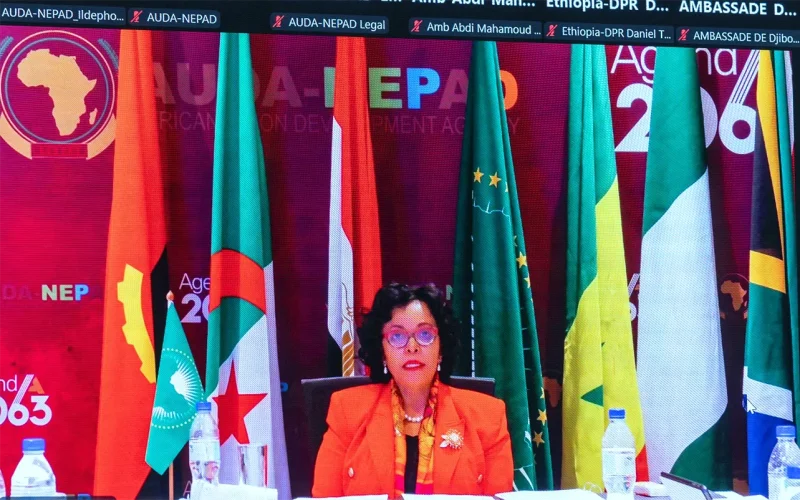
“The message is clear: Africa’s health economy is transforming,” said Nardos Bekele-Thomas, Chief Executive Officer of AUDA-NEPAD, in the Atlas foreword. “It is firmly anchored in African priorities, open to strategic partnerships, converting opportunity into investable pipelines, and building the foundations for long-term scale and resilience.”
Bekele-Thomas emphasised that with clearer standards and more predictable demand, Africa can unlock capital for local manufacturing, diagnostics networks, digital health platforms, research ecosystems, and resilient service delivery systems.
Strategic Platform for Market-Building
The PIFAH Project List represents Africa’s first structured, continent-wide health investment marketplace designed to make the sector visible, navigable, and investable for governments, investors, and development partners.
“Our role is to translate policy into practice—mobilising partnerships, strengthening institutional capacity, and accelerating implementation where impact matters most,” Bekele-Thomas stated, describing AUDA-NEPAD’s mandate as the African Union’s development agency tasked with implementing Agenda 2063.
The CEO noted that PIFAH functions as a market-building platform, bringing together policy alignment, project preparation, partnerships, and financing into a coherent continental proposition that responds directly to investor requirements: clarity, standardisation, credible governance signals, and reduced transaction costs.
Investment Pipeline Shows Strong Regional Distribution
West Africa leads the pipeline with 44.3% of projects, followed by East Africa (27.3%), Southern Africa (13.8%), Central Africa (8.7%), and North Africa (2.4%). Nigeria, Ghana, Cameroon, Kenya, and South Africa emerge as the top countries by project count.
Health infrastructure and diagnostics dominate with 45% of projects, while digital health and AI integration account for 30%. Notably, 98.8% of all projects incorporate digital or AI-enabled components across financing, diagnostics, surveillance, and service delivery.
Nearly 60% of projects (149) are classified as investment-ready, with 26.1% ready for immediate scale-up. The majority (68.8%) represent supply-side opportunities, while 28.1% are government demand ecosystem-enabling initiatives.
Equity and Sustainability at Core
The pipeline demonstrates strong commitments to inclusion and climate resilience. Some 94.9% of projects explicitly target underserved populations, rural communities, informal sector workers, and women and girls, while similar percentages incorporate environmental, social, and governance measures, including renewable energy integration and climate-adaptive design.
“By positioning women and young people as health workers, innovators, and entrepreneurs, the pipeline links improved health outcomes with job creation, productivity, and social stability,” Bekele-Thomas explained, noting that 95.7% of projects embed gender equity and youth participation.
Manufacturing Sovereignty and Regional Integration
The Atlas reveals decisive momentum toward health manufacturing sovereignty, with over two-thirds of projects (67.2%) focused on local manufacturing and health infrastructure. Geographic concentration in West Africa—particularly Nigeria, Ghana, and Cameroon—signals emerging manufacturing hubs for diagnostics, medicines, vaccines, and active pharmaceutical ingredients.
Regional integration potential stands out as a defining feature, with 73.5% of projects designed for cross-border impact. “Many initiatives align with pooled procurement, regulatory convergence, and regional delivery models, enabling scale and market certainty beyond national boundaries,” Bekele-Thomas noted.
Diverse Financing Pathways
According to Bekele-Thomas, projects are structured to mobilise capital through public finance and strategic purchasing, blended finance structures combining concessional and commercial capital, public-private partnerships, and direct private investment where revenue models and regulatory clarity support scale.
“PIFAH’s value lies in making these pathways visible early—ensuring that projects are not only listed, but progressively prepared and positioned for investment,” the AUDA-NEPAD CEO stated.
From Aspiration to Execution
Bekele-Thomas positioned health as both a social priority and a growth sector capable of delivering economic and development returns. “In a global environment characterised by tightening fiscal space and evolving development finance, Africa must increasingly finance its own transformation while strategically crowding in investment,” she said.
The initiative supports this shift by strengthening project preparation, enabling blended finance approaches, and aligning continental reforms such as regional integration and regulatory harmonisation with investable deal flow.
Following its inaugural launch, the PIFAH Project List will be updated on a predictable cycle, with a second call for submissions planned for the second half of 2026. As momentum builds, the portal will progressively evolve into a deal-enabling marketplace with investor-matching features and strengthened project-preparation tools.
Call to Coalition-Building
Bekele-Thomas issued a call to action for governments, investors, development finance institutions, innovators, and development partners to work through the shared PIFAH platform with common standards and clear execution pathways.
“The opportunity is significant,” the CEO concluded. “Through PIFAH, Africa is moving from aspiration to execution by building investable health markets that strengthen resilience, expand prosperity and deliver better health outcomes for people across the continent.”
The PIFAH Project List – Africa’s Health Market Atlas will be formally launched in 2026, with early engagement opportunities available for qualified investors and strategic partners.
The Programme for Investment and Financing in Africa’s Health Sector (PIFAH) is implemented by the African Union Development Agency-NEPAD and anchored within the African Union system to support Member States in translating national health priorities into investable opportunities.