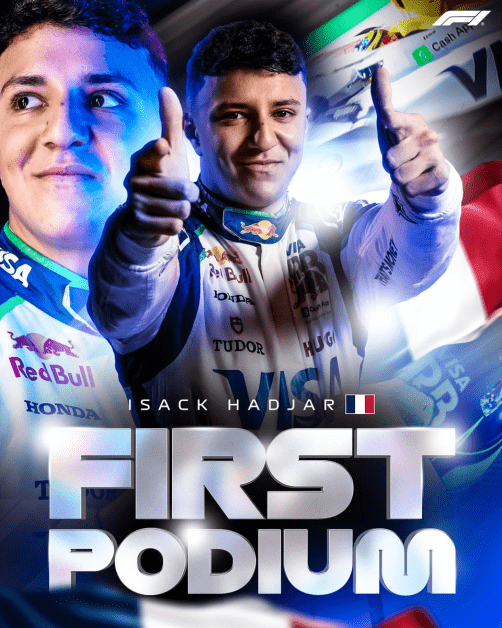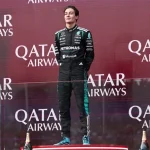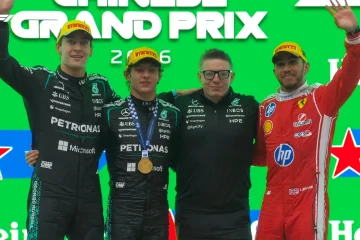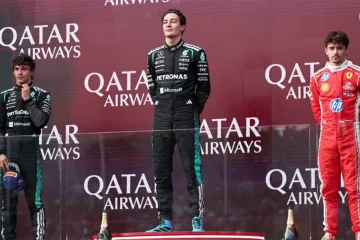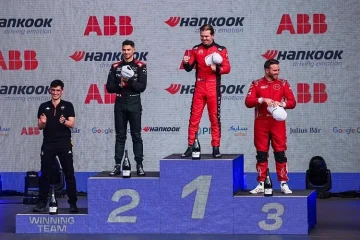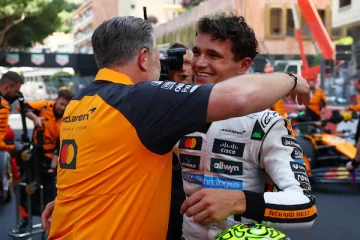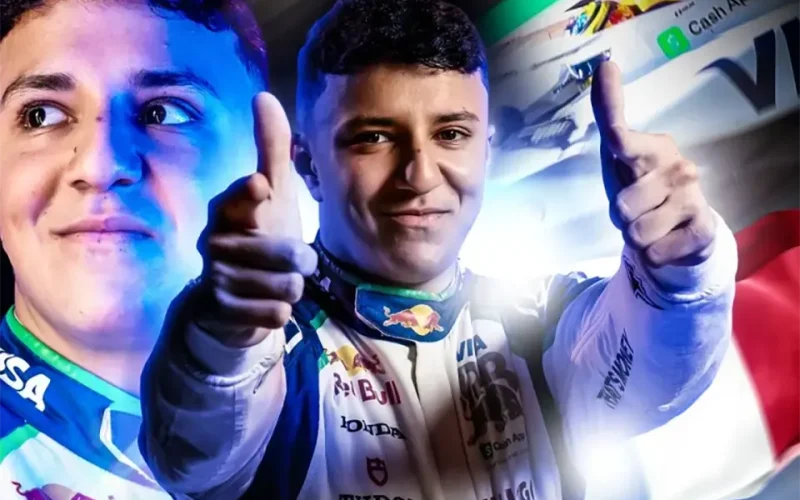
IN a moment that reverberated across two continents, Isack Hadjar crossed the finish line at the Dutch Grand Prix on Sunday to claim third place and become the first driver of African heritage to stand on a Formula One podium.
The 20-year-old rookie, born and raised in Paris to Algerian parents, secured his breakthrough result behind race winner Oscar Piastri and defending champion Max Verstappen at the iconic Zandvoort circuit. As champagne sprayed across the podium, Hadjar’s achievement marked not just a personal milestone but a historic breakthrough for African representation in motorsport’s pinnacle series.
Hadjar’s journey to this historic moment began on the streets of Paris, where his fascination with racing was first sparked by the animated film “Cars.” His parents, recognising their seven-year-old son’s passion, bought him his first go-kart and enrolled him in competitive karting. His father, Yassine Hadjar, a quantum mechanics researcher, doubled as his mechanic during those formative years, providing crucial familial support that would prove instrumental in his son’s development.
Despite physical challenges early in his career – his small stature initially made it difficult to reach the pedals properly – Hadjar’s determination never wavered. He progressed through France’s national karting championships before making the leap to international competition.
The transition to single-seaters came in 2019 with his debut in the French F4 Championship. Though he faced early struggles, Hadjar’s breakthrough came in 2020 when he secured multiple race wins and podium finishes, ultimately claiming third place in the championship standings. This success laid the foundation for his rapid ascent through motorsport’s junior categories.
Holding dual French and Algerian citizenship, Hadjar races under the French flag but has never forgotten his North African roots. His heritage has become a source of pride and motivation, representing both his adopted home of France and his ancestral connection to Algeria.
Sunday’s podium finish comes at a pivotal moment for African motorsport. The continent has been largely absent from Formula One since South Africa last hosted a Grand Prix in 1993, despite producing 1979 World Champion Jody Scheckter. Now, with Rwanda advancing an ambitious $1.2 billion plan to build a state-of-the-art circuit near Kigali, and South Africa also expressing renewed interest in hosting F1 races, Hadjar’s success arrives as Africa seeks to reclaim its place on the sport’s global stage.
The timing is particularly significant. Rwanda’s proposed circuit represents more than just infrastructure investment—it symbolises Africa’s growing motorsport ambitions and the continent’s desire to nurture homegrown talent. For aspiring young drivers across Africa, Hadjar’s achievement provides tangible proof that the highest levels of motorsport are within reach.
“Isak’s success shows what’s possible when talent meets opportunity,” said a source close to the Rwandan F1 project. “This is exactly the kind of inspiration we hope will emerge from bringing Formula One back to Africa.”
Hadjar’s podium also highlights the changing face of Formula One, a sport increasingly committed to global expansion and diversity. His achievement opens doors for future generations of African drivers while demonstrating that motorsport excellence can emerge from anywhere, regardless of geographical or economic constraints.
As Hadjar celebrated on the podium at Zandvoort, his achievement resonated far beyond the Dutch coastal circuit. In Algeria, France, and across Africa, a new generation of motorsport fans witnessed history being made – and saw their own dreams reflected in the success of a young man who refused to let circumstances define his limits.
For Formula One, Hadjar’s breakthrough represents more than just another rookie’s first podium. It signals the sport’s evolving global reach and the untapped potential that exists across continents still underrepresented in the paddock. As Africa prepares for its potential return to the F1 calendar, Hadjar’s historic achievement serves as both inspiration and proof that the continent’s motorsport renaissance is not just a dream, but an emerging reality.