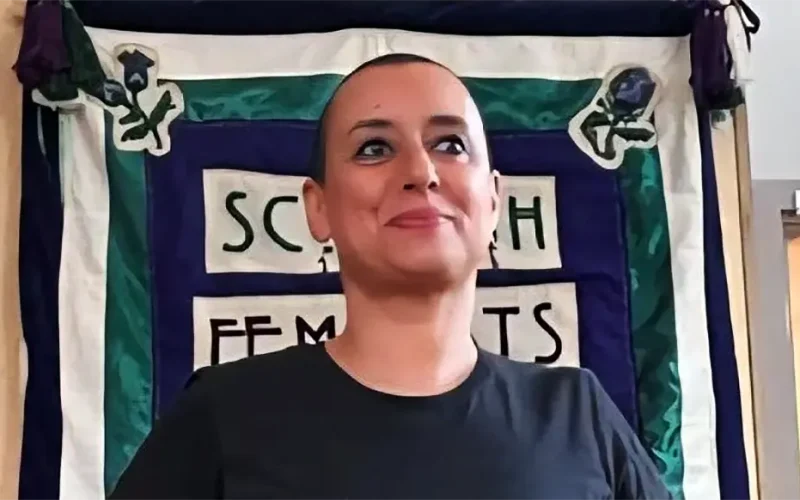
THE cotton of the T-shirt felt soft against her skin, but the words printed across it burned with the fire of revolution. The bold three letters written on the t-shirt would shatter the silence of centuries and thrust Ibtissame Lachgar into a battle that would define not just her own fate, but the very soul of freedom in Morocco.
It was September 4th, 2025, when the gavel came down like thunder in the sterile courtroom of Rabat. Thirty months. The number echoed off the walls like a death knell, while outside, the autumn wind carried the tears of supporters who had gathered with hope in their hearts and justice on their lips. Fifty thousand dirhams – nearly six thousand dollars – is the price tag placed on speaking truth to power.
But this was no ordinary woman facing down the machinery of the state. At 50, Ibtissame Lachgar had weathered storms that would have broken lesser souls. Her body bore scars from battles both personal and political – cancer coursing through her veins even as she fought for the freedom to exist authentically. The irony was bitter as desert sand: while she fought for life in one courtroom of fate, another threatened to steal her liberty.
The photograph that ignited this firestorm wasn’t new. She had worn that same shirt through the cobblestone streets of European cities, had marched beneath grey London skies, had stood proud at feminist rallies where her words were not blasphemy but battle cry. For years, that image had lived quietly on her social media – a digital declaration that had sparked no controversy, drawn no ire, summoned no judges.
Until May 2025, when she posted it again.
This time, the reaction was volcanic. The same three words that had once passed unnoticed suddenly became a lightning rod for fury. Comment sections exploded with rage. Threats poured in like acid rain – promises of rape, calls for stoning, demands for blood. The very people who claimed to follow a religion of peace howled for violence against a woman whose only crime was wearing her truth.
“Islam,” she had written beneath the photo, “like any religious ideology, is fascist, phallocratic and misogynistic.”
The words cut through the comfortable lies that societies tell themselves, exposing the hypocrisy that lurks beneath sacred texts twisted to justify oppression. They were words that made the powerful uncomfortable, words that gave voice to the voiceless, words that dared to name the unnameable.
In the suffocating heat of El Arjat prison, where she had been caged since August 12th, Ibtissame’s lawyer, Mohamed Khattab, fought like a man possessed. “Shocking,” he called the verdict, his voice cracking with indignation. But beyond the legal arguments and procedural protests lay a more desperate reality – his client’s cancer was spreading, and surgery on her left arm, scheduled for September, could mean the difference between healing and amputation.
How grotesque the irony: a woman fighting for the right to speak freely faced losing the very limbs that had typed those controversial words.
Her other attorney, Naima El Guellaf, painted a stark picture of injustice – a woman whose body was betraying her, whose time was running short, locked away for the crime of wearing fabric printed with forbidden thoughts. The courts spoke of “offending God,” but which God demands silence in the face of oppression? Which divine being requires the imprisonment of those who dare to question?
Outside the courthouse, as autumn leaves danced in defiant spirals, family members collapsed in grief. Their tears fell like rain on the steps of justice, each drop a testament to love that transcends law, to bonds that prison walls cannot break. Hakim Sikouk, his weathered face etched with righteous anger, declared what everyone knew but few dared say: this was not justice but vendetta, not law but tyranny wearing the robes of righteousness.
The Alternative Movement for Individual Liberties (MALI), which Ibtissame had co-founded in 2009, stood as more than just an organisation. It was a beacon in the darkness, a lighthouse guiding lost souls toward the shores of freedom. For 16 years, it had fought the good fight, advocating for women’s rights when women were property, championing individual liberties when conformity was currency, and standing tall when others bowed low.
This was not Ibtissame’s first dance with danger. In 2016 and 2018, she had faced similar accusations, similar threats. But those storms had passed without prosecution, leaving her perhaps believing that reason might eventually prevail, that progress, however slow, was possible. How wrong she was.
Article 267-5 of Morocco’s penal code lurked like a snake in legislative grass – a weapon forged to silence dissent, to criminalise thought, to transform opinion into felony. Six months to five years in prison awaited anyone who dared “offend the Islamic religion,” a phrase so vague it could encompass everything from theological debate to wearing the wrong T-shirt.
But Ibtissame Lachgar was not just any offender. She was a woman who had spent her life refusing to be silenced, who had built her existence on the radical notion that women were human beings deserving of respect, dignity, and the right to speak their minds. She was the embodiment of everything that threatened those who preferred their women quiet, compliant, and covered.
Now, as her lawyers prepared for appeal, as her supporters rallied across social media platforms, as human rights organisations worldwide watched with bated breath, the question loomed large: would justice prevail, or would the forces of repression claim another victory?
The cancer in her body raced against the appeals process. Time, that most precious of commodities, slipped through their fingers like sand through an hourglass. Every day in prison was a day stolen from treatment, every hour behind bars an hour her body fought its battles alone.
But if the authorities thought imprisonment would break her spirit, they underestimated the power of a woman who had spent fifty years learning that freedom is not given but taken, that rights are not bestowed but demanded, that silence in the face of oppression is complicity with evil.
The T-shirt that started it all hangs somewhere now – perhaps in evidence lockers, perhaps folded away in her cell. But the words remain, printed not just on cotton but on the consciousness of a generation. The three words challenged not just religious orthodoxy but the very foundations of patriarchal control.
In coffee shops across Rabat, in university halls throughout Morocco, in the quiet corners where young women dream of futures where their voices matter, those words echo still. They whisper of a world where wearing your truth is not a crime, where questioning power is not blasphemy, where being a woman with opinions is not a revolutionary act but simply being human.
The battle for Ibtissame Lachgar’s freedom is more than one woman’s legal fight – it is the eternal struggle between light and darkness, between the right to speak and the power to silence, between the courage to question and the comfort of conformity.
As the appeal process begins, as lawyers prepare arguments and supporters hold vigils, as the cancer grows and time grows short, the question remains: will Morocco choose the path of justice or the comfort of oppression?
The answer will echo far beyond the walls of any courtroom, far beyond the borders of any nation. It will speak to the soul of humanity itself, asking the question that every generation must answer anew: are we brave enough to defend freedom, even when it comes wearing words that make us uncomfortable?
The woman who wore words awaits her answer, her body fighting one battle while her spirit wages another. History watches. The world waits. And somewhere, another young woman looks at a T-shirt and wonders if she dares to wear her truth.
The revolution, it turns out, fits in a single wardrobe.