FOUR major United Nations agencies have issued an urgent appeal for international action on Sudan’s spiralling humanitarian catastrophe, warning that more than 30 million people now require assistance after 900 days of devastating conflict.
Senior officials from the International Organisation for Migration, UN Refugee Agency, UNICEF and World Food Programme painted a grim picture following recent field visits, describing widespread famine, collapsing health systems, and mounting protection risks that have pushed millions to the edge of survival.
“This is one of the worst protection crises we’ve seen in decades,” said Kelly T. Clements, Deputy High Commissioner at UNHCR, after visiting displacement sites near Khartoum and Port Sudan.
The conflict, now in its third year, has displaced 9.6 million people internally and left nearly 15 million children in crisis. In a stark sign of the country’s instability, more than one million people have returned to war-scarred Khartoum since January alone, many finding their homes destroyed and basic services barely functioning.
Children Bear the Brunt
The emergency has devastated Sudan’s youngest population. Fourteen of the country’s 17 million school-aged children are now out of school, while malnutrition rates have soared to catastrophic levels. Famine was confirmed in parts of the country last year.
In Al Fasher, over 260,000 civilians—including 130,000 children—have endured a 16-month siege without adequate food, water or healthcare. Thousands of children with severe acute malnutrition face imminent death without treatment, while reports of killings, sexual violence and forced recruitment mount daily.
“Children are malnourished, exposed to violence, and at risk of dying from preventable diseases,” said Ted Chaiban, UNICEF Deputy Executive Director, following a visit to Darfur this week.
Humanitarian Access Severely Limited
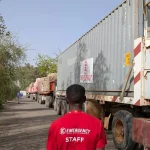
Aid delivery remains severely constrained by insecurity, bureaucratic obstacles and logistical challenges. The situation is particularly dire in Darfur and Kordofan states, where entire communities have been isolated for months.
In towns like Dilling and Kadugli, water systems lie destroyed and health services have ceased functioning, while cholera and measles outbreaks spread unchecked. Disease also threatens returning populations, with cholera, dengue and malaria spreading in Khartoum.
“Their determination to rebuild is remarkable, but life remains incredibly fragile,” said Ugochi Daniels, IOM’s Deputy Director General, who recently returned from Sudan.
Massive Funding Shortfall
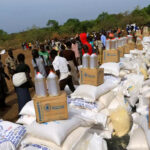
Despite reaching 13.5 million people this year, the humanitarian response faces a critical funding crisis. The 2025 Humanitarian Response Plan, requiring $4.2 billion, is only 25 percent funded, forcing agencies to consider scaling back life-saving operations.
“We are all working together to help displaced families rebuild their lives,” said Valerie Guarnieri, WFP Assistant Executive Director. “But above all, I saw determination and willingness to rebuild and restart life. I saw hope.”
The agencies are calling for an immediate cessation of hostilities, unhindered humanitarian access throughout the country, simplified aid delivery procedures, and urgent, flexible funding. They also stressed the need for continued protection of nearly 900,000 refugees in Sudan, amid rising anti-foreigner sentiment.
Without additional resources and access, humanitarian officials warn millions more lives hang in the balance in what has become one of the world’s most severe emergencies.