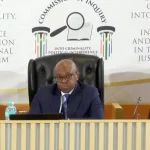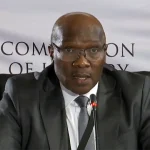
THE testimony unfolding before the Madlanga Commission of Inquiry represents far more than another corruption scandal in South Africa’s troubled post-apartheid history. What is emerging from the walls of that Pretoria hearing room is evidence of something far more sinister: a democratic state potentially captured not by business interests or political factions, but by criminal syndicates and drug cartels who have allegedly used their ill-got wealth to install politicians at the highest levels of government.
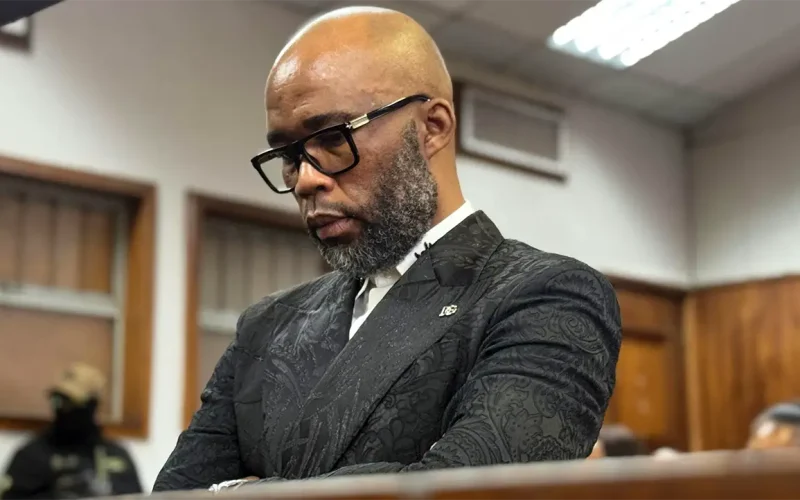
When businessman Vusimuzi “Cat” Matlala sat down for a recorded interview following his arrest in May, he did more than implicate individual officials in corruption. His allegations, now being dissected by the Commission through testimony from the protected “Witness C,” paint a chilling picture of systematic state capture where monthly kickbacks of R1 million, campaign donations of R500,000, and gifts of livestock became the currency through which criminals purchased not just protection, but political power itself.
The prima facie evidence before the commission forces South Africans to confront an uncomfortable question: Have drug cartels and organised crime syndicates succeeded in buying their way into the Union Buildings? The recorded confessions of a man now facing attempted murder charges suggest the answer may be yes.
At the centre of the storm stands suspended Police Minister Senzo Mchunu, whose alleged SM29 campaign for the ANC presidency was reportedly funded by the very criminals his ministry was meant to combat. According to testimony, Matlala channelled approximately R500,000 through his company Gotlhe Specialists to fund flights, accommodation, and entertainment for Mchunu’s delegation to the ANC’s January 8 celebrations. The alleged conduit? Brown Mogotsi, a North West businessman with deep ANC connections who appears to have served as the “fixer” connecting criminal money to political ambition.
But Matlala’s generosity, if the allegations are true, extended far beyond Mchunu. Suspended Deputy National Police Commissioner Lieutenant-General Shadrack Sibiya allegedly received R1 million monthly. Major-General Lesetja Senona from the Hawks, South Africa’s elite crime-fighting unit, was also implicated in receiving regular payments. Major-General Richard Shibiri allegedly received R80,000 in cash after refusing an electronic transfer that could be traced. Crime intelligence head Feroz Khan allegedly demanded R2.5 million from Matlala, receiving R500,000 in what Matlala described as an intimidating manner.
This wasn’t mere corruption. This was the systematic purchase of South Africa’s law enforcement apparatus by organised crime.
When Protectors Become Protected
The mechanics of the alleged scheme reveal how deeply compromised the system had become. When police raided Matlala’s home in December 2024, searching for abducted businessman Jerry Boshoga, the businessman complained to his alleged benefactors. The response, according to testimony, was extraordinary: Mchunu allegedly enlisted the State Security Agency to identify who was investigating Matlala, deploying grabber devices in a counter-surveillance operation. Mogotsi allegedly obtained registration numbers of vehicles used by counterintelligence operations.
When those protective measures failed, the strategy shifted to manufacturing false cases. Matlala was advised to claim that watches were stolen during the raid and to have his wife file assault charges against the investigating officers. A fabricated case was allegedly opened at Brooklyn SAPS with the assistance of Colonel Smanga Simelane, head of crime intelligence for the Soweto area.
This is how a captured state operates: criminals don’t merely evade justice; they weaponise the justice system against those who would investigate them.
The evidence before the commission demands a comprehensive prosecutorial response. The charges must include corruption, fraud, racketeering under the Prevention of Organised Crime Act, defeating the ends of justice, conspiracy, money laundering, and potentially violations of the National Strategic Intelligence Act for the alleged misuse of state security apparatus.
While it is clear that Sibiya and his subordinates must be arrested and tried in a court of law, the political accountability cannot stop at uniformed officers. The politicians whose rise to power was allegedly financed by criminal enterprises must also face consequences. Mchunu must fall on his sword. Resignation is not optional when the evidence suggests one’s political ascent was bankrolled by the very forces one was sworn to combat.
The CR17 Shadow
But the implications extend beyond Mchunu’s ambitions. The testimony has exposed a troubling pattern that reaches back to 2017 and the CR17 campaign that brought Cyril Ramaphosa to the presidency of the ANC and ultimately of South Africa. Brown Mogotsi, the same “fixer” who allegedly organised criminal funding for the SM29 campaign, was also involved in CR17. The connection is impossible to ignore: Matlala and his associates, having allegedly helped install Ramaphosa, appear to have launched a campaign to catapult Mchunu into similar power.
When questions were raised about CR17 donors, it was Mchunu, in his capacity as Police Minister, who sealed those records, keeping vital information from public scrutiny. This act takes on a sinister new meaning in light of the Madlanga testimony. Was he protecting his own benefactors? Was he shielding a president whose rise to power followed the same allegedly criminal funding pattern as his own ambitions?
The only way to dispel the belief that Ramaphosa was installed by drug cartels and criminal syndicates is transparency. Mchunu must unseal the CR17 financial records immediately, or President Ramaphosa himself must do so. The contents, if the evidence before Madlanga is anything to go by, will be politically devastating. They should be. If a president was placed in office by criminal money, that presidency is illegitimate, and the consequences must include his downfall.
Democracy for Sale
What emerges from the Madlanga Commission is a picture of democracy itself being for sale. Not to the highest bidder among legitimate business interests or political factions, but to criminals and drug cartels who understood that the best way to protect their illicit operations was to own the very people sworn to stop them.
This doesn’t augur well for the ANC or for South Africa. The implications are stark: the criminals and drug cartels, if this evidence holds, are the real power running the country, not the politicians they placed in office. Money demands, livestock deliveries, cash drop-offs in dustbins – these are the transactions that allegedly determined who would rise to power in South Africa’s law enforcement and political hierarchy.
The antelopes that allegedly died on Sibiya’s plot become a metaphor for South African democracy itself: a gift from criminals that withered under the weight of corruption.
As the commission continues its work, all implicated parties will have their opportunity to testify and refute these allegations. Due process must be respected. But the prima facie evidence is damning, and South Africans have every right to demand answers.
The question is no longer whether corruption exists at high levels – we have known that for years. The question is whether our democracy has been fundamentally compromised by criminal capture. Whether the men and women who hold power do so because voters chose them or because cartels bought them.
If these allegations prove true, the response cannot be limited to individual prosecutions. South Africa will need to confront the reality that its political system has been penetrated at the highest levels by organised crime, and that restoring democratic legitimacy will require not just arrests and trials, but a fundamental reckoning with how political campaigns are funded and how law enforcement leadership is selected.
The walls of the Madlanga Commission are reverberating with more than allegations. They are echoing with the death rattle of public trust. Whether that trust can be restored depends on the courage of prosecutors to follow the evidence wherever it leads, even—especially—if it leads to the Union Buildings itself.
The nation is watching. The criminals who allegedly bought our democracy are watching too. The question is: who will blink first?