PRESIDENT Samia Suluhu Hassan was sworn in on Monday for her first elected term at a heavily secured military ceremony in Dodoma, as opposition groups and human rights organisations alleged that security forces killed hundreds of protesters in the days following a disputed election.
The 65-year-old leader took the oath of office behind closed gates five days after the National Electoral Commission declared she had won 97.66 percent of the votes cast, with the opposition party CHADEMA estimating post-election deaths had surpassed 700 people. Diplomatic sources speaking on condition of anonymity reported at least 500 verified deaths, though the government has not released official casualty figures.
The inauguration took place as a near-total internet shutdown entered its fifth day, with communications severely restricted across major cities and hospitals reportedly operating under military watch.
The electoral commission announced Saturday that Hassan secured 31,913,866 votes against her closest rival’s 213,414, claiming an 86 percent voter turnout from 37.7 million registered voters. Independent observers have questioned the statistical plausibility of the results, citing reports of empty polling stations, burned ballot boxes, and widespread disruptions.
— Samia Suluhu (@SuluhuSamia) November 3, 2025
The Southern African Development Community Electoral Observation Mission, led by former Malawian Speaker of Parliament Richard Msowoya, issued a preliminary report describing the election as failing to meet basic democratic standards. The mission cited election-day internet shutdowns, harassment of observers, and obstruction of monitoring efforts.
“The environment did not allow voters to freely express their democratic will,” the report concluded, noting that security forces interrogated observers, confiscated passports, and forced them to delete photographs in some locations.
Allegations of Excessive Force
Medical workers speaking anonymously have reported that hospital morgues in Dar es Salaam, Mwanza, and Arusha are struggling to cope with bodies brought in since violence erupted on Wednesday. Eyewitnesses said police have restricted access to some facilities, turning away relatives seeking information about missing family members.
A doctor at Muhimbili National Hospital, speaking briefly by phone, said: “The mortuaries are beyond capacity. We have bodies in corridors and storage rooms. The majority have gunshot wounds to the chest and head.”
Human rights campaigner Maria Sarungi Tsehai posted photographs on social media that she said showed bodies outside Dar es Salaam hospitals. “These vehicles are government-assigned, altered with tinted glass and without plates,” she wrote. “They shot randomly and transported corpses to hospitals.”
— Samia Suluhu (@SuluhuSamia) November 3, 2025
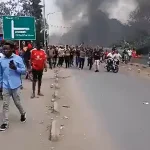
Videos verified by international media outlets showed sustained gunfire in several neighbourhoods on Wednesday, when protests erupted following the election results announcement. Audio recordings circulating on communications platforms captured voices coordinating escape routes and calling for help.
Police enforced dusk-to-dawn curfews across Dar es Salaam and conducted door-to-door searches, with thousands reportedly detained. Witnesses described unmarked vehicles patrolling streets after nightfall.
International Response
United Nations Secretary-General António Guterres has called for a “thorough and impartial investigation” into the violence. Amnesty International and Human Rights Watch have demanded access to affected areas.
Tanzania’s Foreign Ministry has denied allegations of excessive force, stating that “no verified casualty figures exist.”
The European Union said it had “taken note” of the election results and expressed “concern about post-election violence.” The African Union Commission congratulated Hassan while expressing “deep regret” over post-election violence, a response that drew criticism from human rights advocates.
— Samia Suluhu (@SuluhuSamia) November 3, 2025
Regional leaders have offered mixed reactions. While Burundi and Somalia’s leaders congratulated Hassan, Kenya’s President William Ruto issued only a brief statement that drew criticism domestically. Uganda’s Yoweri Museveni and Rwanda’s Paul Kagame have not issued public statements on the election.
Calls for ICC Investigation
CHADEMA Secretary General John Mnyika on Sunday called the violence “a massacre of citizens by their own government” and appealed for United Nations and International Criminal Court intervention.
Legal experts have said the allegations, if verified, could meet the threshold for crimes against humanity under international law, though Tanzania has limited its recognition of ICC jurisdiction. International organisations are reportedly assembling evidence for potential submission to the ICC prosecutor’s office.
Constitutional lawyers note that Tanzania’s constitution effectively bars judicial challenges to presidential election results, leaving limited domestic legal recourse.
— Samia Suluhu (@SuluhuSamia) November 3, 2025
Atmosphere of Fear
By Monday morning, internet service remained largely unavailable across major cities. Residents described streets as largely deserted, with communication severely limited and an atmosphere of fear prevailing.
Doctors confirmed hospitals were at capacity, while families gathered outside medical centres seeking information about missing relatives. The continuing communications blackout has prevented independent verification of the full scope of casualties and arrests.
Hassan, receiving her victory certificate Saturday, described protesters as “unpatriotic elements” threatening national peace and pledged to “deploy all security organs to restore order.”
Police officers speaking anonymously said they had been “overwhelmed” by the scale of fatalities and had received orders to “restore calm at all costs.”
The government has not responded to requests for comment on specific allegations of mass killings or secret burials.
Additional reporting from humanitarian sources and diplomatic contacts in Dar es Salaam. The Tanzanian government has restricted journalists’ access to hospitals and detention facilities.