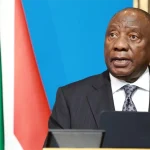
SOUTH Africa’s President Cyril Ramaphosa strode to the podium at the Union Buildings on Sunday evening and delivered a message that has been overdue in the ears of millions of South Africans: the state is coming — for employers who exploit illegal workers, for officials who sell documents, for criminal syndicates that use undocumented migrants as cover, and for those who entered this country unlawfully.
In a carefully calibrated national address that balanced firmness with the country’s constitutional values, Ramaphosa announced the most comprehensive overhaul of South Africa’s migration enforcement architecture in recent memory — including dedicated immigration courts, the imprisonment of employers who break the law, the phased replacement of green ID books, the recruitment of 10,000 labour inspectors, and the relocation of refugee reception centres to border posts.
“The basic principle, on which we all agree, is that every person within the borders of South Africa should be here legally,” Ramaphosa said. “Every person who works in our country must be legally permitted to work. Every person who runs a business here must be legally permitted to run a business.”
“Employers who knowingly hire undocumented workers and exploit their vulnerability are breaking the law. Such conduct will attract far stronger penalties and far stricter enforcement.”
President Ramaphosa
THE FIVE-PILLAR PLAN
The president outlined five interlocking lines of action that the Cabinet adopted last week in what he called a Comprehensive Approach for Migration Management — an approach already endorsed by the President’s Coordinating Council, which includes premiers, MECs, local government representatives and leaders of the National House of Traditional and Khoi-San Leaders.
The first pillar is an intensified crackdown on violations of immigration, labour and other laws. The Department of Home Affairs, the Border Management Authority (BMA) and the South African Police Service will ramp up identification and deportation operations. Dedicated immigration courts will be established to expedite deportations. Ramaphosa noted that in the past year alone, the BMA intercepted more than 450,000 people attempting to cross into South Africa illegally — a figure that underscores both the scale of the challenge and the capacity being built to confront it.
The second pillar addresses border security directly. Ramaphosa announced continued investment in technology, infrastructure and personnel, framing secure borders not as an act of hostility but as “a fundamental requirement of a sovereign and well-governed state.” Refugee reception centres will be progressively relocated to border posts — starting with the Tshwane centre this year — to ensure asylum applications are processed at the point of entry, more efficiently and more securely.
The third pillar targets corruption within the immigration system itself. Ramaphosa was unsparing: officials who sell documents, facilitate unlawful entry or abuse public office are “betraying the trust of the South African people” and face dismissal, criminal prosecution and the full force of the law. An Intelligent Population Register containing biometric data for every person in the country will be established, forming the foundation for a Digital ID system. The green ID book — long exploited for identity theft — will be phased out and a deadline set after which it will no longer be recognised.
“We will pursue these cases relentlessly. Those responsible are facing dismissal, criminal prosecution and the full consequences of the law.”
President Ramaphosa on corrupt Home Affairs officials
The fourth pillar closes legislative loopholes. Government has finalised the National Labour Migration Policy proposing maximum quotas for legally documented foreign nationals across economic sectors. The Employment Services Amendment Bill, approved by Cabinet for introduction to Parliament, empowers the Minister of Employment and Labour to set sector-by-sector quotas. Small and informal businesses — a perennial flashpoint in communities angered by foreign-owned spaza shops — will be required to register properly, supported through a dedicated Spaza Shop Fund.
The fifth and final pillar reaches beyond South Africa’s borders. Ramaphosa announced he will dispatch envoys to a number of African sister countries to outline the measures announced on Sunday. Through SADC, the African Union and bilateral relations, South Africa will pursue what the president called an Africa “in which people move by choice and not by desperation.”
EMPLOYERS ON NOTICE
Among the most pointed messages of the evening was Ramaphosa’s direct warning to the business community. He described a pattern of deliberate exploitation in which employers hire undocumented migrants precisely because their status strips them of any ability to assert their rights — paying them below the minimum wage, working them beyond legal hours without compensation.
“We have uncovered a number of workplaces where undocumented migrants are made to labour under very bad conditions,” Ramaphosa said. “Employers who knowingly hire undocumented workers and exploit their vulnerability are breaking the law. They undermine labour standards. They undermine fair competition. And they undermine opportunities for South Africans.”
The president confirmed that penalties — including imprisonment — for violations of the Immigration Act will be increased significantly. The current regime, he implied, in which convicted employers simply pay a fine and continue operations, is finished. The SAPS, Department of Home Affairs and Department of Employment and Labour are already increasing workplace inspections, backed by the phased recruitment of 10,000 new labour inspectors this financial year.
COMMUNITIES HEARD, NOT DISMISSED
In a departure from the rhetorical tendency of previous administrations to quickly pivot from community concerns to condemnation of xenophobia, Ramaphosa spent considerable time validating the frustrations of ordinary South Africans — particularly around the dominance of foreign nationals in spaza shops and informal trading.
“Many South Africans feel excluded from opportunities within their own communities,” he said. “Government has a responsibility to support local enterprise, promote fair competition and create conditions in which South Africans can participate meaningfully in the economy.”
He acknowledged the systemic reality underpinning those frustrations: persistently high unemployment, struggling families, inadequate access to opportunity — conditions that make competition for economic space acutely felt. But he was equally clear that illegal immigration, while a genuine challenge, is not the source of all economic suffering, and that the ultimate answer lies in faster growth, investment and job creation.
A CONSTITUTIONAL RED LINE
Despite the tough tone, Ramaphosa drew clear constitutional lines. He reaffirmed that enforcement of immigration laws is the exclusive prerogative of the state. “No other person is allowed, for example, to confront someone in the street to demand proof of nationality,” he said — a direct warning to vigilante groups that have increasingly taken immigration enforcement into their own hands.
He condemned those using legitimate public concerns about illegal immigration to pursue political, personal or criminal agendas — warning that “forces who are exploiting the concerns of our people” will be acted against. He also flagged the troubling trend of anti-foreigner sentiment bleeding into ethnic slurs directed at South Africans themselves.
“We can protect our borders while protecting human dignity,” he said. “We can enforce our laws while upholding our Constitution. We can secure our communities while preserving the values of Ubuntu that define us as a people.”
“We can protect our borders while protecting human dignity. We can enforce our laws while upholding our Constitution.”
President Ramaphosa
IMPLEMENTATION ARCHITECTURE
The Inter-Ministerial Committee on Migration will coordinate government’s response across all departments and spheres. NATJOINTS and Provincial NATJOINTS structures have been directed to strengthen coordination among law enforcement, intelligence and security agencies. Cabinet will regularly review implementation progress and has signalled it will remain “seized” with the issue.
The Department of Transport has been given three months to issue new regulations ending the abuse of the Traffic Registration Number — which foreign nationals use to register vehicles but which has been deployed as a de facto identification document in ways that undermine the law.
ANALYSIS: HAS THE TONE FINALLY CHANGED?
Sunday’s address represents a qualitative shift in how South Africa’s executive has chosen to engage with illegal immigration as a political and governance question. Previous administrations — and this one in earlier iterations — have often been accused of leading with the xenophobia warning before the enforcement commitment, effectively putting communities on the defensive before their grievances had been heard.
Ramaphosa reversed that sequence. He opened with an acknowledgment that South Africans’ concerns are “real” and “legitimate,” that government has heard them, and that the state accepts responsibility for failures in enforcement, corruption and systemic gaps. The enforcement measures came not as a reluctant concession to pressure but as the centrepiece of the address.
Whether the machinery of state can match the ambition of the rhetoric remains the central question. South Africa has announced border security upgrades, crackdowns on document fraud and deportation drives before. The difference this time, the Presidency insists, lies in the cabinet-level coordination framework, the legislative teeth being added through the Employment Services Amendment Bill, and the commitment to biometric identification infrastructure that would close document-fraud loopholes at their root.
The envoys to African capitals — not yet named — signal an awareness that migration is a regional phenomenon no single country can resolve through enforcement alone. Whether those diplomatic missions will produce meaningful burden-sharing arrangements, or whether they will be met with the diplomatic discomfort that South Africa’s periodic migration crackdowns have generated on the continent, remains to be seen.
For now, South Africans who have spent years asking whether anyone in Tshwane was listening received their answer on Sunday evening. The harder question — whether the state apparatus can translate that listening into lasting, measurable change on the ground — will be answered not in speeches, but in the coming months.