
THERE is a word for what Vumani Rethabile Tshabalala and his lover did to three children in Bloemfontein over five years. That word is rape. But there is no adequate word — in law, in psychology, in language — for what the mother of two of those children did. The law calls it rape, too, and on multiple counts. The court has called it worthy of life imprisonment. History, and the daughters she violated, will have to find their own vocabulary for a betrayal this complete.
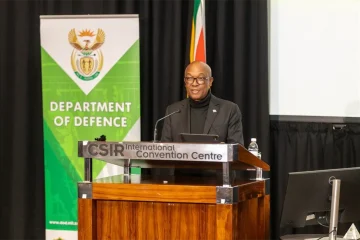
On a day that was both ordinary and historic in the Free State Division of the High Court, Judge and prosecutor Joseph Cwele stood before the Bloemfontein Sexual Offences Court and asked for the maximum sentence available under South African law. He got it — for both the accused. Tshabalala, 36, was sentenced to life imprisonment on each of three counts of rape. The mother of the victims — 33 years old, her name withheld by court order to protect her daughters — was sentenced to life imprisonment on each of three counts of rape, 15 years on each of three counts of sexual exploitation, and three years for assault.
“The children suffered traumas that will be with them for the rest of their lives.”
Prosecutor Joseph Cwele, NPA Free State
The facts of the case, as established by the court, are so disturbing that they resist a comfortable summary. The offences began in 2015. The victims were the 33-year-old’s two daughters — aged 11 and 14 at the time — and her niece, aged 10. Over a five-year period, the mother and Tshabalala, her romantic partner, repeatedly raped and sexually exploited the three children. The mother’s role was not passive. She sent the children to Tshabalala. She ignored their disclosures. She coerced them through threats and physical violence.
In one of the most harrowing incidents presented to the court, Tshabalala raped the 10-year-old niece in the presence of her aunt — the same woman who, as mother to two of the other victims, had a legal and moral duty to protect every child in her care. After the rape of the niece, the mother continued to have sexual intercourse with Tshabalala while the child remained in the room. At various points, the children were offered money or told to perform sexual acts in exchange for basic necessities.
A MOTHER WHO BECAME A PREDATOR
South Africa’s crisis of gender-based violence is well-documented: the statistics are horrifying, the political discourse exhausting, the progress agonisingly slow. But this case confronts something that the public conversation around GBVF rarely pauses to examine — the perpetration of sexual violence not by a stranger, not by a trusted outsider, but by the one figure in a child’s life whose protection is supposed to be absolute. A mother.
The daughter-mother bond is, in every society and every culture, the first covenant. It precedes language, law and consciousness. Before a child can name the world, they know that bond. Its violation is not merely a crime — it is a category error in the human universe, an event so contrary to the natural order that it takes time for the mind to fully process it.
This mother did not simply fail to protect her daughters. She participated in their destruction. She engineered it. She deployed her children as objects to be passed to her lover, turned their bodies into instruments of her own relationship. And when they tried to tell her what was being done to them — because children tell their mothers — she punished them into silence.
Before a child can name the world, they know that bond. Its violation is not merely a crime — it is a category error in the human universe.
WHAT THE VICTIM IMPACT STATEMENTS REVEALED
The court’s judgment did not land in a vacuum. It was underpinned by Victim Impact Statements prepared by Maggie Faas, which the prosecution presented to demonstrate the profound and long-term harm suffered by the three children. The content of those statements has not been made public in full — appropriate, given the ongoing need to protect the victims’ identities — but Prosecutor Cwele was explicit: the trauma these children carry will not leave them. It has been built into them, layered into their developing selves during the years when the world should have been teaching them safety, love and trust.
The psychological literature on childhood sexual abuse is unambiguous about its long-term consequences: elevated rates of PTSD, depression, anxiety, substance abuse, interpersonal dysfunction, and revictimisation. When the abuser is a parent — the very figure who shapes the child’s model of what a relationship is and what they deserve — the consequences are compounded in ways that take decades to unravel, if they are ever fully unravelled at all.
These two daughters, now young women, have lost their childhood. They have lost their innocence. They have lost their right to a mother. In some sense, they have lost the version of themselves they might have been had the woman who gave them life chosen, at any point across five years, to choose them instead.
THE SENTENCE AND ITS MEANING
Life imprisonment in South Africa is the maximum sentence available for rape. It is, in effect, the law’s acknowledgment that some acts are so destructive, some betrayals so complete, that no lesser punishment adequately reflects the moral weight of what has been done. The court’s decision to impose it on both accused — and to impose it on the mother for each of the three rape counts — represents a considered and deliberate statement by the judiciary about where this case sits in the spectrum of human wrongdoing.
The National Prosecuting Authority, through its Sexual Offences and Community Affairs (SOCA) unit, pursued this case with the rigour it demanded. Prosecutor Cwele argued, correctly, that there was no better sentence than life for both the accused. The SOCA unit’s victim-centred prosecution strategy — working alongside social workers, healthcare professionals, and the South African Police Service — ensured that the victims were treated with care and dignity throughout a process that must have required extraordinary courage from them.
NPA Regional Spokesperson Mojalefa Senokoatsane confirmed the outcome, noting the authority’s commitment to combating GBVF and its continued advocacy for the rights of children. The statement is welcome. The conviction is welcome. The sentence is right.
JUSTICE HAS BEEN SERVED. AND YET.
The daughters are free, in the legal sense, from the grip of the adults who destroyed their childhood. Their abusers will spend the rest of their natural lives in prison. The state has done what the state can do.
And yet the daughters have not gained a mother. They have been confirmed, by a court of law, in what they already knew: that the woman who carried them, bore them, and was supposed to love them, chose instead to violate them. The sentence does not restore what was taken. It does not return five years of stolen safety. It does not rebuild the neural pathways of trust that were shattered before these girls were even teenagers. It does not give them back the one person in the world who should have loved them without condition or transaction.
Legal justice and human wholeness are not the same thing. They can intersect, as they have here, but they are not coextensive. A sentence, however just, cannot heal a wound this deep. It can only mark, with the full authority of the state, that what was done was monstrous — and ensure that it cannot be done again, at least not by these two people, to these children or any others.
The daughters have not gained a mother. They have been confirmed, by a court of law, in what they already knew.
WHAT SOCIETY OWES THESE YOUNG WOMEN NOW
The conviction closes a chapter of prosecution. It does not close the chapter of recovery — for the two daughters, for their niece, or for any of the thousands of South African children enduring abuse in households where the perpetrator is also a parent or caregiver.
South Africa has, in recent years, strengthened its legal framework against sexual offences and GBV. The Thuthuzela Care Centres, the Sexual Offences Courts, the SOCA units — these are not window dressing. They save lives and deliver justice. But they function at the point of legal intervention, after the harm has been done. The harder, slower work is upstream: building communities and social systems that identify children at risk before abuse becomes a five-year pattern, supporting them after it does, and ensuring that the professionals who work with them — teachers, social workers, doctors — are resourced to act on their disclosures.
For now, two young women begin the long process of living with what was done to them. They go forward without the mother they deserved. They carry the evidence of a betrayal that should never have been possible. The state has done its part. The question now is whether the rest of us — as a society, as a community of care — will do ours.