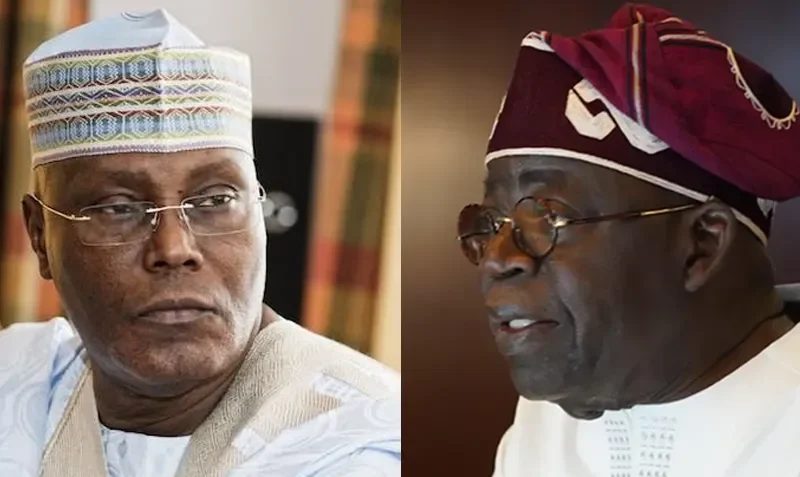
NIGERIA’S 2027 general election calendar is unusually tight this cycle. For the first time since the return to civilian rule in 1999, the presidential vote has been moved into January – fixed by the Independent National Electoral Commission for 16 January 2027, a full five weeks earlier than the February date that would ordinarily have applied. Formal campaigning opens on 19 August 2026, less than a month from now. It is against that compressed and unusually early timetable that Monday’s move by former Vice President Atiku Abubakar’s Washington lobbying firm should be read.
Von Batten-Montague-York, L.C., the policy and lobbying firm retained by Atiku under a reported $1.2 million, twelve-month contract, said in a statement posted to its official X account that it had begun distributing more than 60 pages of United States Department of Justice material – a chronology and supporting court filings – to the Trump administration and senior members of the US Congress. The documents concern a 33-year-old civil forfeiture case that named President Bola Ahmed Tinubu in connection with a Chicago-based heroin trafficking investigation dating to the late 1980s and early 1990s. The firm said the material had gone to committees spanning foreign affairs, judiciary, financial services, intelligence and appropriations in both chambers, as well as the Senate Caucus on International Narcotics Control, and that it intended to bring the full file to President Donald Trump’s personal attention.
Shots Fired Before the Whistle
Nothing in Monday’s disclosure is new evidence. The underlying case, and the affidavit behind it, have circulated in Nigerian public life since 2008 and were litigated exhaustively during the 2023 election petitions against Tinubu’s victory. What has changed is the audience and the timing: with primaries already run in the spring and campaign season opening in four weeks, Atiku’s camp has chosen to make its first big move not on a podium in Kano or Enugu, but in the inboxes of American lawmakers – a signal that the 2027 contest, like the two before it, will be fought partly on foreign turf, in the court of Washington opinion, before it is fought on the ballot.
Atiku, who secured the ADC ticket in May with more than 1.8 million primary votes and is now contesting the presidency for a seventh time, has framed his opposition to Tinubu increasingly in the language of international accountability rather than domestic manifesto politics. Since March, Von Batten-Montague-York has run a sustained campaign accusing the Tinubu government of political intimidation, lobbied Washington to expand scrutiny of a fraud scandal involving Chief of Staff Femi Gbajabiamila, and traded public broadsides with lobbyists it says represent the Nigerian government. Monday’s move folds the decades-old drug case into that same campaign, days ahead of a reported push by Tinubu for a meeting with President Trump at the UN General Assembly – timing the firm itself linked explicitly to Nigeria’s strategic relationship with Washington.
What the 1993 Case Actually Was
The documents at the centre of the firm’s campaign relate to United States v. Funds in Account 263226700 et al., Case No. 93 C 4483, filed in the US District Court for the Northern District of Illinois on 26 July 1993. It was a civil asset forfeiture action, not a criminal prosecution, and Tinubu was never indicted or convicted of any offence arising from it.
The government’s verified complaint, supported by an affidavit from IRS Criminal Investigation Special Agent Kevin Moss, sought forfeiture of funds held in accounts at First Heritage Bank and Citibank in the name of Bola Tinubu, arguing there was probable cause to believe the money represented proceeds of a heroin distribution network the affidavit linked to one Adegboyega Mueez Akande, with a further individual, Abiodun Agbele, identified as having sold heroin to an undercover officer before cooperating with investigators. The affidavit described Tinubu as having opened accounts at First Heritage Bank in December 1989 and stated that, in telephone interviews in January 1992, he acknowledged knowing both Akande and Agbele and having wired money to and from accounts linked to Akande.
These are allegations contained in a law enforcement affidavit filed to support a civil seizure – not findings a court ever adjudicated on the merits, and not a criminal charge. Court records show the matter was resolved by settlement, not trial.
Settled Without Any Admission of Guilt
Under a stipulation and compromise settlement signed on 15 September 1993 and a decree of forfeiture entered on 4 October 1993 by Judge John A. Nordberg, Tinubu agreed that $460,000 held in the First Heritage Bank account would be forfeited to the United States, while the remainder of the seized funds – more than $1.4 million held across the Citibank accounts – was released back to him and his co-claimants, his wife Oluremi Tinubu and Alhaji Mogaji. The settlement explicitly recorded that the claimants disputed that there had been probable cause for the original seizures, and neither the settlement nor the decree of forfeiture contains any admission by Tinubu of criminal, dishonest or fraudulent conduct.
The case first drew wide Nigerian attention when investigative outlet SaharaReporters published the court filings in 2008, then became a central flashpoint during the 2023 presidential election petitions, when Tinubu’s opponents cited the forfeiture as grounds to challenge his eligibility for office. His party, the All Progressives Congress, told the Presidential Election Petition Court at the time that the decree ran against the funds themselves, not against Tinubu personally, and that he had made no admission of any disqualifying conduct. The Court of Appeal and Supreme Court ultimately dismissed those petitions and affirmed his election – a precedent Tinubu’s camp is likely to invoke again if the issue resurfaces domestically ahead of January.
A Parallel FOIA Fight Has Kept the File Alive
Separately from the lobbying campaign, the underlying case file has been the subject of an active US Freedom of Information Act lawsuit brought by researcher Aaron Greenspan, Greenspan v. Executive Office for U.S. Attorneys et al. A 2025 ruling by Judge Beryl Howell of the US District Court for the District of Columbia found that the FBI and DEA could no longer rely on a blanket refusal to confirm or deny responsive records, ordering the agencies to process disclosures. That litigation remains ongoing; it is this FOIA record, rather than any new law enforcement action, that appears to underpin the fresh push by Von Batten-Montague-York.
The 2027 Calculus
For Atiku, now making a seventh run at the presidency, the strategic logic of internationalising the contest is not new – his camp pursued a similar approach in 2023 – but the compressed 2027 calendar sharpens its urgency. With campaigning opening in August and polling day falling in the middle of January, there is markedly less runway than in previous cycles to build a domestic narrative from scratch. Positioning Tinubu as a candidate under renewed scrutiny in Washington, before Nigerian campaign season formally begins, allows the opposition to set a frame that Nigerian voters, the diaspora and international media may carry into the shortened race, regardless of how the underlying 1993 case is ultimately characterised.
For the Presidency, the challenge is the mirror image: neutralising a decades-old allegation it has already beaten back once at the Supreme Court, without allowing the rebuttal itself to dominate the opening weeks of what was meant to be a campaign fought on economic reform, security and Nigeria’s foreign standing under Tinubu’s watch.
Presidency’s Position
The Tinubu government has consistently maintained, through successive court filings and public statements, that the 1993 matter was a civil proceeding against funds rather than a criminal case against Tinubu, that it resulted in no conviction, and that the settlement carried no admission of unlawful conduct. Presidency spokespeople have in the past dismissed related claims circulated by Von Batten-Montague-York as false. The African Mirror has sought comment from the Presidency on Monday’s statement and will update this report with any response.
Why It Matters
With just under six months separating today from the earliest presidential election in Nigeria’s democratic history, Monday’s disclosure functions as an early marker of how the 2027 race will likely be fought: not only door to door and rally to rally inside Nigeria, but simultaneously in Washington committee rooms, on Nigerian Twitter and X, and in the released files of American FOIA litigation. Whether the recycled 1993 case moves any votes in January is an open question – but its reappearance, four weeks before campaigns formally open, confirms that both camps view the contest for the presidency as already underway.