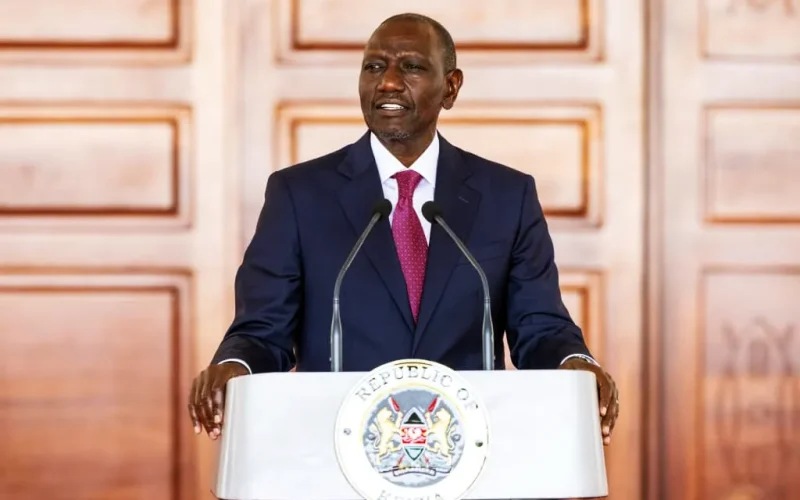
PRESIDENT William Ruto’s declaration that the state will fully fund every Kenyan student who qualifies for placement in a public university, college or TVET programme marks a bold pivot from means-tested support to universal, merit-based tertiary funding. Announced at State House in Nairobi, the policy reframes higher education as a public good to be guaranteed by the state -= an explicitly political decision that promises broad social dividends but poses immediate fiscal and operational tests.
Ruto cast the move as an equality imperative: academic success, not household means, will determine access to higher learning. By removing compulsory household contributions and the variable scholarship model, the administration is attempting to extinguish a long-standing barrier that has forced many capable students from disadvantaged backgrounds out of competitive courses. The rhetoric is unmistakably populist in tone – education as an engine of national competitiveness and social mobility – and it is designed to reframe the government as the guarantor of opportunity.
The legal and budgetary mechanics will define whether the announcement is transformative or merely aspirational. For the policy to take effect in the September 2026 intake, Parliament must rapidly amend the Higher Education Loans Board Act; the Treasury will have to earmark substantial additional funds; and implementing agencies must redesign disbursement systems. These are not trivial tasks. A sudden surge in fully funded enrolments could strain lecture halls, student accommodation and faculty resources, exacerbating quality risks even as access expands.
Politically, the policy consolidates Ruto’s appeal to voters who see state-supported education as a pathway out of poverty, while shifting responsibility for university financing onto the national budget and away from households. That shift will invite scrutiny from opposition parties, fiscal hawks and international partners concerned with sustainability and value-for-money. How the administration balances broad access with accountability, and whether it pairs the funding promise with clear plans for expanding capacity and preserving standards, will determine public and expert judgment in the months ahead.
Implementation will reveal the stakes: rapid passage of HELB amendments, a visible reallocation in the next budget, and operational guidance from education agencies are the immediate milestones to watch. If the state follows the announcement with credible, phased financing and capacity-building measures, Kenya could widen tertiary access dramatically; if not, the policy risks becoming a politically potent promise that founders on logistical and fiscal realities.
In short, Ruto’s move places meritocratic access at the heart of Kenya’s social contract with young people – a decisive political bet whose success depends on hard fiscal choices and efficient execution as much as on rhetoric.